What Animals Eat Sea Grass? A Complete Guide to Ocean Herbivores
Welcome to the Ocean’s Underwater Pastures
Have you ever gazed down at an undersea meadow, lush and green, and wondered just what eats sea grass? Just like the enormous savannas on land, these marine meadows are packed with hungry creatures. Seagrass meadows are the Foundations of our seas, silently supporting life just below the surface of the water. Without them the beautiful tapestry of aquatic life would seem very different. In this complete guide, we’ll delve under the sea to discover the amazing animals who rely on these underwater gardens for their very survival.
Seagrass is unique in the aquatic environment, being the only blooming plant that grows totally underwater. “Seagrass is very nutritious and has roots, stems and leaves unlike seaweed or algae. It lives in shallow, sunlit coastal waters all over the world, except Antarctica. It is so full of nutrients that a variety of creatures have evolved that eat only this. Let us meet the incredible marine herbivores that call these meadows home.
The Heavyweight Champions: Manatees
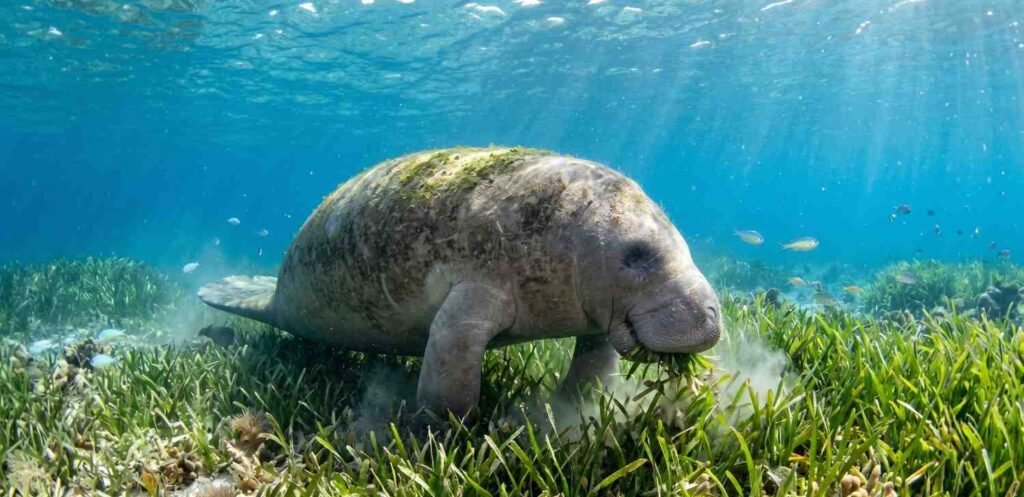
The first animal that often comes to people’s minds when they ask what eats sea grass is the manatee. They spend most of their lives eating and relaxing. Their lips are very huge and flexible, almost like an elephant’s trunk. These specialized lips allow them to deftly grip, pull, and shred seagrass from the ocean floor. Healthy adult manatees can readily eat as much as 10 percent of their large body weight in plants each and every day.
Manatees have an amazing digestive system to process all that fibrous plant material. They have long, amazing intestines that can be up to 150 feet long! The long digestive system is needed to break down the stiff cellulose in the blades of sea grass. Sand and grit wear them down, and thus they have a special set of teeth that they replace all the time while they are alive. Manatees cannot survive in the wild without sufficient seagrass beds.
Dugongs: The True Seagrass Specialists
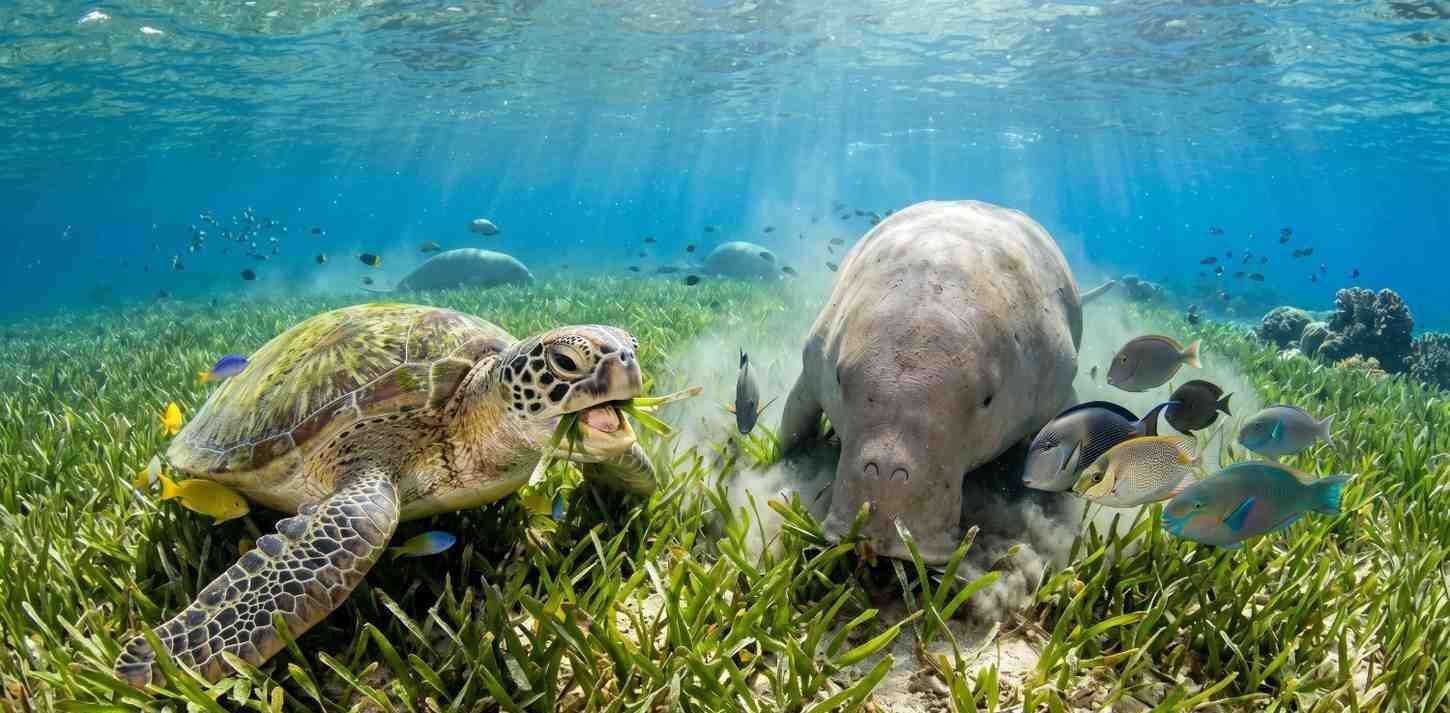
Another great marine mammal, the dugong, is a close relative of the manatee and also feeds on underwater pastures. But manatees will eat floating plants, while dugongs are total seagrass specialists. They are strict bottom feeders, spending their days sweeping up the ocean floor. Dugongs have a uniquely downturned snout perfectly designed for uprooting whole seagrass plants. They don’t only eat the green leafy blades, they prefer the nutrient-rich rhizomes (roots) hidden in the sand.
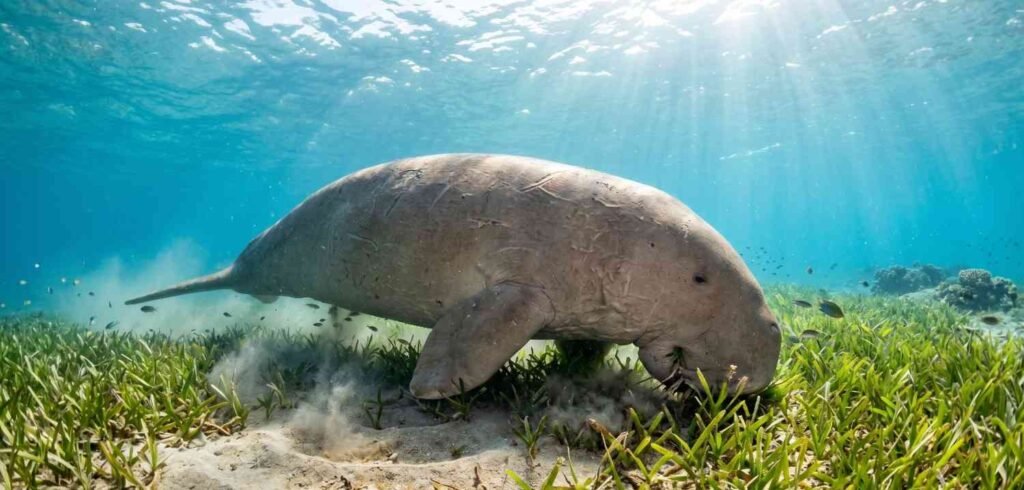
Dugongs pull up the whole plant, leaving characteristic “feeding trails” in the sand. In fact, the paths help the environment by aerating the sea floor and fostering the growth of new, healthier seagrass. Dugongs are found mostly in the warm coastal waters of the Indian and Pacific Oceans. Unfortunately, their tight diet leaves them highly vulnerable to changes in the environment. If a local seagrass bed is destroyed by a storm or pollution, dugongs must travel long distances to find nourishment, placing them at tremendous risk.
Green Sea Turtles: The Ocean’s Lawn Mowers
Marine mammals are the heavyweights while Green Sea Turtles are the graceful lawn mowers of the seagrass environment. Young green sea turtles eat things such as crabs and jellyfish, they are omnivores but their diet changes as they become older. They become virtually completely herbivores when they get to be adult. A massive portion of their adult diet consists of seagrass blades. Their beaks have fine serrations, so they can easily pull off tidy strips of grass.
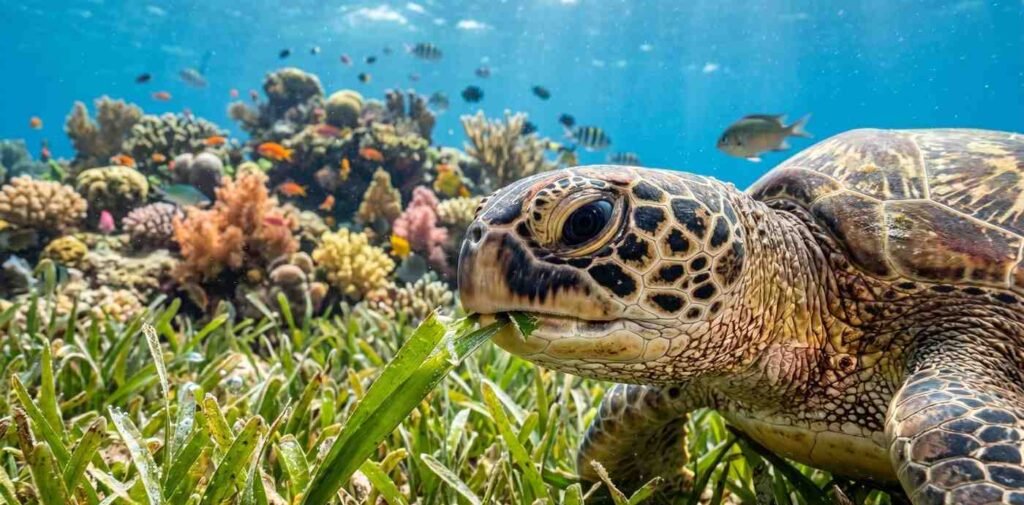
Green sea turtles live in a beautifully synergistic interaction with seagrass beds. They tend to nibble the tops off the grass blades rather than pulling up the whole plant. This precise grazing approach actually keeps the seagrass healthy, keeping it from growing too tall and obstructing sunlight from the bottom stems. The turtles are constantly pruning the grass, encouraging the plant to grow broader and thicker across the ocean floor. It is nature’s perfect landscaping service keeping the meadow nutritious for everyone.
Fish That Nibble on Seagrass
Big animals and reptiles rule the seagrass banquet, but the plant is also critical to many little fish. Parrotfish, known for their bright colors and beak-like teeth, are common visitors to seagrass beds. Although they mostly graze algae off coral reefs, they often come into the meadows to munch on epiphytes (small organisms living on the seagrass) and the grass itself. These habitats are also grazed actively by surgeonfish, known for the sharp “scalpels” at the base of their tails. They form big schools, darting about picking at the foliage.
Here are a few famous fish species you will find eating in seagrass beds:
- Parrotfish: They often feed on algae adhering to the blades of the seagrass.
- Surgeonfish: Feed continually on both the grass and accompanying algae.
- Pinfish: A smaller species that nibbles fast and in small bits at the plant material.
- Halfbeaks: Surface-dwelling fish that periodically dive down to graze on floating grass fragments.
These are important fishes in the food web. They eat the sea grass and the algae that grow on this grass, keeping the plants clean and able to photosynthesize. If the algae were allowed to spread unchecked, it would cover the seagrass and kill the entire meadow.
The Tiny Grazers: Sea Urchins and Crustaceans
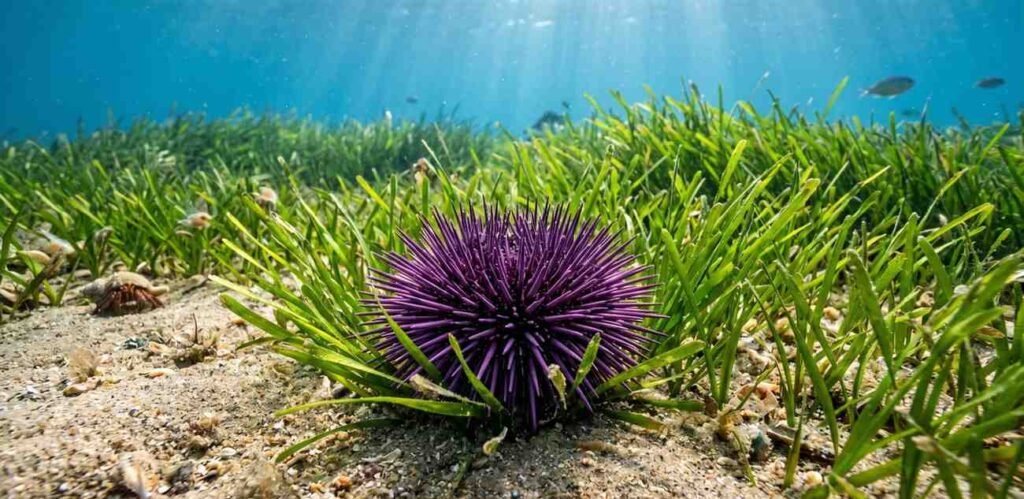
You do not have to be a giant to enjoy a wonderful seagrass lunch. At the tiny and minuscule levels an entirely different world of grazing is going on. Sea urchins are quite greedy about sea plants. On the underside is a powerful, star-shaped mouth with which they steadily scrape away at the blades and stems of grass. Sometimes, if predator numbers decline, an overpopulation of sea urchins can wipe out a seagrass meadow entirely.
The seagrass community includes important members such as crabs and small shrimp. Most crabs are scavengers, but some species, like the spider crab, do eat pieces of fresh and decaying seagrass. Tiny amphipods and isopods, or aquatic bugs, are clinging to the grass blades consuming the decaying plant matter and algae. These tiny grazers act as the ultimate cleanup staff for the ocean floor. In breaking down the dead plant material they recycle nutrients back into the ecosystem and feed the very roots of the plants on which they reside.
Surprising Seagrass Eaters: Waterfowl
f you wonder what animals eat sea grass, you may only think of animals that are fully submerged in water. But surprisingly many land birds depend substantially on shallow seagrass beds. At low tide large areas of coastal seagrass are exposed or brought very close to the surface. It offers a fantastic all-you-can-eat buffet for waterfowl such as swans, geese and ducks. The Brant Goose, for example, depends nearly entirely on eelgrass (a type of seagrass) for food during its winter migrations.
Their lengthy necks allow them to reach below the surface and pull up the rich grass blades and roots. Swans are especially good at this, using their size to dive into deeper parts of the vegetation where ducks can’t reach. Their travels typically correspond exactly to the growth cycles of particular species of seagrass. If these coastal meadows are lost to development, these migrating birds risk losing their most critical winter food source.” This indicates that seagrass has an influence that extends far beyond the limits of the ocean.
The Ecological Ripple Effect
Knowing what creatures consume sea grass is merely the first part of a much greater ecological puzzle. Finally, the energy these herbivores get from the seagrass moves up the food chain to the entire ocean. A turtle or a dugong eating seagrass turns that plant energy into body bulk. Eventually, these species become prey for apex predators like huge sharks and killer whales. Without the base energy supplied by the seagrass, these top predators would soon starve.
Seagrass beds are also recognised worldwide as important ‘nursery’ habitats. The dense web of blades offers the perfect hiding place for juvenile fish, infant sharks and tiny crabs. These newborns may not consume the grass themselves, but they do eat the little critters that do. The meadows are the backbone of this complex web of life, and their steady, ongoing expansion is essential. Seagrass is the quiet backbone of ocean stability, holding together the entire food chain.
The Alarming Decline of Seagrass Beds
Unfortunately, these essential undersea meadows are under tremendous assault globally. One of the major destroyers of marine grasses is agricultural runoff. Fertilizers that wash into the water create gigantic algal blooms that block out the sun — basically smothering the grass. Without sunshine the plants can not photosynthesize and the meadow dies. The herbivores have no nourishment at all.
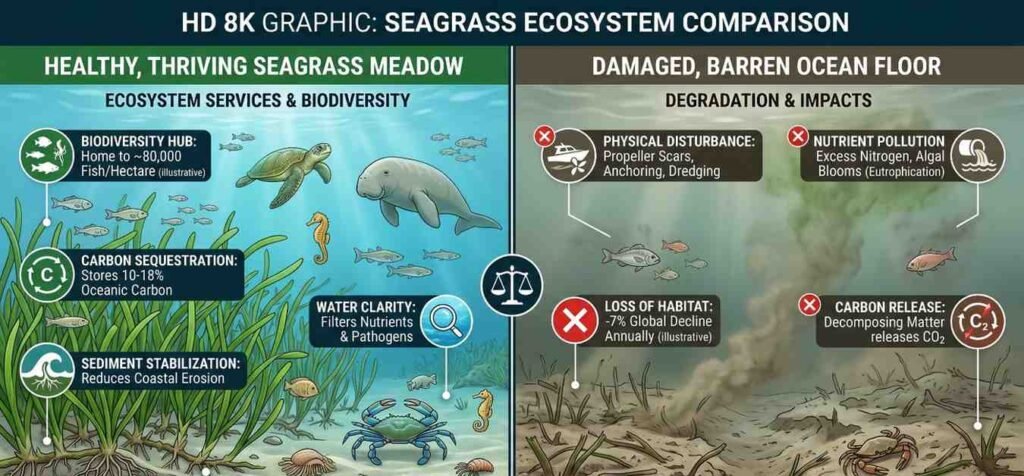
These delicate ecosystems are also ravaged by coastal development and damaging boating practices. Boat propellers frequently cut deep into shallow seagrass beds, ripping off roots that can take decades to recover organically. Furthermore, ocean warming from climate change is beyond the thermal limits of many seagrass species. When the meadows go, we immediately observe a tragic drop in the populations of manatees, turtles and dugongs. Protecting these ecosystems is no longer discretionary, it is a global ecological emergency.
How You Can Help Protect Seagrass Ecosystems
Even if you don’t live near the coast, you can assist to safeguard the species that eat sea grass. Everything is connected and lowering your carbon footprint directly contributes to stopping the ocean warming that kills marine vegetation. Promoting sustainable agriculture and minimizing chemical fertilizer use minimizes harmful runoff from flowing into coastal seas. For boaters, just knowing your depth and avoiding shallow grass beds can rescue thousands of plants.
Here are a few direct ways to contribute to seagrass conservation:
- Practice Safe Boating: Always elevate your motor in shallow waters to avoid prop scarring.
- Reduce Fertilizer Use: Choose organic yard care products that help minimize nutrients leaching into local waterways.
- Support Conservation Groups: Support or volunteer for groups working to restore marine habitat.
- Spread the Word: Tell others what creatures consume sea grass and why these habitats are important.
By taking these small steps, we can ensure that future generations get to witness sea turtles and manatees thriving in the wild.
Final Thoughts on Our Ocean’s Pastures
The topic of what eats sea grass opens up a beautifully interwoven world of aquatic life. From the mighty, gentle dugongs plowing the ocean floor to the tiny sea urchins keeping the blades clean, each creature has a role to play. They are the sea’s grocery stores, nurseries and water purifiers. When we lose them we lose the colorful animals that depend on them daily. Realizing their tremendous worth, we will be able to take the steps that need to be taken to save these wonderful underwater savannas for hundreds of years to come.