Discover the Amazing Animals That Live in Grass: A Complete Guide
The Magic of the Grassland Biome
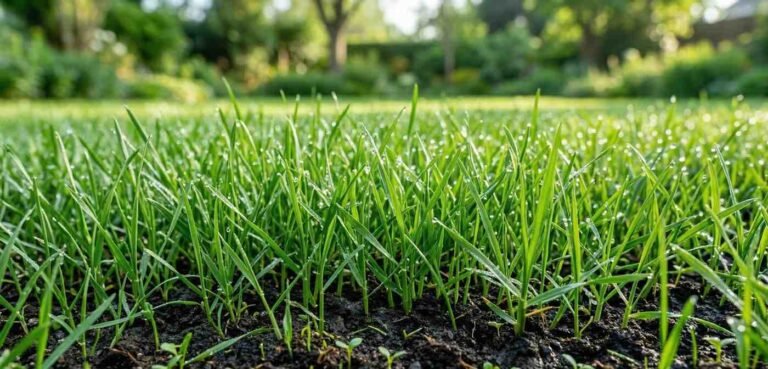
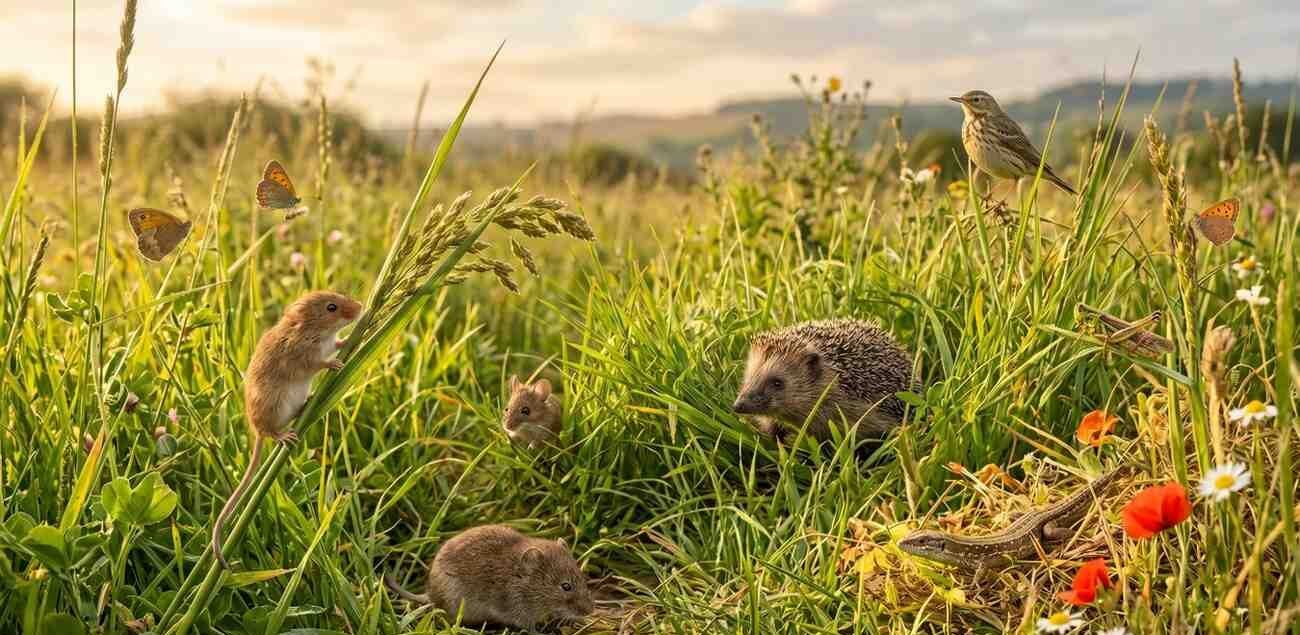
To understand the animals that live in grass, we first have to understand their house. Grasslands are places with not enough regular rain to grow a vast forest, but too much rain to let the area turn into a desert. This special climate creates seas of grass that provide food and shelter for innumerable species. There are no trees so the animals that live here are entirely exposed to the elements and to predators. So the animals that live in these areas have come up with some really incredible techniques to stay alive.
Grasslands are called many things depending on where in the world you are. In North America they are called prairies , in Africa savannas . South America has the rich pampas, and Europe and Asia the wide rolling steppes. Each of these places has its own distinctive cast of characters perfectly suited to their particular grassy habitat. So let’s look into the numerous types of animals that depend on grass to survive.
Tiny Titans: Insects and Bugs
When we imagine animals living in grass, insects are usually the first thing that comes to mind. They are the unquestioned base of the grassland food chain. Millions of small critters scurry, jump and fly through the thick foliage each and every day. They break down decaying plant material, pollinate the few flowers that blossom and are an important food source for bigger animals. This would mean that the entire grassland ecology would fold totally without insects.
Masters of Camouflage
Grasshoppers and crickets are probably the most iconic occupants of any grassy landscape. Their bodies are shaped and colored specially to fit in perfectly with the green and brown stalks.
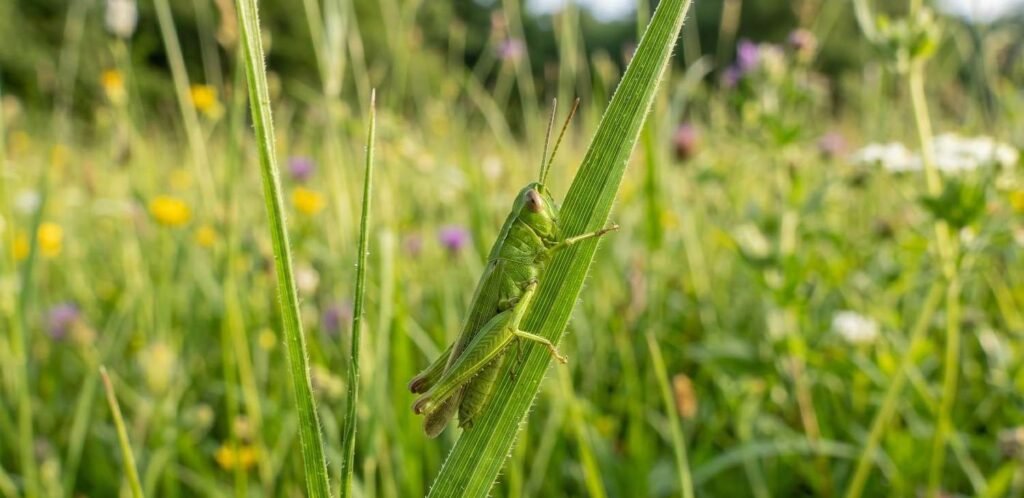
When predators come near, these insects leap into safety on their strong hind legs as they leap away from danger. Days are spent grazing on fresh grass, converting plant energy into protein for the birds and small mammals. Crickets take over at night, filling the air with their distinctive chirping melodies to attract mates.
The Ground Workers
If you look more closely at the dirt you will see a whole world of busy insects. Ants are the ultimate grassland builders, creating huge underground colonies that aerate the soil. By constantly digging, you help the water get down to the roots of the grass and keep the entire ecosystem healthy. Beetles, especially dung beetles, also provide an essential role by recycling animal waste into the earth. They’re nature’s little janitors, keeping the grassy plains fertile for fresh development.
Mammals that Call the Grass Home
In the microworld, insects govern, but the most noticeable residents of the grasslands are animals. Grass gives very little in the way of physical cover, therefore animal life here tends to divide into two ways. They either remain small enough to hide in the brush, or they grow large enough to defend themselves. We also encounter exceptionally fast runners who rely on speed to escape danger in the broad plains. Let’s look at the many creatures that live in this harsh landscape.
Small but Mighty Burrowers
For small mammals, the safest area in a grassland is frequently just below it. Voles, field mice and shrews spend their lives weaving between the dense mats of grass roots.
They dig secret runways at the level of the soil, so they can move safely out of sight of swooping eagles. These little rodents rely solely on grass stems and seeds for their daily sustenance. They reproduce so quickly that they have been able to keep their species alive even though just about every predator in the vicinity hunts them for food.
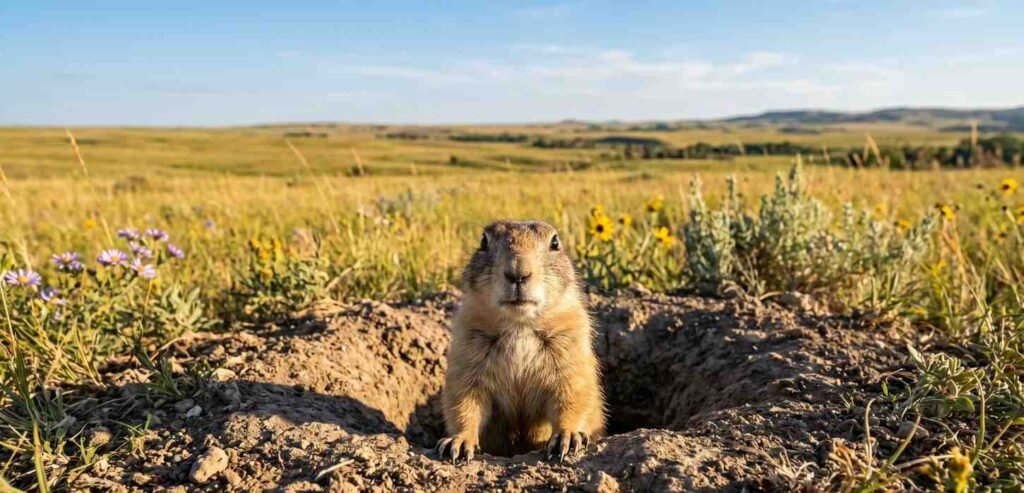
A good example of a very social grassland mammal is the prairie dog in North America. They live in enormous underground “towns” that can stretch for hundreds of acres and host thousands of inhabitants. Prairie dogs are the alarm system of the plains. They rise up on their hind legs and bark to alert others of an oncoming threat. They typically use the abandoned tunnels as dens for other animals, such as burrowing owls and black-footed ferrets.
The Great Grazers
You cannot describe creatures that dwell in grass without discussing the huge herds of herbivores. The African savanna is home to mind-boggling herds of grazing animals including zebras, wildebeests and gazelles. These animals are always on the move and follow the seasonal rains for new patches of green grass. Their digestive tracts are adapted to obtain necessary nutrients from tough, fibrous plant material.
In North America, the American bison once numbered in the tens of millions, dominating the prairie landscape.
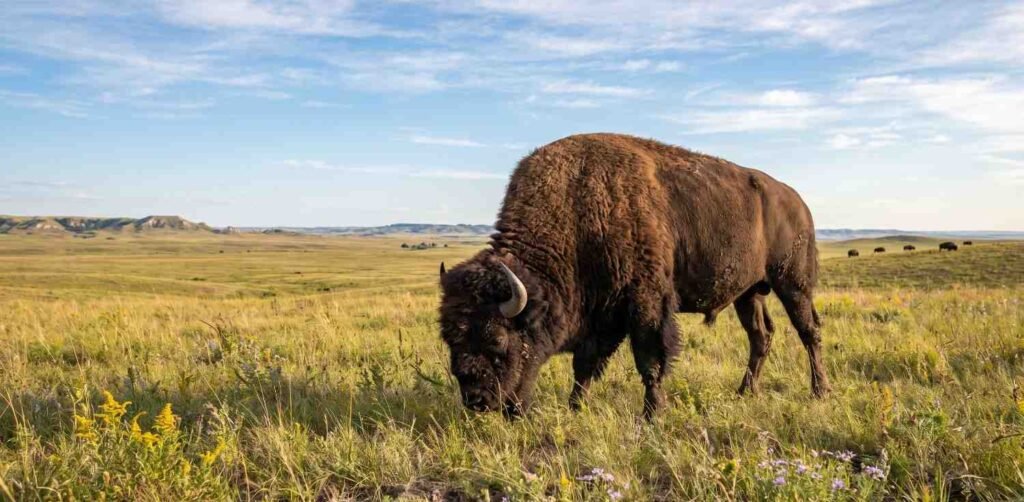
In fact, these large grazers encourage the grass to grow lush and robust by constantly cropping the tops off the plants. Kangaroos perform a similar ecological role in the vast grassy out backs of Australia. Instead of running, they move across the vast plains at great speeds using their muscular tails and hind legs.
The Apex Predators
Where there are large prey herds, predators are never far behind. In a land with no place to hide, grassland predators have to rely on stealth, speed or extraordinary collaboration to get a meal. In the African savanna, the cheetah is the undisputed king of speed, designed for quick, rapid sprints. They hide in the tall dry grass and, at a high speed, they creep as close as they can to their prey before giving chase.
Lions, on the other hand, rely on brute might and the coordinated tactics of the pride.
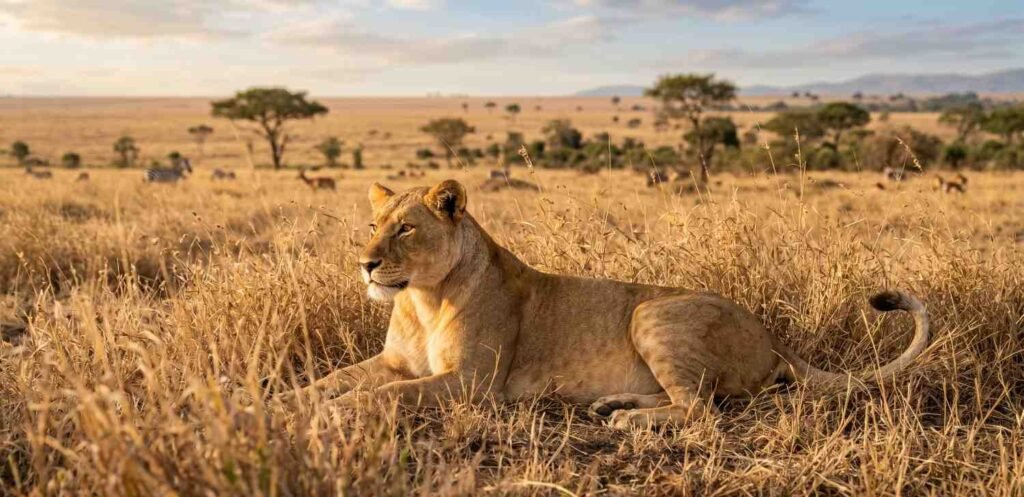
Their golden coats camouflage them on the sun-baked savanna, enabling them to set ambushes. In North American prairies, coyotes and badgers kill smaller mammals that take refuge in the bush. Interestingly, coyotes and badgers have also been observed to hunt together, combining the coyote’s speed with the badger’s digging skills.
Birds of the Grassy Plains
Grasslands are a bird’s heaven, full with insects and seeds. But the lack of trees creates a unique challenge for nesting and roosting. There are few branches and many grassland birds have adapted to make their nests straight on the ground. To do this, their eggs and chicks must be well hidden so that ravenous foxes and snakes cannot find them.
Songbirds and Ground Nesters
Meadowlarks are a typical icon of the American grassland with their vivid yellow chest and sweet voice.
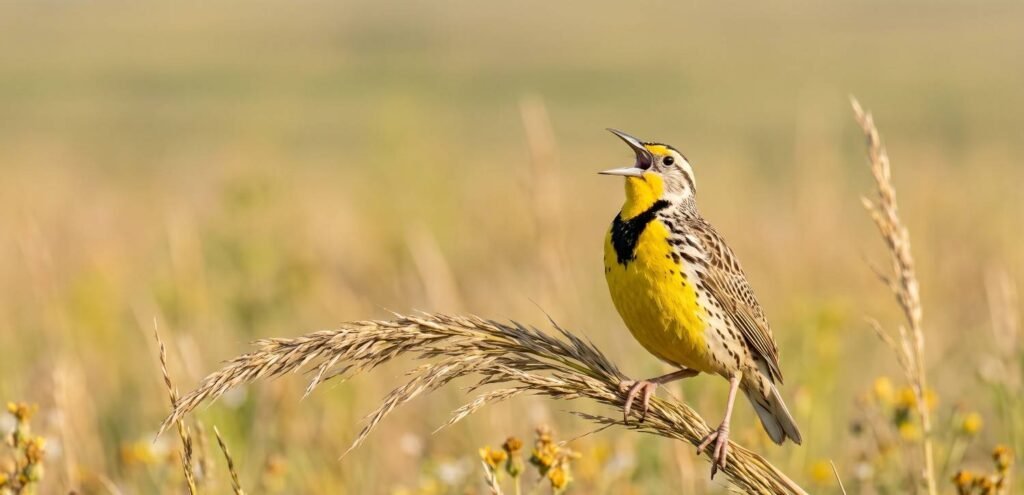
They construct intricate nests of dried grass and successfully conceal them among overhanging plants. The quails and pheasants are largely terrestrial birds, scurrying through the long grass rather than taking to the air. They only take off in brief, frenzied bursts when surprised by an oncoming predator.
Birds of Prey
The wide skies above the grasslands are heavily monitored by raptors hunting for an easy meal. Hawks, eagles, and falcons have extraordinary optics. They can see a mouse running over the grass from hundreds of feet in the air. They ride the thermal updrafts generated by the sun-baked plains and glide smoothly for hours. When they have picked out a target, they plunge down at breathtaking speeds to pluck their prey right out of the ground.
The Flightless Giants
Some grassland birds have even stopped flying altogether, instead choosing to get bigger and run faster. To get away from predators such as lions and leopards, they may run as fast as 43 miles per hour. In South America, the rhea has a very similar niche, striding rapidly across the pampas hunting for seeds and insects.
Slithering and Crawling: Reptiles and Amphibians
It’s easy to forget about the cold-blooded species that live in the grass. But reptiles and amphibians are key participants here. The thick grass is perfect cover from the hot sun of the day, and it keeps the ground damp for the amphibians. Snakes are particularly well adapted to this environment, as they lack limbs that would get caught in the thick stalks. They creep softly through the underbrush looking for frogs, mice and insects.
Snakes of the Grasslands
Garter snakes are among the most common sights in grassy fields and meadows throughout North America. They are absolutely harmless to people and do a great job of keeping the local bug and rodent populations in check. In drier, more arid grasslands, you are likely to encounter venomous creatures like rattlesnakes. These ambush predators can use their elaborate scale patterns to camouflage into the dry grass and wait for a tiny mammal to cross their path.
Lizards and Frogs
Various types of lizards scurry between the grass stalks, relying on their lightning-fast reflexes to catch flies and beetles. Many grassland lizards have evolved lengthy bodies and tails to enable them move easily through the thick grass. Amphibians, such as the chorus frog, thrive in the damp micro-climate surrounding the roots of grass. During the rainy season, these frogs emerge in large numbers, turning the plains into a symphony of loud, rhythmic croaking.
Incredible Survival Adaptations
Living in an environment with few places to hide takes some significant evolutionary ingenuity. Special morphological and behavioral characteristics have been developed by the animals living on grass to gain an advantage. Everything about them, from their appearance to the way they digest their food, is tailored for the broad plains. Here are some of the most typical adaptations in grassland fauna.
- Speed and Agility: Without trees to climb, animals like gazelles, hares, and ostriches rely on pure speed to escape danger.
- Camouflage: The same color palette of subdued greens, browns, and golds are used by many predators and prey to blend into the grass.
- Burrowing Abilities: Badgers and prairie dogs have strong front claws and unique lungs that allow them to dig complex underground castles.
- Heightened Senses: For example, zebras have huge ears and eyes on the sides of their heads so they can see 360 degrees of the open environment.
- Herd Behavior: Moving in large numbers makes it difficult for a predator to pick out an individual, which increases the chances of survival for the whole herd.
Why Grassland Ecosystems Matter
Animals that live in grass are not simply intriguing, they are critical to the health of our world. Grasslands are vast carbon sinks that take carbon dioxide out of the atmosphere and store it deep in their roots. Herbivores’ grazing continuously keeps the plant life healthy and stops dead material from accumulating and leading to huge wildfires. Every insect, bird, and mammal serves a distinct role in keeping this delicate equilibrium intact.
Animals that live in grass are not simply intriguing, they are critical to the health of our world. Grasslands are vast carbon sinks that take carbon dioxide out of the atmosphere and store it deep in their roots. Herbivores’ grazing continuously keeps the plant life healthy and stops dead material from accumulating and leading to huge wildfires. Every insect, bird, and mammal serves a distinct role in keeping this delicate equilibrium intact.
Worldwide, conservation projects are working to restore native grasses and return natural predators and grazers. These ecosystems are recovering thanks to national parks and programs that promote sustainable farming. Knowing the variety of organisms that rely on these fields can help us to better understand the urgency of protecting them. The next time you see an empty field, realize that it is actually a vibrant, complicated world all of its own.
Final Thoughts
The animals that live on grass are some of the hardest and most adaptable species on the world. Survival is the name of the game on the broad plains, from the tiniest soil mites to the giant elephants of the savanna. They’ve adapted to sprint quicker, burrow deeper and conceal better than creatures in practically any other ecosystem. Here, each being, from the tiniest insect recycling nutrients to the lion hunting its prey, has a purpose. Conserving these great oceans of grass will mean these wonderful stories of survival will continue for generations to come.