Do Ants Eat Grass? The Surprising Truth About Lawn Ants
If you spend any time maintaining a beautiful lawn, you have probably noticed tiny intruders marching across your turf. It is incredibly common to see worker ants scurrying through the green blades, sometimes carrying bits of organic matter. This frequent sight naturally leads homeowners to a very specific question: do ants eat grass? Seeing an ant carry a piece of greenery can easily make you think your lawn is their next meal. However, the ecosystem operating right under your feet is much more complex than it appears. Understanding what these insects are actually doing can save you a lot of unnecessary stress and expensive pest control treatments.
In this comprehensive guide, we are going to explore the fascinating relationship between ants and your lawn. We will uncover their true diet, explain why they love your yard so much, and discuss whether they pose a genuine threat to your pristine grass.
The Short Answer: Do Ants Eat Grass?
The simplest answer to this common gardening question is no. The vast majority of ant species do not eat grass, grass roots, or grass seeds as a primary food source. Their digestive systems are simply not designed to break down the tough cellulose found in grass blades. When you see an ant navigating through your turf, they are usually just using the grass as a highway. They are on a mission to find food, but the grass itself is not on the menu.

Instead of grazing like miniature cows, ants are mostly scavengers and predators. They are constantly hunting for things that offer high energy and rich nutrients. A blade of grass simply does not provide the concentrated calories an ant colony needs to thrive and expand. So, if your lawn is suddenly developing brown patches or thinning out, ants are rarely the direct culprits eating the foliage.
What Do Ants Actually Eat?
To understand why ants are hanging out in your yard, you have to know what they are actually hunting for. Ants are opportunistic omnivores, meaning they will eat almost anything they can find that provides nutritional value. Their diet can be broadly split into two main categories: proteins and carbohydrates. By foraging for these two food groups, they keep the colony strong and support the development of their young.
Here is a breakdown of what the ants in your lawn are typically eating:
- Other Insects: Ants are incredible natural pest controllers. They hunt and eat small caterpillars, insect eggs, termites, and even dead bugs they find in the soil.
- Honeydew: This is a sweet, sticky substance excreted by aphids and scale insects. Ants absolutely love honeydew and will aggressively protect the insects that produce it.
- Fallen Fruit and Nectar: If you have fruit trees or flowering plants near your lawn, ants will happily consume the sugary nectar and decaying fruit.
- Fungi: Some ant species cultivate and eat specific types of fungi that grow in decaying organic matter.
- Household Scraps: If your lawn is near a patio, ants will quickly clean up spilled soda, dropped chips, or pet food left outside.
As you can see, their diet is incredibly varied and relies heavily on proteins and sugars. Grass simply does not fit into either of these crucial categories. Therefore, your lawn is safe from being actively consumed by the average worker ant.
Why Are Ants Hanging Out in Your Grass?
If they aren’t eating your lawn, why are there thousands of them setting up camp in your yard? Your lawn provides the perfect environment for a colony to thrive. Grass creates a protective canopy that shields ants from harsh sunlight and heavy rain. The soil beneath your turf is also usually easy to excavate, making it the perfect real estate for building complex underground nests.
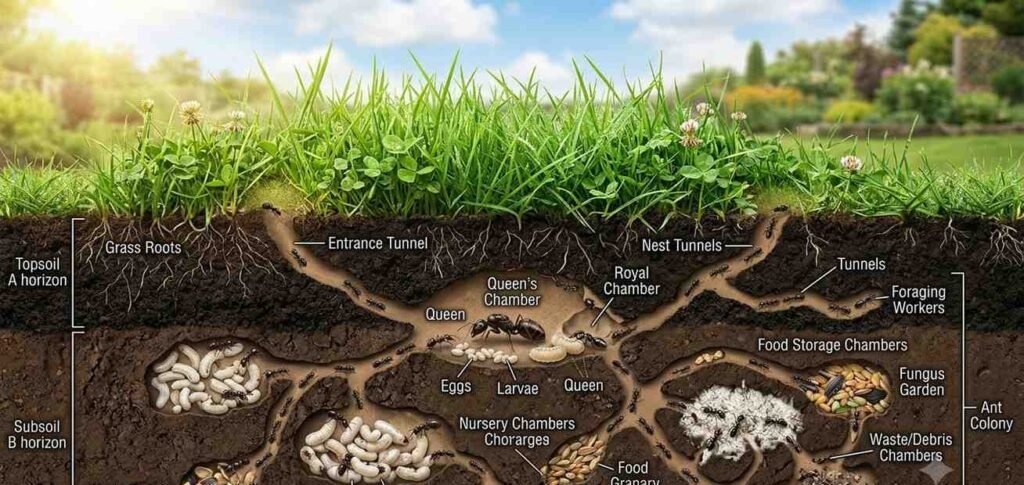
Furthermore, a healthy lawn is an entire ecosystem teeming with the exact food sources ants love. The thatch layer—the dead grass and organic matter sitting on top of the soil—is home to thousands of tiny insects. Ants patrol this layer to hunt these micro-pests, effectively turning your lawn into their personal grocery store.
Moisture is another massive draw for these insects. Regular lawn watering keeps the soil damp, which ants desperately need to prevent their colonies from drying out. Between the shelter, the abundant food supply, and the reliable moisture, your well-maintained lawn is essentially an insect paradise.
The Aphid Connection: Farming in Your Yard
One of the most fascinating reasons ants patrol your grass is to manage their “livestock.” Yes, certain species of ants actually function as tiny farmers. They seek out aphids, mealybugs, and scale insects that feed on the sap of your plants and weeds. When these sap-sucking insects digest plant juices, they excrete the sugary liquid known as honeydew.
Ants are highly addicted to this sugar source. Instead of eating the aphids, the ants protect them from natural predators like ladybugs. The ants will even “milk” the aphids by stroking them with their antennas to stimulate the release of honeydew. In some cases, ants will physically pick up aphids and move them to fresh, healthy plants to ensure a steady supply of sugar.

If you see a heavy concentration of ants in a specific patch of your lawn or garden, look closer. You might not have an ant problem; you might actually have an aphid problem. Treating the aphids will often cause the ants to pack up and leave naturally, as their primary food source is gone.
The Exception to the Rule: Leafcutter Ants
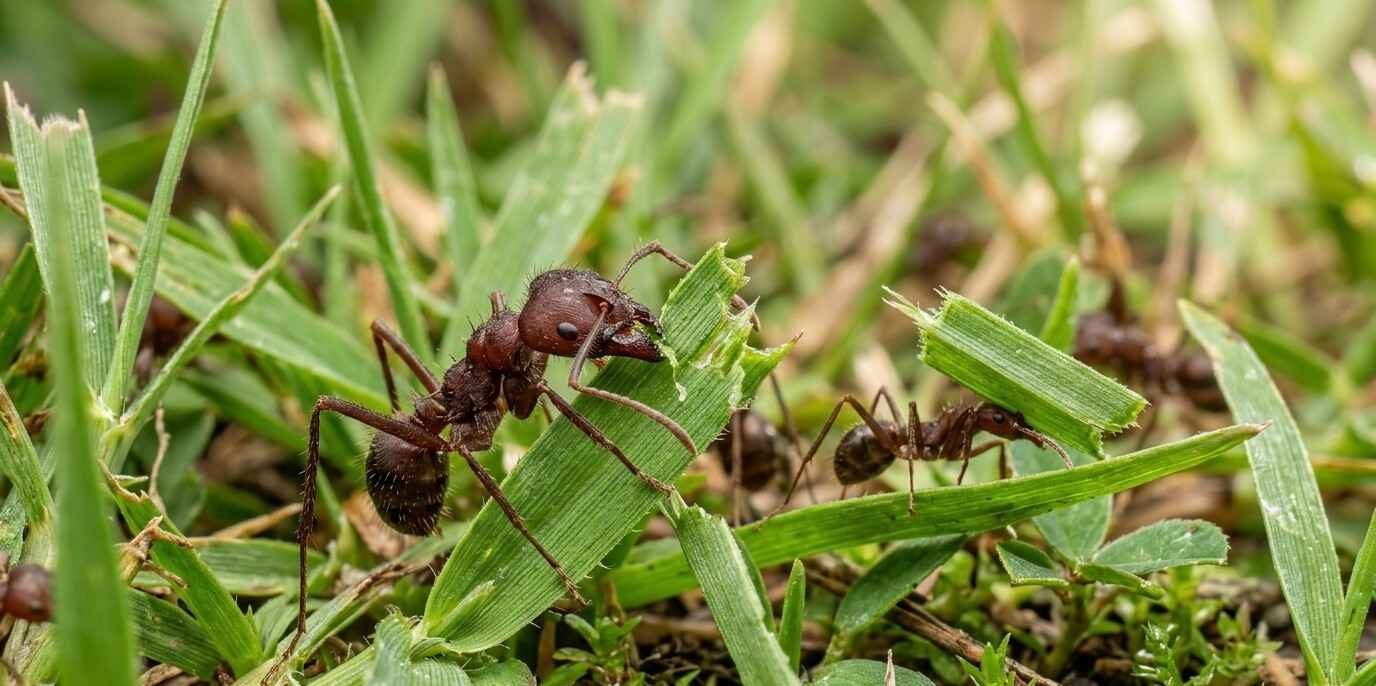
In nature, there is almost always an exception to the rule, and in this case, it is the leafcutter ant. Leafcutter ants are predominantly found in warmer, southern climates and tropical regions. These ants are famous for using their powerful jaws to slice perfect half-moons out of leaves and sometimes grass blades. If you live in an area where these ants are native, you might actually see them carrying pieces of grass back to their nest.
Despite their name, leafcutter ants aren’t snacking on the greenery they tirelessly collect—their stomachs simply aren’t equipped to break it down. Instead, they act as tiny, subterranean farmers. After hauling the vegetation into hidden underground vaults, they grind the leaves into a mushy compost. This organic paste is then carefully used to cultivate a highly specialized fungus, which serves as their actual food supply.
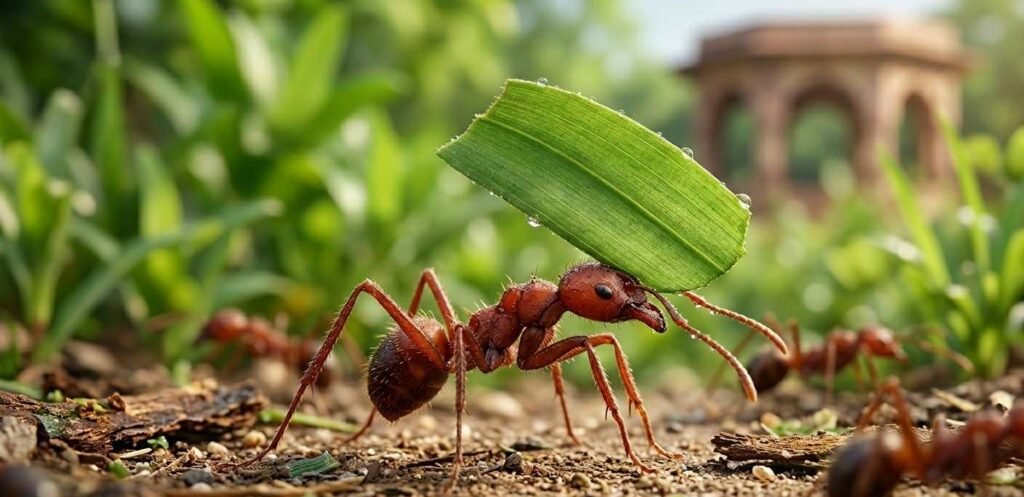
This underground fungus is what the leafcutter ants actually consume. The grass is simply the compost they use to keep their fungal gardens thriving. While they don’t eat the grass, a large colony of leafcutter ants can still cause cosmetic damage to a lawn by clipping the blades. If you suspect leafcutter ants are stripping your yard, you may need targeted pest control to protect your landscaping.
Do Ants Damage Lawn Grass?
Since we have established that most ants don’t eat grass, you might assume they are completely harmless to your yard. Unfortunately, ants can still cause secondary damage to your lawn through their nesting habits. When ants build their underground colonies, they excavate massive amounts of dirt. This soil is pushed up to the surface, creating the familiar anthills and mounds we all recognize.
These mounds can smother the grass beneath them, blocking sunlight and preventing photosynthesis. Over time, the grass covered by the mound will turn yellow and die. Additionally, the tunneling activity below the surface can disrupt the root system of your turf. If the roots are exposed to air pockets created by ant tunnels, they can dry out, leading to brown, dead patches on the surface.
Furthermore, anthills can be a massive nuisance when it comes to lawn maintenance. Running a lawnmower over a large dirt mound dulls the mower blades rapidly. It also spreads the excavated dirt across the surrounding grass, creating a muddy mess if the lawn is wet. So, while the ants are not eating the turf, their construction projects can certainly degrade the look of your yard.
The Benefits of Having Ants in Your Lawn
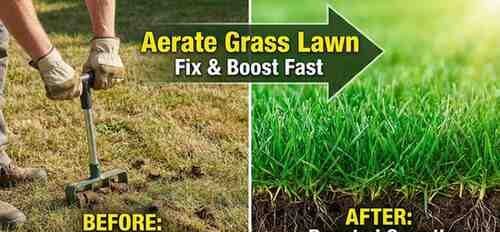
Before you rush to the hardware store for harsh chemical pesticides, it is worth considering the positive role ants play. Ants are actually incredibly beneficial to the local ecosystem and the overall health of your soil. Just like earthworms, ants are fantastic natural aerators. Their constant tunneling helps loosen compacted soil, allowing oxygen, water, and nutrients to reach the grass roots more easily.

Ants also act as a vital cleanup crew for your yard. They break down dead insects, decaying plant matter, and animal waste, speeding up the decomposition process. This organic material is dragged down into their tunnels, effectively fertilizing the soil from the inside out. Without ants, the thatch layer on your lawn would build up much faster, leading to potential fungal diseases.
Finally, ants are a crucial part of the food web. They serve as a primary food source for a variety of birds, frogs, lizards, and beneficial predatory insects. By completely eradicating ants from your yard, you might inadvertently drive away beautiful local wildlife that relies on them for sustenance. Maintaining a balanced population, rather than total annihilation, is usually the best approach for a healthy garden.
Signs of Ant Damage vs. Other Lawn Pests
Because brown patches can be caused by dozens of different issues, it is important to accurately identify the culprit. Homeowners often blame ants for lawn damage simply because the ants are highly visible. However, if your grass is dying in large, irregular patches, the real enemy might be lurking out of sight. Grubs, chinch bugs, and lawn diseases are far more destructive to turf than a standard ant colony.
White grubs, for example, actually do eat grass roots. If your lawn is dying and the turf peels back easily like a loose carpet, you have grubs, not an ant problem. Chinch bugs suck the sap directly out of grass blades, leaving behind large, expanding patches of yellowing turf. If you part the grass and see tiny black and white insects near the soil line, chinch bugs are to blame.
The main sign of ant-related damage is always localized around a physical mound of dirt. If the grass is dying but there are no soil mounds present, ants are likely just passing through. Always inspect the affected area closely before applying pesticides to ensure you are treating the correct problem.
How to Manage Ants in Your Yard Safely
If the ant population in your yard has grown out of control, you may need to intervene. The goal should be management rather than complete eradication, keeping the ecosystem balanced while protecting your lawn’s aesthetics. The best first step is to simply rake out any small anthills as soon as they appear. Scattering the dirt exposes the colony to sunlight and predators, which often encourages them to relocate naturally.
You can also make your lawn less hospitable by adjusting your watering habits. Ants prefer consistently moist soil to build their nests. By watering your lawn deeply but infrequently, you allow the top layer of soil to dry out between waterings. This creates an environment that is excellent for deep grass roots but highly uncomfortable for nesting ants.
If you need a more direct treatment, consider using natural or organic deterrents before turning to toxic chemicals. Diatomaceous earth is a natural powder that destroys the exoskeleton of insects, and it can be sprinkled safely around mounds. Boiling water poured directly into a large anthill is also a highly effective, chemical-free way to reduce a problematic colony. For severe, recurring infestations, using slow-acting ant baits allows the workers to carry the poison deep into the nest, eliminating the queen without spraying harmful toxins all over your yard.
Conclusion: Coexisting with Lawn Ants
In the end, the panic over whether ants eat grass is largely unfounded. Your lush green lawn is completely safe from being devoured by these tiny, industrious insects. Instead of viewing every ant as a threat to your turf, you can now recognize them as complex scavengers and beneficial soil aerators. They are simply living their lives, hunting for protein, seeking out sugar, and building their homes in the shelter your grass provides.
While their mounds can be a slight cosmetic annoyance, the benefits they provide to the soil often outweigh the negatives. By understanding their true diet and behavior, you can make smarter, more eco-friendly decisions about lawn care. Next time you see an ant marching across a blade of grass, you can rest easy knowing your lawn is not on their lunch menu. With simple cultural practices and a little patience, you can maintain a beautiful yard while coexisting peacefully with nature’s ultimate cleanup crew.