Why Does My Cat Eat Grass? A Complete Guide for Pet Parents
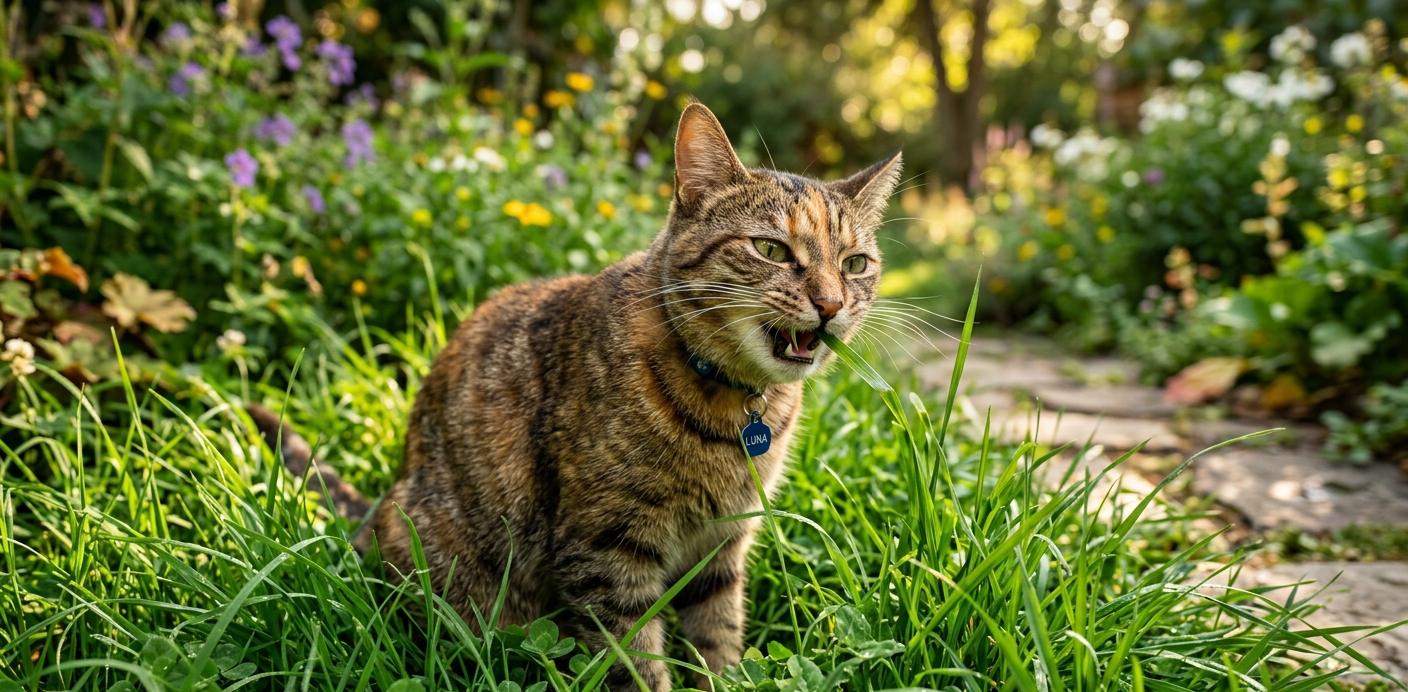
Have you ever watched your majestic indoor panther suddenly turn into a grazing cow? It is a strange sight that leaves many pet parents scratching their heads in confusion. You likely invest in high-quality, protein-packed feline nutrition for your furry best friend. Yet, given the chance, your feline companion heads straight for the lawn to chew on weeds. Fortunately, this perfectly common behavior is completely normal and rooted in instinct.
Understanding exactly why does my cat eat grass requires looking closely at feline biology. Cats are obligate carnivores, meaning they biologically require meat to survive and thrive. They actually lack the specific enzymes needed to digest plant matter efficiently. However, their wild ancestors frequently consumed vegetation for very specific health reasons. Today, our modern domesticated friends proudly carry on this ancient, deeply ingrained instinct.
While it might seem alarming when your cat throws up right after grazing, this is often intentional. The process of eating grass and subsequently vomiting serves a physiological purpose. It acts as a natural reset button for their delicate digestive systems. However, as a responsible pet owner, you must know when this behavior is safe. You also need to know when it signals a deeper health issue requiring veterinary attention.
The Evolutionary Roots of Feline Grazing
To understand this quirky habit, we must look back at the ancestors of our modern cats. In the wild, cats consume their prey entirely, including bones, fur, and feathers. These indigestible parts can easily cause serious blockages in a wild cat’s digestive tract. Eating grass was nature’s way of helping them clear out these unwanted materials. The fibrous texture of the plant matter essentially triggers a natural purging mechanism.
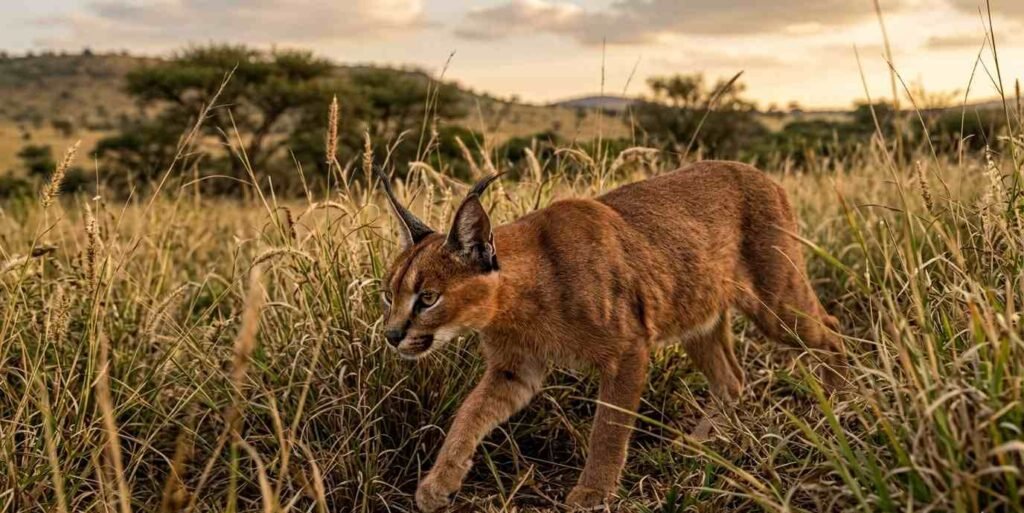
Even though your indoor cat eats processed kibble or pate, the instinct remains strongly intact. They no longer need to purge mouse bones, but they still ingest indigestible matter. Grooming is a huge part of a cat’s day, leading to the ingestion of loose fur. This fur builds up over time in the stomach, creating uncomfortable hairballs. Eating grass remains their most reliable, instinctual method for finding quick physical relief.
Evolution has also taught cats that certain plants contain vital, life-sustaining nutrients. Before the invention of perfectly balanced commercial cat food, felines had to forage. They relied on their environment to supplement whatever their prey lacked on any given day.
Top Reasons Why Cats Graze on Lawns
“Why does my cat eat grass?”, they will several factors. There is no single answer because every cat has unique physiological and behavioral needs. Some cats graze strictly for digestive management, while others do it purely out of boredom. Identifying your specific cat’s motivation can help you manage their overall health and happiness better. Below are the most heavily researched reasons behind this fascinating feline behavior.
Natural Relief for Stubborn Hairballs
As mentioned, cats are fastidious groomers who swallow a significant amount of loose hair. This hair cannot be easily digested and often forms dense mats in the stomach. When a hairball becomes too large to pass through the intestines, it causes discomfort. Grass acts as an irritant to the stomach lining, which gently induces vomiting. This allows the cat to safely expel the hairball before it becomes a dangerous blockage.
The Quest for Essential Folic Acid
Grass is surprisingly rich in folic acid, which is also known as Vitamin B9. Folic acid is an essential nutrient that aids in the production of healthy red blood cells. It also plays a vital role in synthesizing DNA and promoting healthy oxygen levels. A mother cat’s milk contains folic acid, making it a familiar nutrient to young kittens. If your cat feels slightly deficient, they may naturally seek out grass to compensate.
Acting as a Gentle, Natural Laxative
Not all ingested grass results in a dramatic vomiting session on your living room rug. Sometimes, the grass travels completely through the feline digestive tract without being thrown up. When this happens, the tough plant fiber acts as a highly effective natural laxative. It adds necessary bulk to their stool, helping to push waste through the intestines smoothly. If your cat is experiencing mild constipation, a little grass can provide tremendous relief.
Behavioral Triggers, Stress, and Boredom
Sometimes, the answer to why cats eat grass is purely psychological rather than physical. Indoor cats can easily become bored if they lack sufficient environmental enrichment and playtime. Chewing on interesting textures provides a much-needed sensory experience for an under-stimulated feline. Furthermore, some cats chew on plants as a coping mechanism for underlying stress or anxiety. It can become a soothing, repetitive behavior much like a human biting their nails.
Is Eating Grass Actually Bad for Cats?
The eating of grass is not bad. In fact, veterinary experts widely consider it a normal, healthy part of feline behavior. The grass itself does not possess any toxic properties that will harm your pet’s internal organs. The occasional post-grass vomiting is also considered standard and usually not a cause for alarm.
However, the true danger lies not in the grass itself, but in what might be on it. Outdoor lawns are often treated with a variety of dangerous chemical products to keep them pristine. Heavy pesticides are highly toxic to cats. If your cat ingests grass coated in these chemicals, they could suffer severe poisoning. Symptoms of chemical ingestion include excessive drooling, seizures, severe lethargy, and uncontrollable vomiting.
Therefore, grazing on unknown outdoor lawns is a habit you should actively discourage. Additionally, some common outdoor and indoor plants are deadly look-alikes to safe grasses. Lilies, sago palms, oleander, and tulips can cause fatal kidney or liver failure if nibbled. A cat seeking out grass might mistakenly chew on these toxic plants instead. As a responsible pet parent, you must strictly monitor what greenery your cat has access to. Creating a safe, controlled grazing environment is the best
The Dangers of Outdoor Lawns and Gardens
Allowing your cat to roam freely in the backyard comes with several hidden botanical risks. Even if you do not use chemicals, your neighbors’ lawn treatments can easily drift over. Runoff rainwater can also carry toxic fertilizers directly into the patches of grass your cat prefers. You simply cannot guarantee that random outdoor weeds are completely free of dangerous synthetic residues.
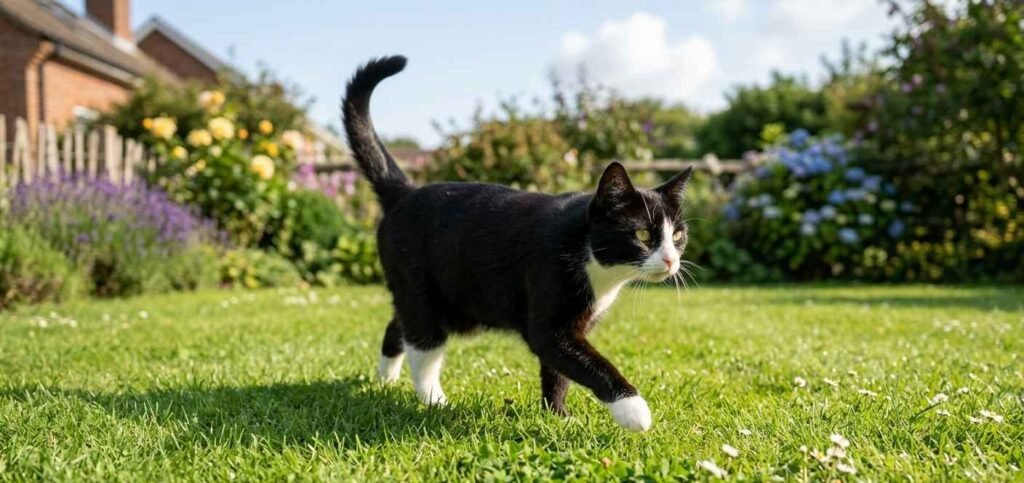
Beyond chemicals, outdoor grass poses a biological threat in the form of dangerous parasites. Stray animals and wild rodents frequently pass through yards, leaving behind invisible traces of feces. These droppings can easily contaminate the surrounding grass with roundworms, hookworms, or other internal parasites. When your cat consumes this tainted grass, they unknowingly ingest the parasite eggs as well. This can lead to a severe infestation that requires immediate medical deworming by a vet.
Finally, some wild grasses have sharp, microscopic barbs along their physical edges. These rough edges can easily cause micro-abrasions in your cat’s throat and delicate esophagus. In rare cases, tough outdoor grass blades can even become lodged in the nasal cavity. This causes chronic sneezing, severe irritation, and potential respiratory infections if left untreated. For these reasons, uncontrolled outdoor grazing is generally discouraged by modern veterinary professionals.
Cat Grass: The Perfect Safe Indoor Alternative
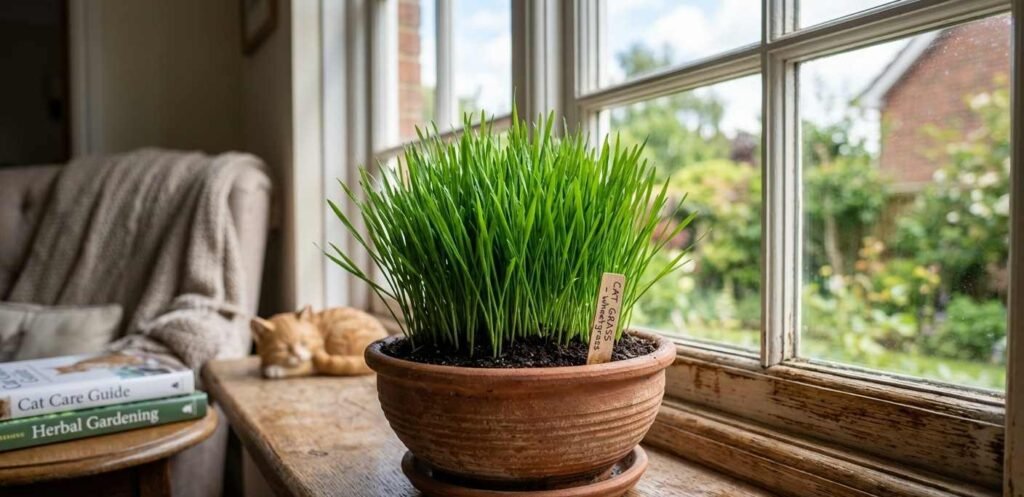
If your cat is desperate to graze, you do not have to fight their natural instincts. The absolute best solution is to provide them with a safe, dedicated indoor alternative. “Cat grass” is a broad term used for a variety of safe, nutritious grasses grown specifically for pets. You can easily purchase these in pet stores or grow them yourself from cheap seeds. Offering safe cat grass completely eliminates the risks associated with outdoor chemical exposure and parasites.
Cat grass gives your pet a designated, approved area to fulfill their chewing desires. It successfully distracts them from attacking your expensive, potentially toxic household houseplants. Because it is grown in controlled soil, you know exactly what your cat is ingesting. It provides all the digestive and nutritional benefits without any of the hidden outdoor dangers. Best of all, most cats vastly prefer the tender, sweet taste of indoor cat grass.
Types of Safe Grass for Cats
Not all grasses are created equal when it comes to pleasing a picky feline palate. There are several popular varieties of cat grass, each offering slightly different textures and benefits. You may need to experiment with a few types to see which one your cat prefers. All of these options are incredibly easy to grow and completely safe for feline consumption.
- Wheatgrass: This is the most common and popular choice among feline enthusiasts. It is packed with beneficial vitamins, minerals, and amino acids that support overall feline health.
- Oat Grass: Known for being slightly sweeter, oat grass is highly palatable to fussy eaters. It grows quickly and features wider blades that are very satisfying for cats to chew.
- Barley Grass: This variety grows incredibly fast and reaches an impressive height. It is exceptionally high in fiber, making it excellent for cats struggling with chronic hairballs.
- Ryegrass: This grass is very durable and holds up well to aggressive, frequent chewing. It is a fantastic option for multi-cat households where the grass pot sees heavy daily traffic.
Step-by-Step Guide to Growing Cat Grass at Home
Sprouting your own cat grass is remarkably cheap, rewarding, and foolproof. You don’t need any prior gardening experience to create a lush, vibrant indoor oasis for your pet. By following a few basic steps, you can provide endless fresh greens for your companion. Here is exactly how to start your very own indoor feline grazing station today.
- Select the Right Container: Choose a heavy, shallow pot that your cat cannot easily tip over. Ensure the pot has proper drainage holes at the bottom to prevent harmful mold growth.
- Choose Organic Soil: Always use organic, fertilizer-free potting soil to ensure maximum safety. Avoid any dirt that contains synthetic growth boosters or water-retaining chemical crystals.
- Plant the Seeds: Sprinkle your chosen cat grass seeds generously across the surface of the damp soil. Lightly cover them with a very thin, quarter-inch layer of additional soil.
- Water and Wait: Mist the soil gently with a spray bottle to keep it constantly moist but not soggy. Keep the pot in a dark, warm place for a few days until tiny sprouts appear.
- Provide Sunlight: Once the seeds proudly sprout, move the pot to a bright, sunny windowsill. The grass will be ready for your eager cat to eat when it reaches four inches tall.
When Should You Worry? Signs to Visit the Vet
While eating grass is overwhelmingly normal, there are times when it signals a medical emergency. You know your cat’s normal baseline behaviors better than anyone else does. If their grazing habits suddenly change overnight, it is time to pay close attention. An obsessive, frantic need to eat grass can indicate severe gastrointestinal distress or blockages. It is always better to be proactive rather than reactive regarding feline health.
If your cat eats grass and vomits excessively, completely losing their appetite, call the vet. Frequent vomiting can quickly lead to severe, life-threatening dehydration in small animals like cats. Furthermore, if you notice your cat straining in the litter box despite eating grass, beware. This could mean the grass has caused an intestinal impaction rather than acting as a laxative. Blood in the vomit or stool is another undeniable red flag requiring immediate emergency care.
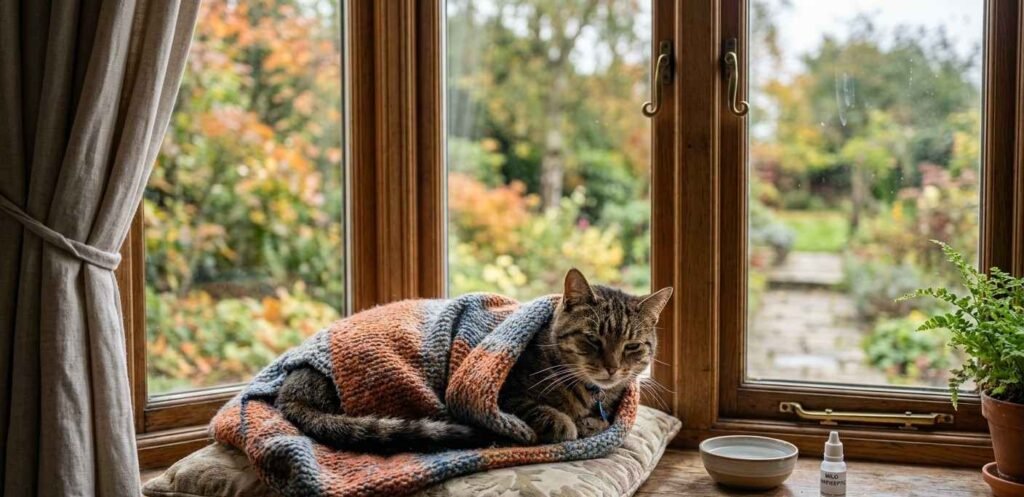
You should also consult a vet if the grass-eating is accompanied by sudden lethargy. A cat that hides, refuses to play, and obsessively eats houseplants is clearly in pain. Sometimes, chronic grazing is a desperate attempt to soothe an undiagnosed condition like inflammatory bowel disease. Your veterinarian can run blood panels and perform ultrasounds to rule out serious underlying illnesses. Never ignore a sudden, drastic shift in your pet’s normal daily routines.
How to Manage Your Cat’s Grazing Habit Safely
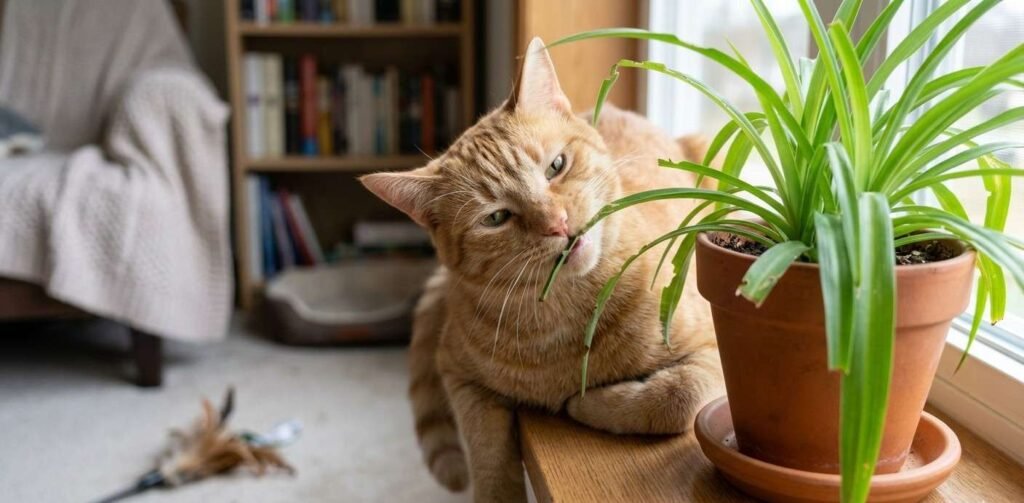
Managing this natural instinct comes down to redirection, supervision, and environmental enrichment. You cannot train the deeply ingrained biological urge to chew out of a cat. Instead, you must actively shape how and where they are allowed to express this behavior. The first crucial step is completely removing all toxic houseplants from your indoor living spaces. Replace them with pet-safe options like spider plants, Boston ferns, and dedicated pots of cat grass.
If your cat is an avid outdoor explorer, consider building them a secure “catio.” A catio is an enclosed outdoor patio that allows cats to enjoy nature safely. You can stock the catio with safe, organic grasses while keeping them away from chemical-treated lawns. When supervising your cat outdoors on a harness, gently pull them away from unknown weeds. Reward them with high-value treats when they choose to ignore the dangerous outdoor greenery.
Lastly, ensure you are adequately addressing the root causes of their urge to graze. Brush your cat daily to drastically reduce the amount of loose fur they swallow. Feed them a high-quality, vet-approved diet to ensure they lack no essential daily nutrients. Most importantly, provide plenty of interactive toys to keep their active minds thoroughly stimulated. A happy, well-groomed, and entertained cat will naturally obsess over eating grass much less.
Frequently Asked Questions (FAQs)
Pet parents constantly search for clarity regarding their feline’s bizarre, grass-eating behaviors. Below are the most frequently asked questions surrounding this incredibly common topic. These concise answers will help put your worried mind at total ease.
Can kittens eat cat grass safely?
Yes, kittens can safely consume indoor cat grass once they are fully weaned onto solid food. However, you must monitor them closely to ensure they do not choke on long, tough blades. It is a fantastic way to introduce them to safe chewing habits early in life.
Why does my cat throw up immediately after eating grass?
Cats lack the specific digestive enzymes required to break down raw plant matter properly. The grass heavily irritates their stomach lining, causing an intentional, natural purging reflex. This helps them effectively expel indigestible matter like stubborn hairballs and lingering parasites.
Is it bad if my cat eats grass every single day?
Nibbling on safe, indoor cat grass daily is generally fine if they act perfectly normal otherwise. However, if they are obsessively eating it and constantly vomiting, consult a veterinarian immediately. Daily vomiting can easily lead to dangerous dehydration and severe esophageal irritation.
Can I give my cat lawn clippings?
No, you should never feed your cat loose lawn clippings from your yard mower. Lawn clippings ferment rapidly, which can cause severe, painful gastrointestinal upset for your cat. They also likely contain dangerous traces of toxic motor oil, pesticides, and chemical fertilizers.
How long does indoor cat grass live?
Cat grass is a short-lived crop that typically only lasts about two to three weeks. Once the blades begin to yellow or wilt, the grass loses its nutritional value. You should regularly plant new seeds in a separate pot to maintain a fresh, continuous supply.
Conclusion: Embracing Your Cat’s Wild Side
The simple answer to the common question, “why does my cat eat grass?” is beautifully complex. It is a brilliant mix of evolutionary survival, digestive maintenance, and instinctual feline behavior. Your pampered indoor kitty is simply listening to the ancient, wild whispers of their ancestors. They are actively seeking out a natural method to soothe their stomach and regulate their digestion.
Instead of fighting this perfectly natural urge, pet parents should actively embrace and support it. By providing safe, chemical-free indoor cat grass, you protect your pet from outdoor dangers. You simultaneously allow them to express their normal biological behaviors in a healthy, controlled environment. Monitoring their habits ensures you catch any potential underlying health issues before they become severe. With a little understanding and a small pot of seeds, you can easily keep your grazing panther perfectly happy.