
Black Elephant Ear Plant Care: The Ultimate Guide to Growing Colocasia ‘Black Magic’
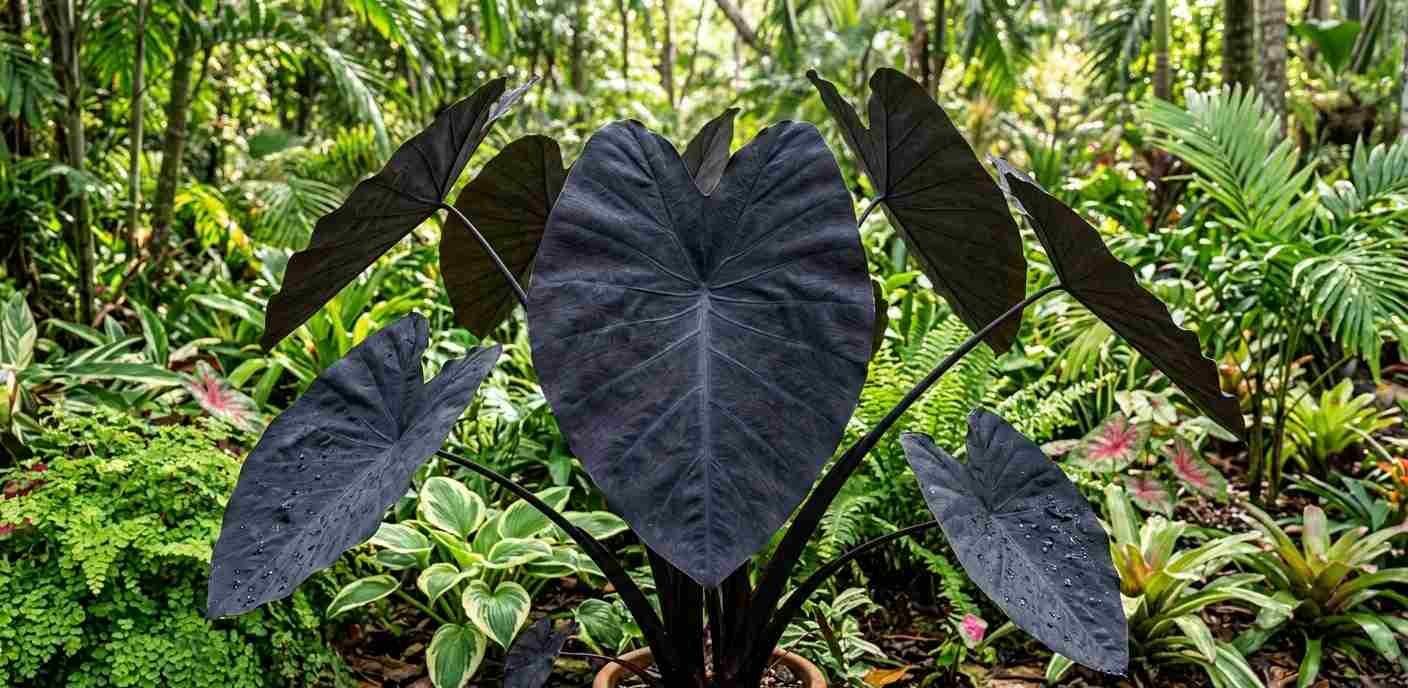
If you are looking to add a touch of mystery, drama, and tropical grandeur to your garden, few plants compete with the Black Elephant Ear. Known scientifically primarily as Colocasia esculenta ‘Black Magic’ (and related cultivars), this plant is a showstopper. With its massive, heart-shaped leaves that range from dusty purple-black to glossy obsidian, it creates a stunning focal point that contrasts beautifully with the bright greens and floral colors of a typical landscape.
In this comprehensive guide, we will explore everything you need to know about the Black Elephant Ear plant. From its botanical origins to advanced propagation techniques, pest management, and design ideas, this is your ultimate resource for cultivating the “goth” of the garden world.
1. Botanical Profile: What is the Black Elephant Ear?
To understand how to care for this plant, we must first understand what it is. “Elephant Ear” is a common name used for several genera in the family Araceae (Aroids), primarily Colocasia, Alocasia, and Xanthosoma.
The most famous “Black Elephant Ear” is the Colocasia esculenta ‘Black Magic’.
Key Characteristics
- Scientific Name: Colocasia esculenta
- Common Names: Black Elephant Ear, Taro, Dasheen.
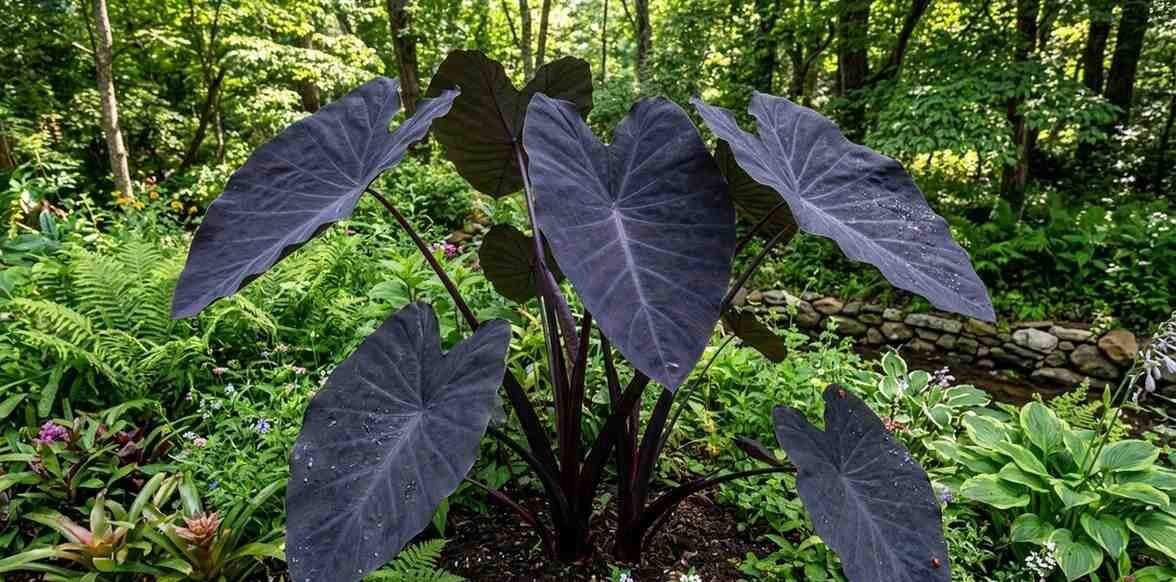
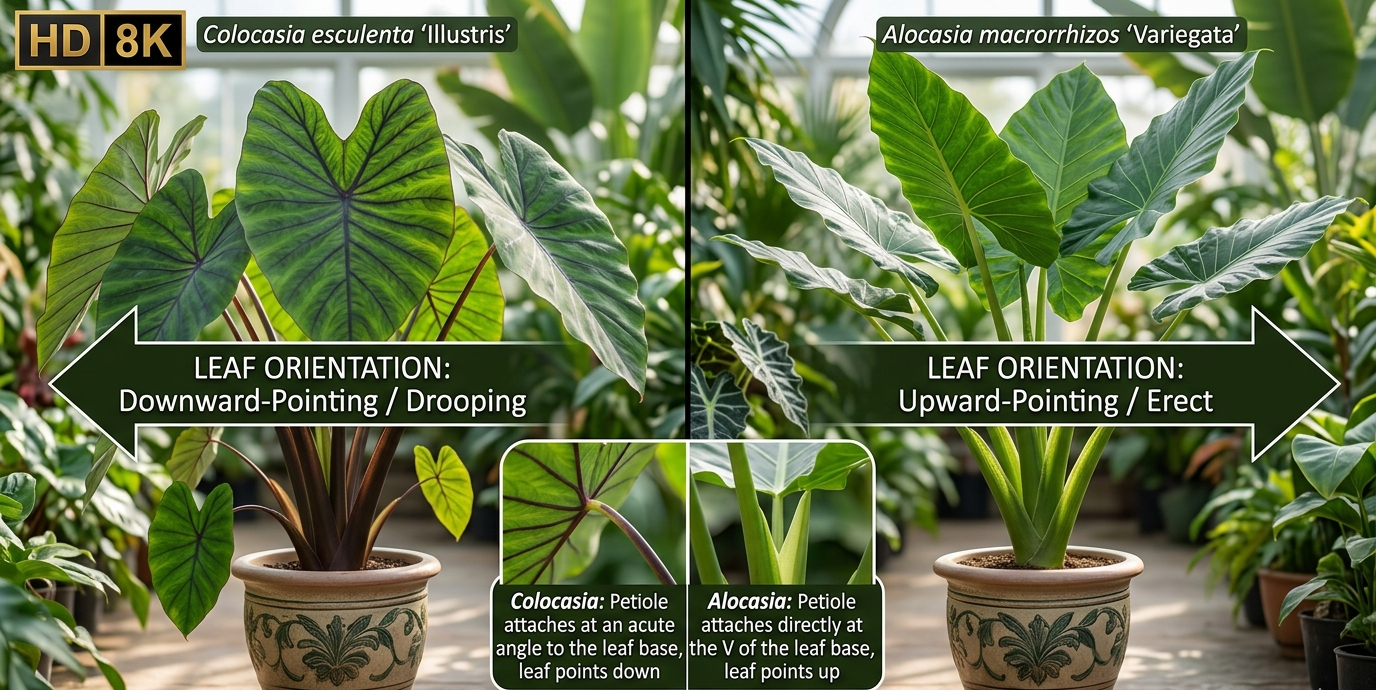
- Foliage: Leaves can grow up to 2-3 feet long. They are peltate (stem attached to the middle of the leaf underside) and point downwards.
- Coloration: The dark color is due to high concentrations of anthocyanin pigments. Interestingly, the leaves often emerge green and darken as they mature and absorb sunlight.
Colocasia vs. Alocasia
It is vital not to confuse Colocasia black varieties with Alocasia black varieties (like Alocasia ‘Black Velvet’).
- Colocasia: Leaves usually point down; they prefer moist to wet soil (some can even grow in water).
- Alocasia: Leaves usually point up; they prefer well-draining soil and will rot in standing water.
2. Popular Varieties of Black Elephant Ears
While ‘Black Magic’ is the classic, breeders have developed several stunning cultivars. Choosing the right one depends on the texture and size you desire.
1. Colocasia ‘Black Magic’
The original classic. It features dusty, matte charcoal-black leaves. The stems are a deep purple. It creates a soft, velvety appearance in the garden.
2. Colocasia ‘Black Coral’
If you prefer shine over matte, ‘Black Coral’ is the choice. It has glossy, jet-black leaves with a corrugated texture. It is arguably darker than ‘Black Magic’ and reflects light beautifully.
3. Colocasia ‘Black Ripple’
A smaller variety, perfect for containers. The leaves are puckered and deeply corrugated, reflecting light in a way that highlights the dark purple-black hues.
4. Colocasia ‘Diamond Head’
Named after the volcanic cone in Hawaii, this variety has broad, glossy dark purple leaves with a spectacular shine. It is known for being slightly more robust in its upright growth habit.
5. Alocasia ‘Black Velvet’
Distinctly different, this is a dwarf variety usually grown as a houseplant. It has thick, stiff leaves that are almost black with stark white veins.
| Variety | Texture | Size | Best Use |
|---|---|---|---|
| Black Magic | Matte/Velvet | Large (4-6 ft) | Pond margins, backgrounds |
| Black Coral | Glossy | Large (4-6 ft) | Focal points |
| Black Ripple | Puckered | Medium (3-4 ft) | Containers, Patios |
| Diamond Head | Glossy | Large (4-5 ft) | Landscape borders |
3. Ideal Growing Conditions
The Black Elephant Ear is a tropical tuber. It craves heat, humidity, and moisture. If you treat it like a desert plant, it will fail. If you treat it like a rainforest inhabitant, it will thrive.
Sunlight Requirements
Light is the most critical factor for coloration.
- Full Sun: For the deepest, darkest black color, these plants usually require full sun (at least 6 hours of direct light).
- Partial Shade: They can survive in partial shade, but the leaves will likely remain green or a washed-out purple. The anthocyanins (dark pigments) are produced as a “sunscreen” response to intense light.
Note for Hot Climates: In extremely hot regions (like Arizona or parts of Australia), afternoon shade is beneficial to prevent leaf scorch.
Soil Preferences
- Rich and Loamy: The soil should be rich in organic matter. Amend your garden beds with compost, peat moss, or leaf mold.
- Acidity: Slightly acidic to neutral soil (pH 5.5 to 7.0) is ideal.
Water: The Thirsty Giant
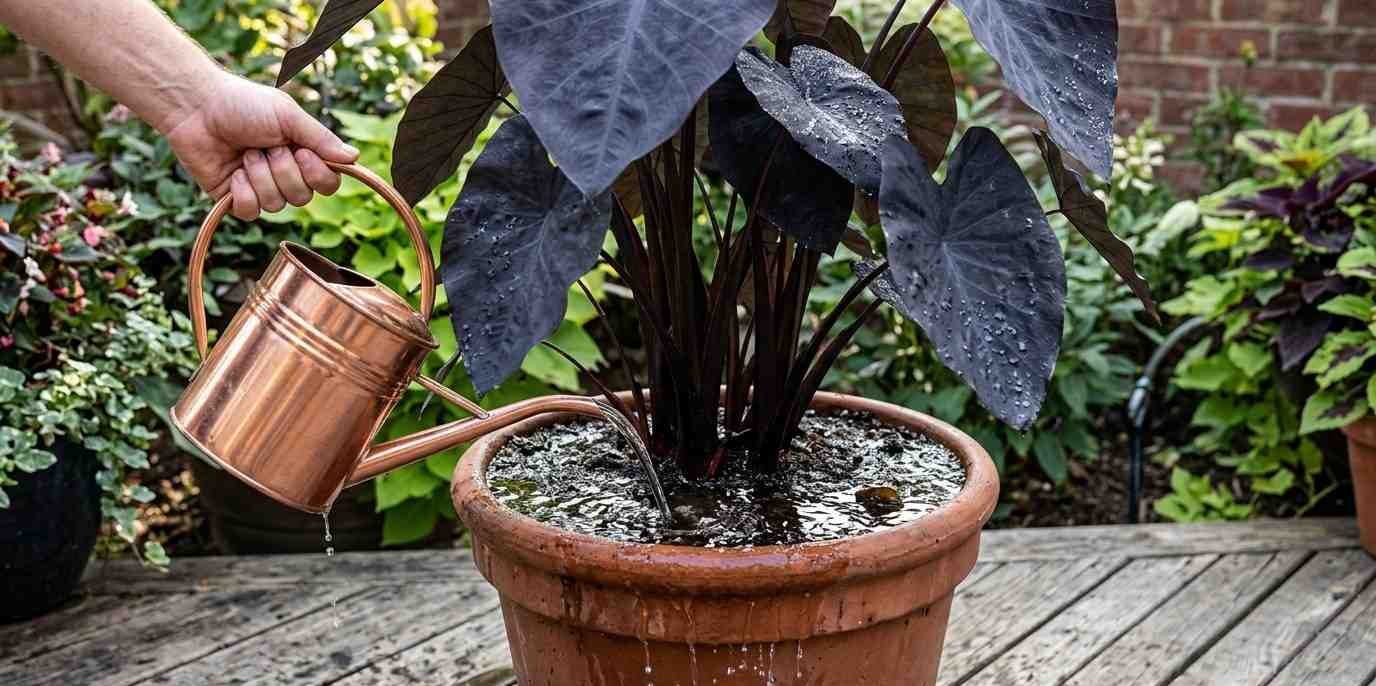
Unlike many garden plants that fear “wet feet,” Colocasia loves water.
- Consistency: Keep the soil consistently moist.
- Water Gardens: Varieties like ‘Black Magic’ can actually be grown directly in water features. You can submerge the pot up to the rim in a pond.
- Drought Stress: If the plant droops, it needs water immediately. Repeated drought stress causes brown, crispy edges on the beautiful leaves.
4. Planting Guide: Step-by-Step
Whether you are planting a tuber (bulb) or a potted nursery plant, correct planting ensures a season of massive growth.
When to Plant
Do not rush! Elephant Ears are extremely frost-sensitive.
- Soil Temperature: Wait until the soil has warmed to at least 65°F (18°C).
- Timing: usually late spring, a few weeks after the last frost date.
Planting Tubers
- Dig a Hole: Dig a hole about 2–4 inches deep.
- Orientation: Look for the concentric rings on the tuber. The knobby end is usually the top. If you are unsure, plant it sideways; the plant will correct itself.
- Spacing: These plants get huge. Space tubers at least 3–4 feet apart to allow for spread.
- Cover: Cover with soil and water thoroughly.
Planting Potted Plants
- Dig: Dig a hole twice the width of the root ball.
- Amend: Mix the native soil with compost.
- Place: Set the plant in so the top of the root ball is level with the ground surface.
- Mulch: Apply a thick layer (2-3 inches) of mulch to retain moisture.
5. Care and Maintenance
Once established, the Black Elephant Ear is a fast grower. It needs fuel to sustain those massive solar-panel leaves.
Fertilization
These plants are “heavy feeders.” To get giant leaves, you must fertilize.
- Frequency: Apply a water-soluble fertilizer every 2–3 weeks during the growing season.
- Type: A balanced fertilizer (like 10-10-10) or one high in Nitrogen is best, as Nitrogen promotes leafy growth.
- Slow Release: Mixing a slow-release granular fertilizer into the soil at planting provides a steady baseline of nutrients.
Pruning and Grooming
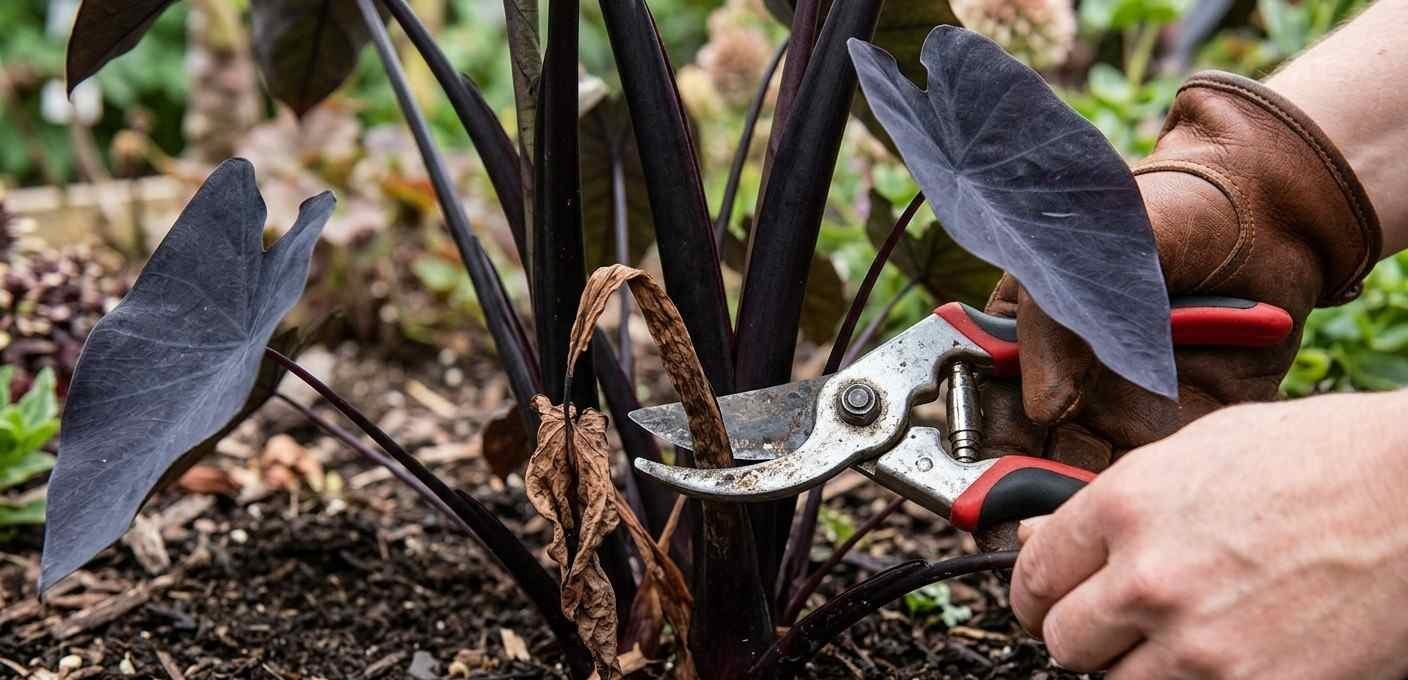
Black Elephant Ears are constantly renewing themselves. As a new leaf unfurls from the center, an older leaf on the outside will naturally fade, yellow, and droop.
- The Routine: This is normal. Simply cut the dying leaf off at the base of the stem with clean shears.
- Safety: The sap can be irritating to the skin. Wear gloves when pruning.
6. Pests and Diseases
Despite their robust appearance, Black Elephant Ears are susceptible to a few specific pests.
Spider Mites
These are the number one enemy. They love the dry, warm surface of the large leaves.
- Symptoms: Tiny yellow dots (stippling) on the leaves, or fine webbing on the undersides. The leaves may look dusty.
- Treatment: Blast the leaves with water to dislodge them.
Aphids
- Symptoms: Clusters of small green or black insects on new growth or stems.
- Treatment: A strong spray of water or Neem oil usually works well.
Fungal Leaf Blight
In very humid, stagnant conditions, fungal spots can appear.
- Prevention: Water the soil, not the leaves. Ensure good air circulation around the plant.
7. Overwintering: Saving Your Bulbs
If you live in USDA Zone 8 or warmer, you can likely leave your Black Elephant Ears in the ground (with mulch). If you live in Zone 7 or colder, the frost will kill the tuber. You must bring them inside.
Method A: Digging Up the Tubers
- Wait for Frost: Wait for the first light frost to kill back the foliage. This signals the tuber to go dormant.
- Cut Back: Cut the stems down to about 2-4 inches above the tuber.
- Dig: Carefully dig up the root ball. Be gentle; tubers can be damaged easily.
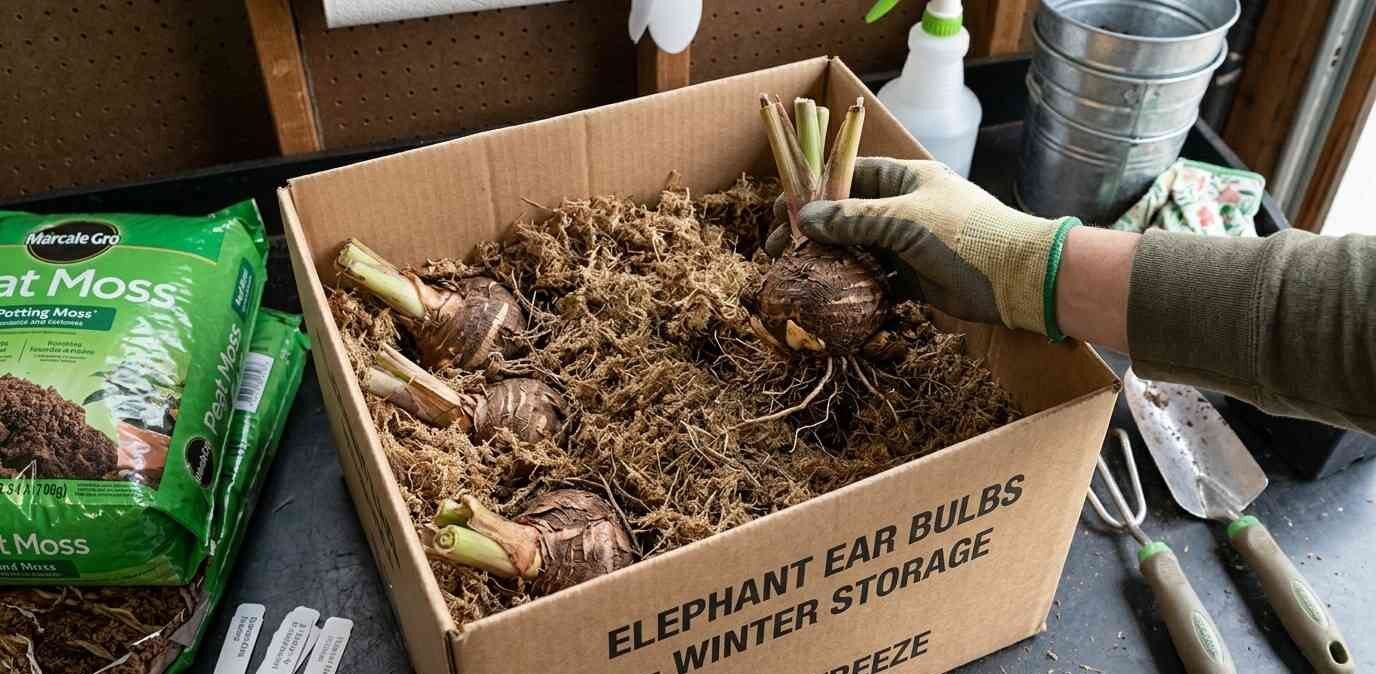
- Dry: Let the tubers dry (cure) in a warm, dry place for a few days. Brush off excess soil.
- Store: Wrap them in peat moss or newspaper and store them in a cool (50°F), dark place like a basement or garage. Do not let them freeze.
Method B: Keeping as a Houseplant
You can bring the whole pot inside, but be warned:
- They require very bright light (grow lights are recommended).
- They are prone to spider mites indoors.
- They may go semi-dormant and stop growing; reduce watering if this happens.
8. Propagation Techniques
One of the joys of growing Black Elephant Ears is that they multiply. One tuber planted in spring can turn into a clump of five or six by autumn.
Division (The Easiest Method)
Colocasia spreads by sending out runners (stolons) or producing offsets attached to the main tuber.
- Timing: The best time to divide is in the fall when digging them up, or in the spring before planting.
- Separation: You will see smaller “baby” tubers attached to the “mother” tuber. Gently snap or cut them off.
- Healing: Let the cut surfaces callous over for a day before replanting to prevent rot.
Runners
Some varieties send out long runners above the soil.
- Pinning: You can pin a node of the runner into a separate pot of soil while it is still attached to the mother plant.
- Rooting: Once it roots, cut the runner connecting it to the main plant.
9. Designing with Black Elephant Ears
The aesthetic power of the Black Elephant Ear lies in contrast. A black plant against bare soil looks lost; a black plant against neon green looks electric.
Color Combinations
- Chartreuse: Pair ‘Black Magic’ with Sweet Potato Vine ‘Marguerite’ or Golden Creeping Jenny. The yellow-green makes the black pop.
- Hot Pink/Fuchsia: Planting near bright pink Impatiens or Petunias creates a tropical, moody vibe.
- Silver: Silver foliage plants like Brunnera or Dusty Miller create a sophisticated, modern look against the dark leaves.
Container Gardening
Black Elephant Ears make excellent “Thrillers” in the “Thriller, Filler, Spiller” container formula.
- Thriller: Colocasia ‘Black Ripple’ (Center/Back).
- Filler: White Caladiums or Coleus.
- Spiller: Lime green Sweet Potato Vine.
10. Troubleshooting Common Issues
Even the best gardeners face issues. Here is a quick diagnostic guide.
1. Why are my Black Elephant Ear leaves turning green?
- Cause: Lack of sunlight.
- Fix: Move the plant to a sunnier spot. The dark pigment needs UV light to develop.
2. Why are the edges of the leaves brown and crispy?
- Cause: Under-watering or low humidity.
- Fix: Increase watering frequency. If indoors, use a humidifier.
3. The stems are drooping and soft.
- Cause: Root rot (if soil is soggy and cold) or extreme thirst.
- Fix: Check soil moisture. If bone dry, water. If soaking wet and smelling distinctively “swampy,” you may have rot. Let it dry out or treat with a fungicide.
4. The plant isn’t growing.
- Cause: Soil is too cold or lack of nutrients.
- Fix: Elephant ears stall in temperatures below 70°F. Wait for heat. Also, apply liquid fertilizer.
11. Toxicity and Safety
It is crucial to note that all parts of the Black Elephant Ear plant contain calcium oxalate crystals.
- Mechanism: These crystals are like microscopic needles. If chewed or ingested, they cause immediate and intense burning, swelling of the mouth, throat, and tongue.
- Pets: Keep these plants away from dogs and cats that like to chew.
- Humans: The plant is technically edible (it is Taro, after all) only if cooked thoroughly to break down the crystals. However, ornamental varieties are not grown for food quality. Do not eat them raw.
- Handling: The sap can cause skin irritation (contact dermatitis) in sensitive individuals. Always wash hands after pruning.

12. Frequently Asked Questions (FAQ)
Q: Can I grow Black Elephant Ears indoors permanently?
A: Yes, but it is challenging. They need high humidity (60%+) and very strong light to maintain their black color. Without it, they tend to become leggy, green, and prone to mites.
Q: How big do they get?
A: In a single season, a ‘Black Magic’ can reach 4 to 6 feet in height with a similar spread.
Q: Do they flower?
A: Yes, they produce a spathe and spadix flower (similar to a Peace Lily), usually creamy yellow. However, the flowers are often hidden by foliage and are not the main attraction. Many gardeners cut them off to divert energy back to the leaves.
Q: My bulb is soft/squishy. Is it dead?
A: Unfortunately, yes. A squishy bulb usually indicates rot. It should be firm, like a potato. Discard rotting bulbs to prevent spreading infection.
Conclusion
The Black Elephant Ear plant is more than just a vegetable; it is a design statement. Whether you choose the velvety ‘Black Magic’ or the glossy ‘Black Coral’, growing these dark beauties brings a touch of the exotic tropics to your backyard.