

What does the Bible say about a falcons?
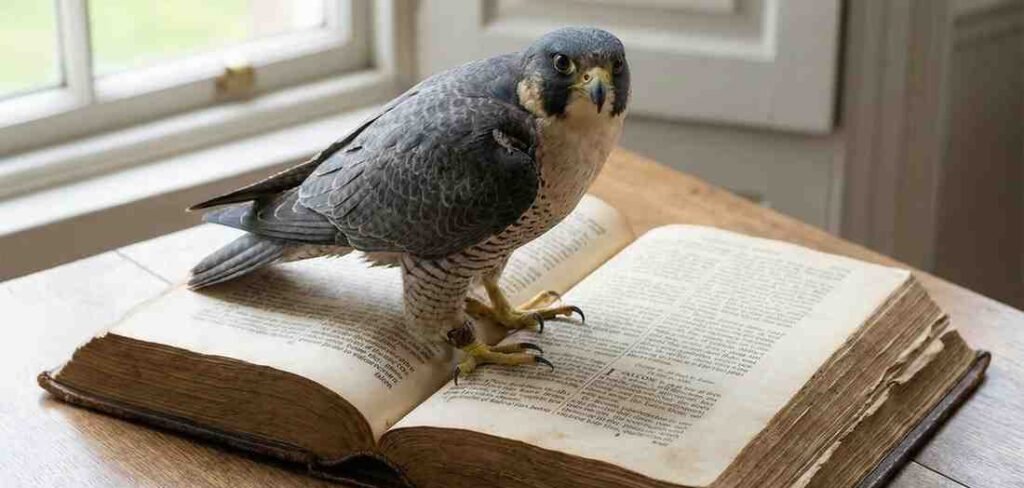
In the Bible, the falcon is primarily mentioned in the Old Testament within the lists of dietary restrictions found in Leviticus 11:14 and Deuteronomy 14:13. In these passages, God instructs the Israelites on which animals are “clean” to eat and which are “unclean.” The falcon is classified as an unclean bird, strictly forbidden for consumption alongside other birds of prey like eagles, vultures, and hawks. While different Bible translations (such as the KJV or NIV) may alternate between “kite,” “falcon,” or “vulture” for the specific Hebrew word used, the context consistently places it in a category of predatory birds that were not to be hunted for food.
Beyond these legal texts, the falcon is admired in the Book of Job for its incredible biology, specifically its legendary eyesight and flight. Job 28:7 uses the bird to illustrate the hidden nature of divine wisdom, stating, “That path no bird of prey knows, neither has the falcon’s eye seen it,” acknowledging that while the falcon has perhaps the sharpest vision in the animal kingdom, even it cannot see the depths of God’s wisdom. Additionally, Job 39:26 asks, “Is it by your understanding that the hawk soars and spreads his wings toward the south?” referring to the migratory instincts of falcons and hawks to show that the complex patterns of nature are directed by the Creator, not by human logic.

Are falcons mentioned in the Bible?
Yes, falcons appear in the Bible, most notably within the detailed dietary codes of the Mosaic Law found in the Old Testament. In both Leviticus 11:14 and Deuteronomy 14:13, the falcon is explicitly categorized as an “unclean” animal, meaning it was strictly forbidden for the Israelites to use as food.1 These passages group the falcon with other carrion-eaters and birds of prey, such as eagles and vultures, reflecting a spiritual and hygienic mandate to avoid consuming animals that feed on flesh. Translations of these verses can vary, with the specific Hebrew term ay-yah sometimes being rendered as “kite,” “falcon,” or “vulture,” but the context universally identifies a keen-sighted raptor that was protected from the hunting pot by divine decree.2
Beyond the legal restrictions, the falcon is used poetically in the Book of Job to illustrate the limits of human perception compared to divine wisdom.3 In Job 28:7, the text references the bird’s legendary visual acuity, stating, “There is a path which no fowl knoweth, and which the vulture’s eye hath not seen,” with many modern translations using “falcon” to capture the intended meaning of a bird with superior sight.4
What do falcons mean spiritually?
Spiritually, the falcon is a powerful symbol of clear vision, mental focus, and victory over obstacles. Because of its legendary eyesight and ability to fly at high altitudes, the bird often represents the ability to see the “bigger picture” and rise above mundane problems to gain a higher perspective. In many traditions, seeing a falcon is considered a sign to sharpen your focus on your goals, suggesting that success is within reach if you act with precision and speed. It acts as a messenger of mental clarity, encouraging individuals to plan their next move with strategy rather than emotion.
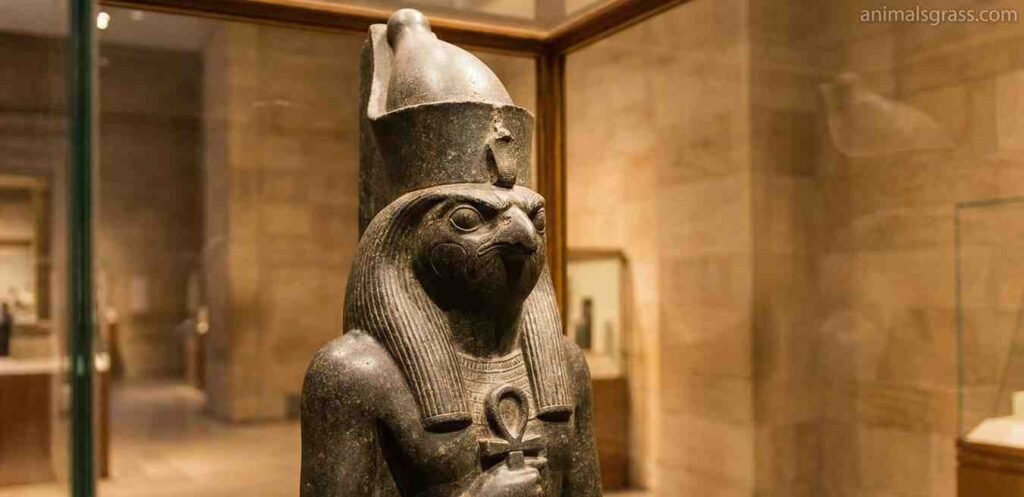
Historically, the falcon has been revered as a solar emblem, representing the light of the soul and spiritual enlightenment. In ancient Egypt, the falcon-headed god Horus symbolized divine protection and the triumph of light over darkness, cementing the bird’s status as a guardian of royalty and spiritual power. For modern seekers, the falcon spirit animal embodies freedom and liberation, urging one to break free from restrictive habits or negative thinking. It serves as a reminder that spiritual evolution requires both the grounding of earthly discipline and the courage to soar into the unknown.

What God do the falcons symbolize?
The most prominent deity associated with the falcon is Horus, the ancient Egyptian god of the sky, kingship, and divine protection. Often depicted as a man with the head of a falcon or simply as a giant falcon wearing the Double Crown of Egypt, Horus was one of the most significant gods in the Egyptian pantheon. He was believed to be the son of Isis and Osiris, and his right eye represented the sun (power) while his left eye represented the moon (healing). The falcon’s ability to dominate the sky made it the perfect symbol for the Pharaoh, who was considered the “living Horus,” serving as the earthly embodiment of the god’s authority and the protector of the people.
In addition to Horus, the falcon is closely linked to Ra (or Re), the supreme sun god. As the deity who ruled over the sky, earth, and underworld, Ra was frequently merged with Horus to form Ra-Horakhty, translated as “Ra, who is Horus of the Two Horizons.” This composite deity was depicted as a falcon-headed man crowned with a solar disk and a cobra, symbolizing the sun at its zenith. Because of these powerful associations, the falcon was not just seen as a bird in the ancient world, but as a manifestation of celestial power, representing the sun’s dominance and the watchful eye of the heavens over the earth.
What does the falcon symbolize?
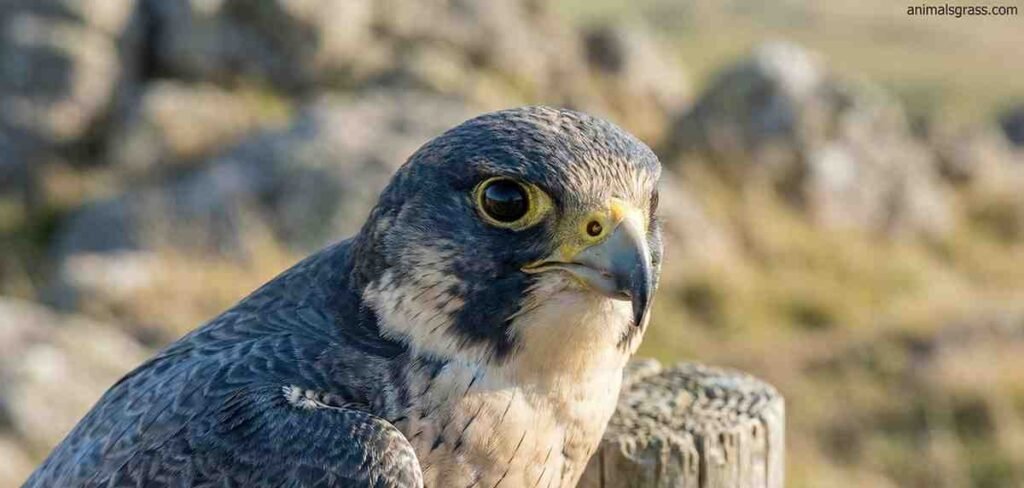
The falcon is universally recognized as a potent symbol of ambition, mental focus, and victory.1 Renowned for its unparalleled speed and incredible eyesight, the bird represents the power of clear vision—both literally and metaphorically—urging individuals to look ahead and plan their goals with precision.2 In many cultures, the falcon embodies the idea of rising above the mundane to see the “bigger picture,” signifying a state of higher consciousness where one can detach from daily distractions to strike at opportunities with calculated efficiency rather than brute force.
Historically, the falcon has long been associated with nobility, royalty, and freedom.3 In medieval Europe, it was the ultimate status symbol of the aristocracy, representing superiority, discipline, and the refined control of nature, often referred to as the “sport of kings.”4 Deeper into antiquity, the bird was viewed as a solar emblem, representing the rising sun and the triumph of light over darkness.5 Consequently, the falcon is not just a symbol of predatory skill, but a spiritual icon representing the liberation of the soul and the courage to conquer the skies.
What bird represents God in the Bible?
The Eagle is the most prominent bird used to symbolize God’s power, protection, and renewing strength in the Old Testament. In Exodus 19:4, God describes His deliverance of the Israelites from Egypt by saying, “I bore you on eagles’ wings and brought you to Myself,” illustrating a powerful, uplifting rescue that carries believers above danger. This imagery is further expanded in Deuteronomy 32:11, where God is compared to an eagle that stirs its nest and hovers over its young, teaching them to fly while remaining ready to catch them. This metaphor emphasizes God’s role as a fierce guardian and a sovereign provider who renews the strength of those who wait on Him (Isaiah 40:31).
In the New Testament, the Dove serves as the definitive representation of the Spirit of God. All four Gospels record that during the baptism of Jesus, the heavens opened and the Holy Spirit descended upon Him “like a dove” (Matthew 3:16). Unlike the eagle, which represents might and deliverance, the dove symbolizes purity, peace, and the gentle, abiding presence of the divine. This imagery connects back to the story of Noah, where a dove returned with an olive branch to signal the end of judgment and the beginning of a new covenant of peace, making it one of the most enduring icons of God’s grace in Christian history.