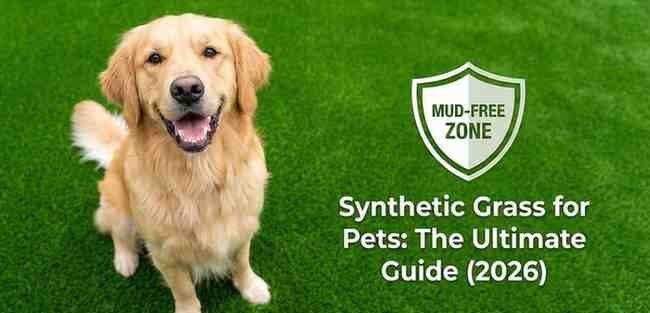
Synthetic Grass for Pets: The Ultimate Mud-Free Guide (2026)
Introduction: The Battle for a Clean Lawn
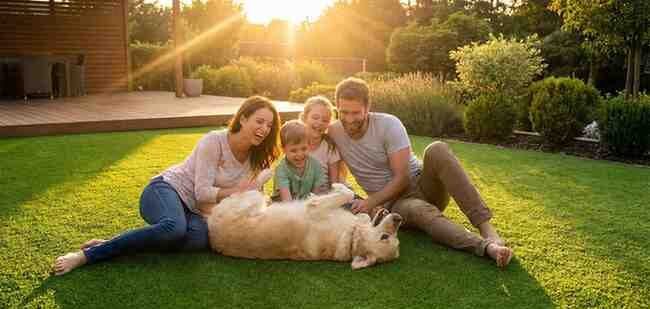
If you are a dog owner, you likely know the struggle all too well. It starts with a few yellow patches on the lawn, evolves into a mud track along the fence line, and ends with your beautiful backyard resembling a barren wasteland. And let’s not forget the muddy paw prints stamped across your clean floors after every rainstorm.
For years, pet owners have been forced to choose between a happy dog and a nice lawn. But the rapid evolution of synthetic grass for pets has changed the game. No longer the scratchy, fake-looking “astro-turf” of the 1980s, modern artificial grass is soft, realistic, and engineered specifically to withstand the wear and tear of active animals.1
In this comprehensive guide, we will explore everything you need to know about installing artificial turf for dogs. From drainage technology and cooling features to maintenance tips and cost analysis, this is your roadmap to a cleaner home and a happier pet.
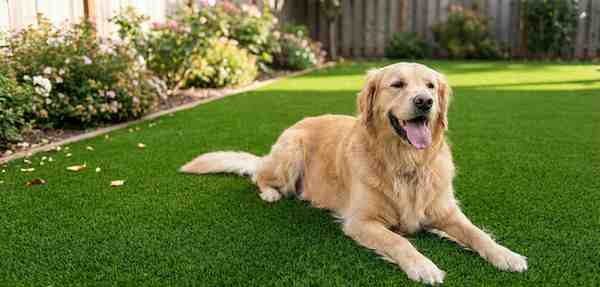
Why Make the Switch? The Benefits of Artificial Pet Turf
Why are thousands of homeowners ditching natural sod for synthetic alternatives? It isn’t just about aesthetics; it is about lifestyle.
1. The End of Muddy Paws
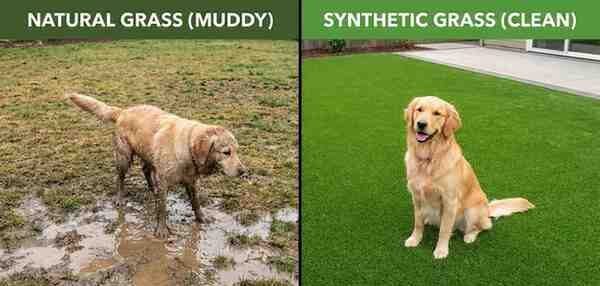
This is the number one reason pet owners convert. Because synthetic grass is installed over a compacted aggregate base with superior drainage, mud is virtually eliminated.2 Even after a heavy downpour, your dog can run outside and return with clean, dry paws.
2. Durability Against Digging and Zoomies
Natural grass is fragile. A large dog pivoting quickly (the “zoomies”) can tear up sod in seconds. Dedicated pet turf is constructed with durable backing and strong blade fibers (often polyethylene or polypropylene) that resist tearing. Furthermore, dogs generally stop digging because they cannot smell the soil or bugs beneath the barrier.
3. No More Yellow Spots
Nitrogen in dog urine burns natural grass, causing unsightly yellow or brown dead patches. Synthetic grass is chemically inert; it will not discolor, die, or stain when your pet does their business.
4. Tick and Flea Reduction
Ticks and fleas thrive in the cool, moist soil and tall shade of natural grass.3 Artificial turf eliminates this breeding ground, significantly reducing the risk of pests hitching a ride on your pet.4
The Anatomy of Pet-Friendly Synthetic Grass
Not all artificial grass is created equal. If you go to a hardware store and buy the cheapest turf available, you will likely regret it. Synthetic grass for pets requires specific engineering features.
The Importance of Drainage
This is the single most critical factor. Standard artificial grass often uses a latex backing with punched holes for drainage.5 While this works for patios, it is often insufficient for pet urine.
- Hole-Punched Backing: Drains roughly 30 inches of water per hour. Good for rain, okay for one small dog.
- Fully Permeable (Edge-to-Edge) Backing: This is the gold standard for pets. The backing is woven or knitted to allow liquids to pass through anywhere, draining 100+ inches per hour. This prevents urine from pooling and creating odor.
Pile Height and Density
- Pile Height: For pets, a pile height between 1.0 to 1.5 inches is ideal. Shorter piles are easier to clean (poop sits on top rather than sinking in) and stand up better to traffic.6 Long, lush grass (2 inches+) can mat down and makes waste removal difficult.
- Density (Face Weight): A higher face weight (60-80 oz) means a denser, more durable lawn that feels softer under paw.
Antimicrobial Technology
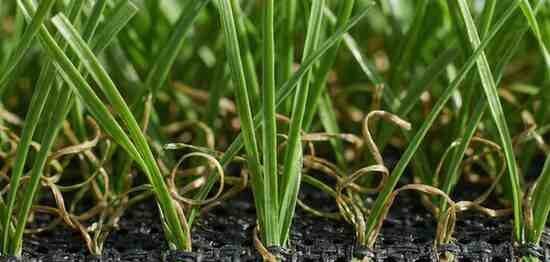
Top-tier pet turfs often include antimicrobial additives infused into the backing or the yarn itself.7 This helps prevent the growth of bacteria and mold, which are the primary causes of “dog yard smell.”
Choosing the Right Infill: The Secret to Odor Control
Infill is the material brushed in between the grass blades to keep them standing upright and weigh the turf down.8 For pet owners, choosing the wrong infill can be a disaster.
Avoid: Crumb Rubber
Rubber infill (often made from recycled tires) absorbs heat, making the lawn incredibly hot in summer.9 Worse, it traps urine odors that are nearly impossible to wash out.
Avoid: Silica Sand (Standard)
While cheap, standard sand can trap ammonia from urine, leading to lingering smells.
The Best Choice: Zeolite or Antimicrobial Coated Sand
- Zeolite (T-Cool/Envirofill): This is a negatively charged, honeycomb-like mineral.10 It traps the ammonia gases in urine, preventing the smell from being released into the air. When it rains (or you hose it down), the ammonia is flushed out, and the Zeolite resets.
- Acrylic Coated Sand: Designed to be non-absorbent and antimicrobial, preventing bacteria growth.11
Installation Best Practices for Pet Owners
If you are planning a DIY project, you must adapt the standard installation process for pets.
1. The Sub-Base Matters
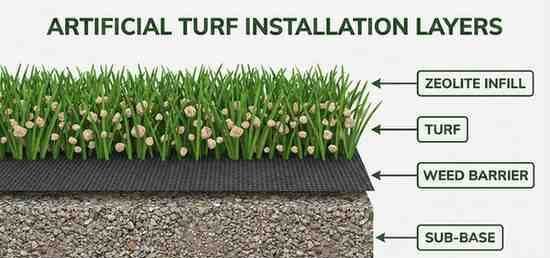
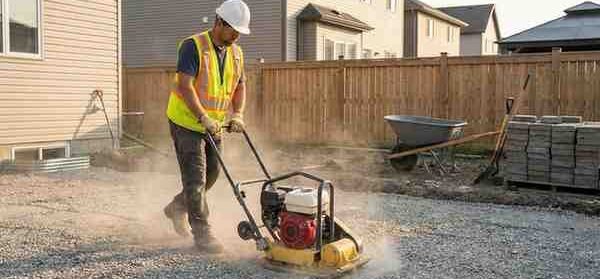
Do not install turf directly on top of soil. You need 3 to 4 inches of crushed rock/aggregate.
- Pro Tip: Avoid using a “fines” topping (stone dust) if you have multiple dogs. While it makes the surface smooth, it packs too tightly and slows down drainage. Use a slightly coarser aggregate (like 3/8″ chip stone) to maximize urine flow-through.
2. The Membrane Question
Standard installs put a weed barrier cloth under the turf. Do not do this for pet turf. The weed barrier can trap urine and clog over time. Instead, place the weed barrier at the very bottom, under the crushed rock base.
3. Secure the Edges
Dogs are curious. If an edge is loose, they will pull it. Use 6-inch galvanized turf nails (non-rusting) every 3-4 inches along the perimeter. For aggressive diggers, consider a “tuck strip” border made of concrete or timber.
Maintenance: Keeping Your Synthetic Lawn Fresh
A common myth is that artificial grass is “zero maintenance.” It is actually “low maintenance.” If you have pets, you must perform regular cleaning to prevent odors.
Weekly Routine
- Scoop the Waste: Pick up solid waste as you normally would. It is usually easier than on real grass because it doesn’t hide in the dirt.
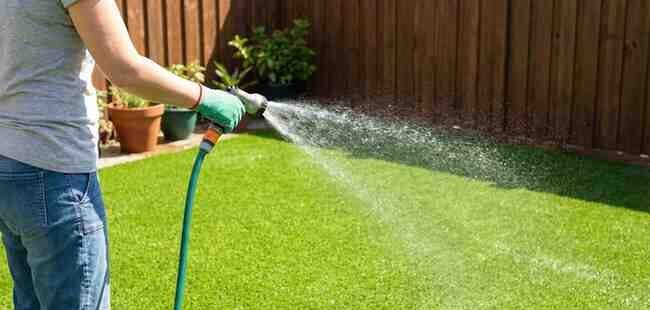
- Rinse: Give the main “potty areas” a quick rinse with a garden hose to dilute any urine sitting in the infill.
Monthly Routine
- Deep Flush: If it hasn’t rained, water the lawn thoroughly.
- Cross Brushing: Use a stiff-bristled broom (not metal) or a power broom to brush against the grain. This perks the blades back up and prevents matting in high-traffic zones.
Fighting the Smell (Summer Maintenance)
In the heat of summer, urine smells can intensify.
- Enzymatic Cleaners: Use a bio-enzyme cleaner (like Simple Green Outdoor Odor Eliminator or specialized turf cleaners).12 These enzymes eat the bacteria causing the smell. Apply it in the evening when the sun goes down so it doesn’t evaporate instantly.
- Vinegar Solution: A 50/50 mix of water and white vinegar is a cheap, natural DIY deodorizer.
Addressing the Heat Issue
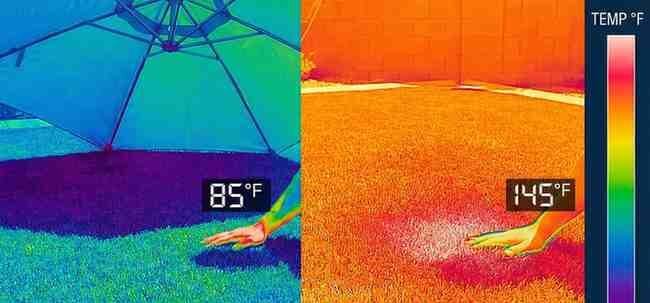
One valid concern with synthetic grass is temperature. Plastic absorbs heat, and on a 95°F day, synthetic turf can reach temperatures of 140°F—hot enough to burn paws.
How to Mitigate Heat:
- Choose “Cool” Technology: Look for turf with “CoolR” or similar heat-reflective technology in the blade shape (W-shape or S-shape blades reflect light better than flat blades).
- Shade: Install shade sails or plant trees.
- The Water Trick: A quick spritz with water evaporates rapidly, cooling the surface by 20-30 degrees instantly.13
- Lighter Colors: Darker greens absorb more heat. Opt for a blend with lighter lime tones.
Cost Analysis: Is It Worth the Investment?
Synthetic grass is an investment. The upfront cost is high, but the long-term ROI (Return on Investment) is significant.
- Initial Cost: Average professional installation ranges from $8 to $15 per square foot. A 500 sq. ft. yard could cost $4,000 – $7,500.
- DIY Cost: Materials usually run $2 to $5 per square foot.
- Savings: You eliminate costs for:
- Water (saving hundreds per year).
- Mowing (gas/electricity or landscaping service).
- Fertilizers and pesticides.
- Resodding/re-seeding every spring.
Most homeowners find they break even within 3 to 5 years, while the turf itself has a lifespan of 15 to 20 years.
Frequently Asked Questions (FAQ)
Can dogs be allergic to synthetic grass?
It is extremely rare. High-quality synthetic grass is made from inert non-toxic plastics (polyethylene). In fact, dogs with grass pollen allergies often see their symptoms disappear after switching to turf.14
Will my dog try to dig through it?
Most dogs stop digging because the sensory reward (earth/scent) is gone. However, determined diggers might try. Securing the edges and using a heavy infill usually deters this.
How do I remove dog hair from the turf?
If your dog sheds, hair can get trapped in the fibers.15 The easiest way to remove it is with a plastic rake, a leaf blower, or even a shop vac if the grass is dry.
Is synthetic grass safe for puppies?
Yes. Just ensure the turf is lead-free (most US/EU manufactured turf is). It is actually cleaner for puppies, reducing their exposure to parvo or parasites found in soil.
Conclusion: A Paw-sitive Upgrade
Switching to synthetic grass for pets is more than a landscaping decision; it is a lifestyle upgrade. It reclaims your backyard, turning it from a mud pit into a usable, clean, and green extension of your living space.
While the upfront cost and heat management require consideration, the benefits—clean floors, no mowing, and a pest-free environment—make it a resounding “yes” for most dog owners. When choosing your turf, remember the golden rules: prioritize drainage, choose a short pile height, and invest in quality odor-neutralizing infill.