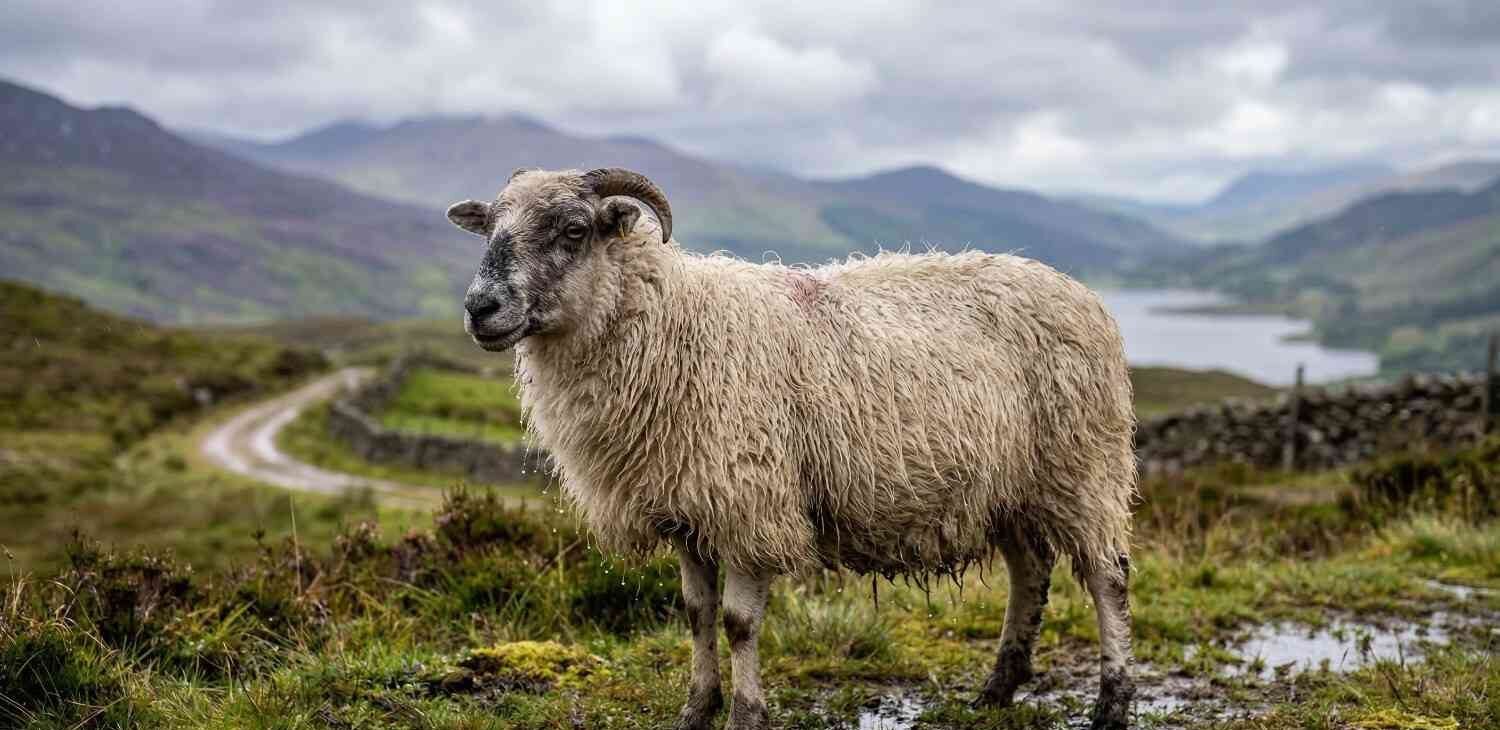
Sheep with Wet Wool: The Hidden Dangers, Health Risks, and Management Strategies
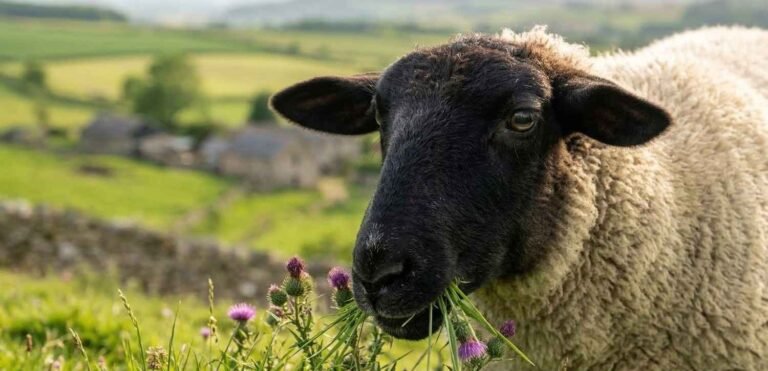
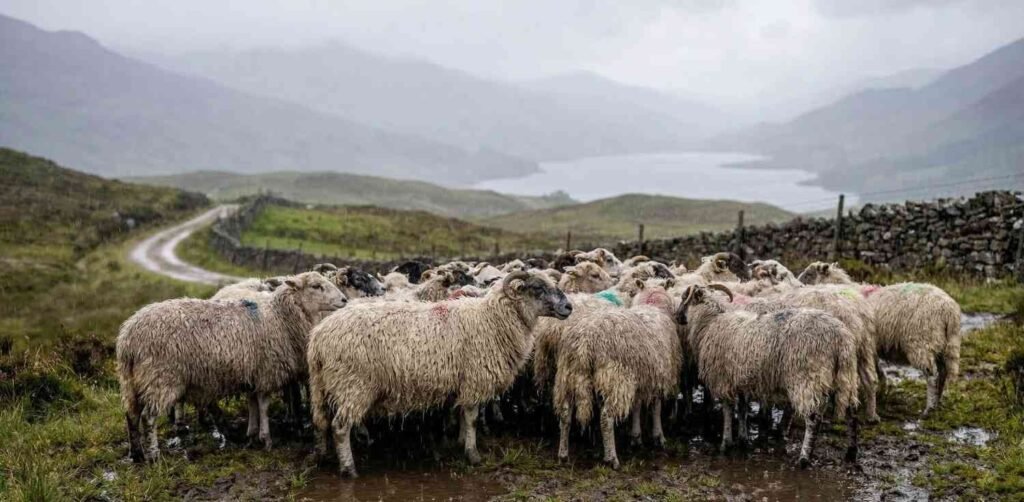
In the idyllic imagery of pastoral farming, few sights are as common as a flock of sheep grazing under grey, drizzly skies. We often take for granted the resilience of these animals, assuming their thick fleeces provide an impenetrable barrier against the elements. After all, wool is nature’s premier insulator, renowned for keeping heat in and cold out.1
However, there is a critical tipping point where this magnificent natural fiber transforms from a life-saving asset into a life-threatening liability. Sheep with wet wool are not merely uncomfortable animals; they are creatures in the throes of a physiological crisis. When a fleece becomes saturated to the skin, its insulating properties do not just diminish—they reverse.
For the shepherd, the farmer, and the veterinarian, understanding the profound implications of a soaked flock is crucial. It is not just about the immediate risk of hypothermia in a newborn lamb during a spring storm. It involves a complex cascade of issues ranging from chronic dermatological conditions like “lumpy wool” to subtle yet severe economic losses caused by increased metabolic energy demands.
This comprehensive guide will move beyond surface-level advice to explore the physics, biology, and economics of sheep with wet wool. It is an essential manual for anyone tasked with maintaining flock welfare and profitability in challenging climates.
Part 1: The Physics of Failure: When Insulation Becomes Conduction
To understand the danger, we must first understand how wool works. A dry woolen fleece is a miracle of bio-engineering. It does not actually warm the sheep; rather, it traps the sheep’s own body heat. The crimp (waviness) of the wool fibers creates millions of tiny air pockets near the skin.2 Air is a poor conductor of heat, meaning this layer of trapped air acts as a thermal buffer between the warm skin of the sheep and the cold outside environment.3
The Saturation Tipping Point
Lanolin, the natural grease produced by the sheep’s skin, coats the wool fibers and provides the first line of defense, shedding light rain and snow.4 However, during prolonged downpours, heavy driving rain, or immersion (such as during dipping or flooding), the lanolin barrier is overwhelmed.
When a sheep becomes truly “wet-to-the-skin,” water displaces the trapped air pockets. This is disastrous for thermodynamics. Water is approximately 25 times more conductive to heat than air. Instead of an insulating buffer, the fleece becomes a conductive blanket, drawing precious body heat away from the skin and transferring it rapidly to the cold environment.
Evaporative Cooling: The Silent Killer
The problem is compounded by evaporation. As the water in the fleece evaporates, it requires energy to convert from liquid to gas. This energy is pulled directly from the sheep’s body heat. This process—evaporative cooling—is exactly how sweating cools a human down on a hot day. For sheep with wet wool on a cold, windy day, this process is uncontrollable and catastrophic, sapping body temperature even after the rain has stopped.
A sheep with a saturated heavy fleece can actually be colder than a shorn sheep in the same conditions, as the shorn sheep dries off relatively quickly, while the fleeced sheep remains encased in a cold, damp, evaporating compress for days.
Immediate Health Crisis: Hypothermia and Pneumonia
The most immediate threat to sheep with wet wool is a rapid drop in core body temperature, known as hypothermia.
The Vulnerability of Lambs
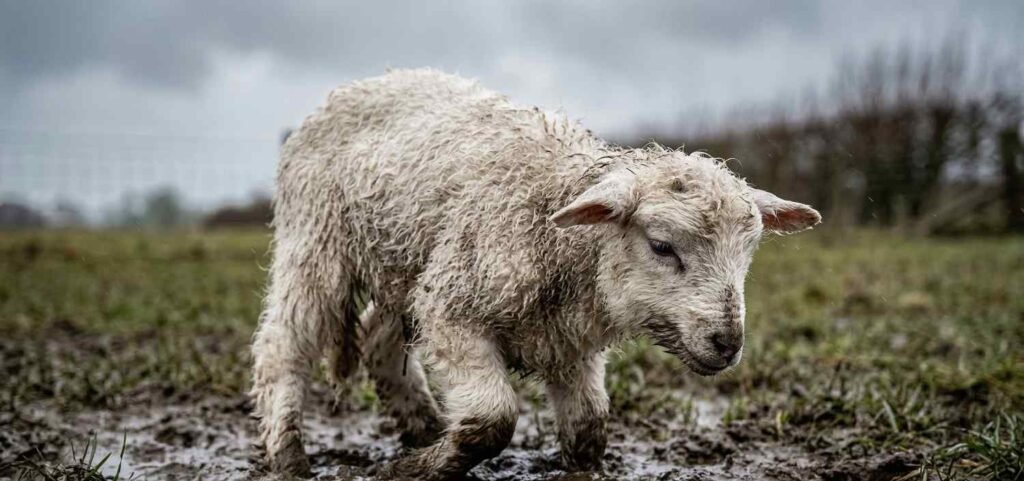
While adult sheep can succumb to hypothermia, lambs are exponentially more vulnerable. Newborns have a high surface-area-to-body-mass ratio, meaning they lose heat rapidly.5 They also are born wet, with limited energy reserves (brown fat). If a lamb is born into cold rain and its birth coat becomes saturated before it can dry off and nurse, its metabolic furnace will fail within hours.
A wet lamb cannot regulate its temperature. It becomes lethargic, stops seeking the udder, and enters a downward spiral. Once its core temperature drops below 37°C (98.6°F), it cannot recover without intervention (warming and glucose).
Adult Hypothermia and “Twin Lamb Disease”
Adult ewes, particularly those in late pregnancy or peak lactation, are already under immense metabolic strain. If they become soaked and chilled, their body diverts energy desperately to stay warm. In pregnant ewes, this energy deficit can trigger Pregnancy Toxemia (Twin Lamb Disease), as the ewe rapidly breaks down her own body fat to feed her unborn lambs, leading to ketosis, coma, and death.
Pneumonia
Prolonged exposure to wet and cold conditions suppresses the sheep’s immune system.6 The stress of maintaining body temperature weakens their defenses against respiratory pathogens. Pasturella bacteria, which often live harmlessly in a sheep’s upper respiratory tract, seize the opportunity when the animal is stressed by being wet and cold to descend into the lungs, causing life-threatening pneumonia. A flock that has been soaked for days often sees a spike in respiratory illness a week later.
Dermatological Disasters: Wool Rot and Flystrike
While hypothermia is an acute threat, chronic wetness leads to severe skin conditions that can plague a flock for months. The fleece environment creates a perfect incubator for bacteria and parasites.
Mycotic Dermatitis (“Lumpy Wool”)
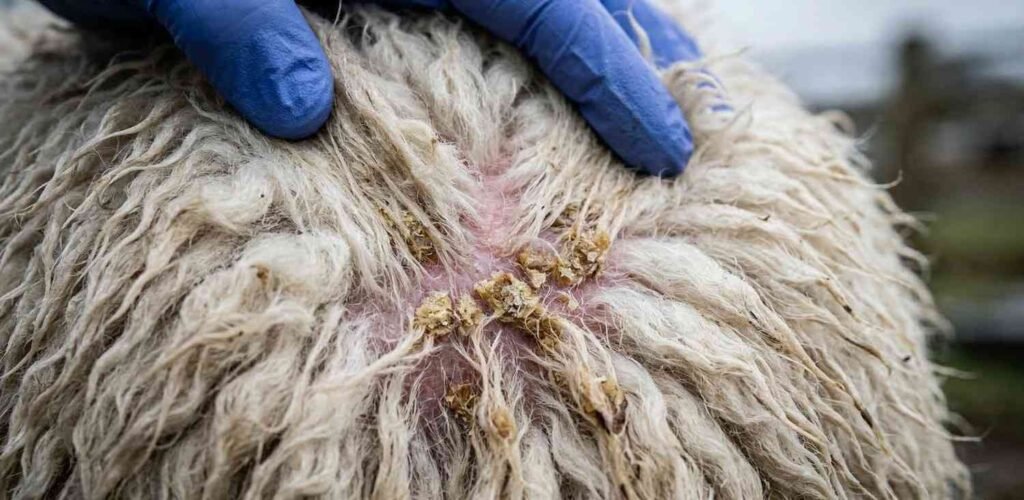
One of the most common consequences of prolonged wetness is Mycotic Dermatitis, frequently called “Lumpy Wool” or “Rain Scald.”7 Despite the “mycotic” name suggesting fungus, it is actually caused by the bacterium Dermatophilus congolensis.
These bacteria remain dormant in dry conditions. However, when the fleece gets wet and stays wet, the bacteria activate. They attack the epidermis of the sheep’s skin, causing an exudative, crusty infection. The skin weeps serum, which binds the wool fibers together into hard, yellowish scabs or “lumps.”
When the sheep eventually dries, these lumps lift off the skin but remain trapped in the growing fleece. This condition is painful for the sheep, ruins the value of the fleece for spinning or textiles, and makes shearing incredibly difficult and painful for the animal.
Fleece Discoloration and Fleece Rot
Constant moisture allows other bacteria, such as Pseudomonas aeruginosa, to proliferate. This results in “fleece rot,” where the wool becomes matted, discolored (often green, blue, or bright yellow), and develops a foul, putrid odor.8 This is not just a cosmetic issue; it is a beacon for pests.
The Flystrike Connection
The most devastating consequence of wet-induced skin conditions is flystrike (myiasis). Blowflies are attracted to warmth, moisture, and the smell of bacterial decay.9
A sheep with wet wool, particularly one suffering from fleece rot or lumpy wool, is a prime target. The flies lay eggs in the damp, smelly fleece. Upon hatching, the maggots begin to literally eat the sheep alive, burrowing into the inflamed skin underneath the wet wool. Because the wool covers the initial stages, a struck sheep might not be noticed until significant damage is done. Wet weather in warm seasons almost always guarantees a spike in flystrike cases.
The Economic “Silent Thief”: Metabolic Energy Loss
Farmers often count the cost of wet weather in dead lambs or vet bills for pneumonia. However, the greatest financial loss related to sheep with wet wool is invisible: lost energy.
Every living animal has a “Lower Critical Temperature” (LCT). This is the ambient temperature below which the animal must actively burn extra calories just to maintain its baseline body temperature.
For a dry, full-fleeced sheep in calm conditions, the LCT might be as low as -5°C or -10°C. They are incredibly efficient.
However, saturate that fleece with water and add wind, and the LCT skyrockets dramatically, perhaps rising to +15°C or higher. This means that a wet sheep standing in a 10°C (50°F) rain shower is burning significantly more feed just to stay alive than a dry sheep in freezing temperatures.
The Feed Conversion Drain
This increased metabolic demand has direct economic consequences:
- Increased Feed Costs: To maintain condition during prolonged wet spells, the flock must be fed more high-energy supplemental feed (grains, high-quality hay) to compensate for the heat loss.
- Loss of Condition: If extra feed is not provided, the sheep will burn its own body reserves (fat and muscle). Ewes lose condition score, leading to lower conception rates in the next breeding season or poorer milk production for current lambs.
- Reduced Growth Rates: Feeder lambs spending energy to stay warm are not spending energy growing. Wet weather stalls weight gain, increasing the “days to market” and reducing profit margins.
This invisible energy drain is the “silent thief” of farm profitability during wet seasons.
Managing the Environment: Shelter and Topography
Given the severe consequences of sheep with wet wool, management strategies must focus on prevention and mitigation. The primary defense is shelter.
The Myth of the Hardy Sheep
While many breeds, particularly hill breeds like the Scottish Blackface or Herdwick, are evolved for high rainfall, no sheep is immune to the effects of being soaked to the skin with wind chill. Relying solely on breed hardiness in extreme weather is a welfare risk.
Natural Shelter
In extensive grazing systems, topography is key. Farmers should ensure that pastures used during the wettest seasons have access to natural windbreaks. Hedges, stone walls, thick stands of trees, and deep gullies provide crucial refuge where sheep can escape the driving wind, significantly reducing the evaporative cooling effect even if they are wet.
Man-Made Shelter and Barns
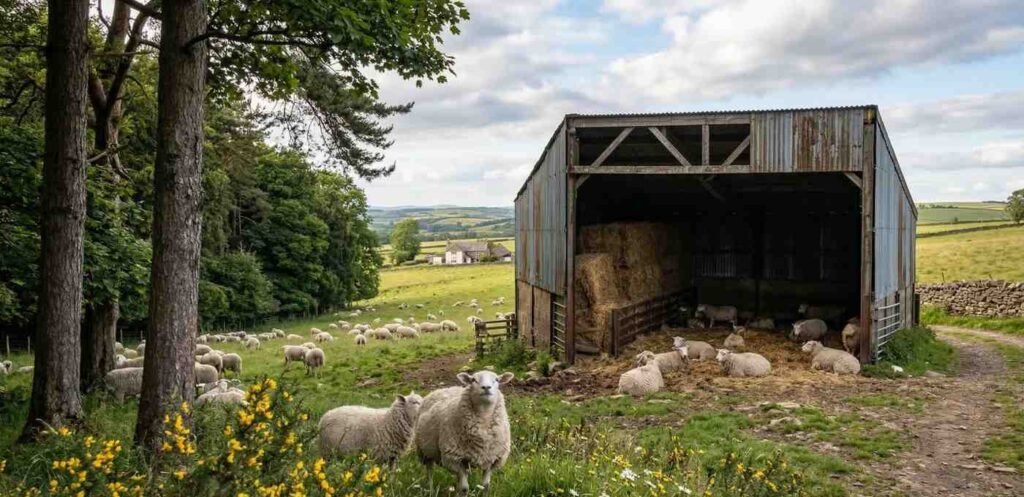
Providing access to barns or three-sided sheds is the gold standard, especially for lambing ewes or freshly shorn stock. However, housing wet sheep presents its own challenges.
If a flock is brought inside soaking wet, the barn must have exceptional ventilation. Crowding hundreds of wet sheep into a poorly ventilated barn creates a saunalike environment of high humidity and ammonia. This is the perfect breeding ground for pneumonia. Sometimes, it is healthier for sheep to be outside in the rain with fresh air than inside a damp, stuffy barn. The goal of housing wet sheep is to allow them to dry out without exposure to wind.
The Role of Shearing in Wet Weather Management
Shearing strategy is a critical component of managing the risks of wet weather.10
The Shorn Sheep Paradox
As mentioned earlier, a freshly shorn sheep is initially very vulnerable to cold rain because it has lost its insulation.11 Many farmers lose sheep to hypothermia if a cold storm hits immediately post-shearing.
However, once the immediate shock is past, a shorter fleece can be advantageous in chronically wet climates. A sheep carrying four inches of dense wool takes days to dry out once saturated. A sheep with one inch of wool dries in hours. Therefore, in some environments, maintaining a moderate fleece length rather than full wool can reduce the incidence of wool rot and flystrike.
Pre-Lambing Shearing
Many producers shear ewes 4-6 weeks before lambing. This is often done when ewes are brought into housing.
- The Advantage: It keeps the ewe drier inside the barn (less sweating), reduces humidity in the shed, makes it easier for the lamb to find the teat without sucking on wet, dirty wool tags, and allows the farmer to see the ewe’s condition score accurately.
- The Risk: If these ewes are turned out too quickly into cold, wet weather before re-growing sufficient wool cover, they are at high risk of mastitis (chilling of the udder) and hypothermia.
Acute Care: Treating the Soaked and Chilled Sheep
Despite best efforts, farmers will inevitably encounter sheep in crisis due to wetness and cold. Knowing how to respond correctly is vital.
Triage
Identify the most vulnerable animals first: lambs, very old ewes, and any animal that is down and unable to rise.
Moving to Shelter
The first step is always to break the wind. Get the affected animal into a barn, a shed, or even the footwell of a truck. Stopping evaporative cooling is priority number one.
Warming Protocols (Mistakes to Avoid)
If dealing with acute hypothermia, especially in lambs, rapid warming is necessary. This can involve warming boxes, heat lamps (used carefully to avoid fire risk), or warm water baths (for lambs).
Crucial warning: Never vigorously rub a hypothermic lamb to dry it. Rubbing dilates blood vessels in the skin, which draws cold, stagnant blood from the extremities back to the core, causing a further, potentially fatal drop in core temperature (the “afterdrop”). Pat them dry gently or use warm air.
Nutritional Support
A cold sheep has depleted its glucose reserves. Once a lamb is warmed enough to swallow (never feed a comatose lamb), it needs energy. Stomach tubing with warm colostrum or a dextrose solution is often necessary before they have the strength to nurse. For adults, high-energy concentrate feed and warm molasses water can help restart their metabolic furnace.
Conclusion: Proactive vs. Reactive Management
The image of sheep with wet wool should not be viewed merely as a rustic scene of farm life, but as a visual indicator of animals under significant physiological stress.
While wool is a remarkable fiber, its Achilles heel is water saturation. The consequences of ignoring this reality range from immediate losses due to hypothermia to long-term struggles with disease and invisible economic drain through wasted feed.
Successful farming in wet climates requires a proactive mindset. It involves selecting genetics suited to the environment, investing in adequate shelter, planning shearing dates carefully around weather patterns, and recognizing that a wet sheep is an animal that requires increased nutritional support. By understanding the physics of failure when wool meets water, shepherds can ensure the welfare of their flocks and the sustainability of their farms, regardless of the weather.