Falconry News: Best Guide About Falcons
As 2026 begins, the ancient practice of falconry is making a come back. No longer confined to the pages of history books or a few specific regions, falconry has spread across the globe as a sport that combines ancient cultural practices with modern technology. Whether it’s the deserts of Saudi Arabia, the Scottish Highlands or the open plains of America, the “sport of kings” is thriving everywhere.
This report looks at the most important developments in the world of falconry over the past year. We’ll look at record-breaking major events, bird conservation successes, the new and controversial trend of “robot hunting”, and the changing rules governing this UNESCO-recognized heritage. Whether you’re an expert hunter, just learning, or a conservationist, this information is essential for you.
1. Global Events & Competitions
Today, the real center of falconry competitions is the Gulf States (GCC), where the government is heavily supporting these traditional sports and the whole world is paying attention to it.
The King Abdulaziz Falconry Festival 2025
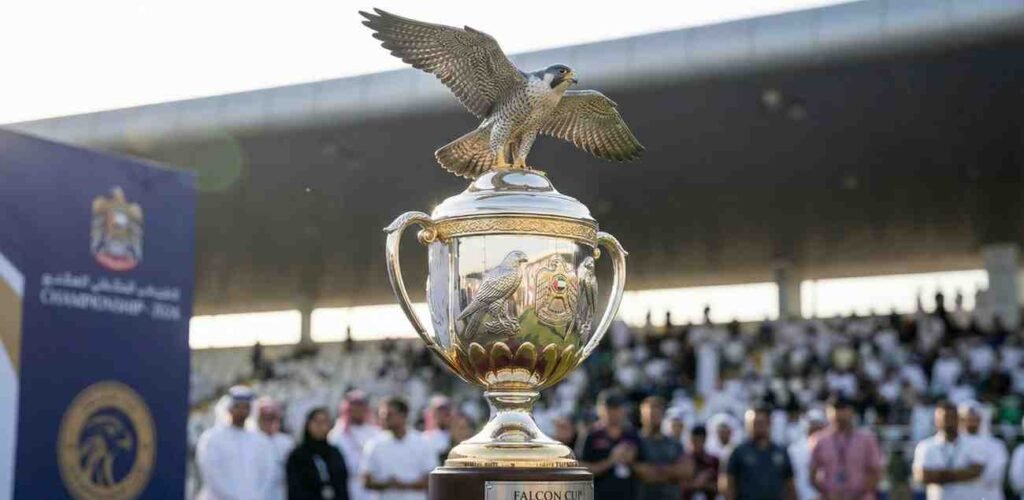
The King Abdulaziz Falconry Festival (KAFF) 2025, held in Malham, north of Riyadh, has raised the bar for the sport worldwide. Running from late December 2025 to January 10, 2026, the event has cemented its place as the world’s largest falconry festival and is listed in the Guinness World Records.
Highlights:
Foreign participation: For the first time, nine different countries participated, including teams from Ireland, Italy and Mongolia. The festival has now become more than just a regional event, but a “World Cup” of falconry.
Prize money: The total prize money was more than 38 million riyals (about $10 million), which was set aside for the best falconers and trainers.
New competitions: In 2025, special competitions for the “Nova Falcon” and Mongolian falcons were held, to recognize the different breeds of working birds.
For children: The “Future Hunters” section has been redesigned. Now, children are taught the basics of falconry through VR (virtual reality) so that they can learn before they touch a real bird.

The Liwa International Festival
Like Riyadh, the UAE’s Liwa Festival is also making strides in “Al-Talah” (simulated hunting races). An Olympic-grade laser system has been installed here in 2025 to ensure accurate timing and fair judging. The “Farukh” (young falcon) competitions saw record speeds this year, thanks to their improved diet and modern training.
European Meets and Field Trials
While the Gulf countries focus on races and beauty contests, in Europe at the end of 2025 all the attention was on hunting in the open field. British and German hunters held a meeting together, in which the emphasis was on real hunting in the wild environment. These meetings expressed concern that the number of game animals is decreasing. That is why the hunters themselves have reduced the number of prey and now they focus more on the good flight and skill of the falcon rather than catching more prey.
2. Conservation
Nowadays, bird protection is the most important thing in falconry. In 2026, it is no longer just about saving the species, but the focus is on maintaining the number of birds and preventing their illegal purchase and sale (black market).
The Saker Falcon Crisis and Hope
The Saker Falcon is still critically endangered. Its numbers are declining due to habitat loss and electrocution from power lines. But there is some hope for improvement thanks to the “Global Saker Task Force” in 2025.
News from Bulgaria and Central Asia:
The organization “Green Balkans” has reported that for the first time in many years, Saker Falcons released in Bulgaria have successfully raised their third generation of young in the wild. This proves that captive-bred birds can re-breed in the wild.
Meanwhile, in Kazakhstan, strict action was taken against illegal hunting of birds in November 2025. According to the new law, every Saker Falcon used in races must now have a “DNA passport” to prove that it was bred and not stolen from the wild.

The Peregrine Fund’s “Assisted Dispersal”
The Peregrine Fund in the United States is experimenting with new conservation methods. The method they found to be successful in saving a rare hawk (Ridgway’s Hawk) in the Dominican Republic is now being used for other birds of prey.
The method is called “assisted dispersal,” in which young birds are moved to safe areas before they can fly. It is now being tested on birds living in cities to prevent them from mating with their own kind and to keep their populations healthy.
Habitat Restoration as a Falconry Duty
A key trend in 2026 is the “falconer as ecologist.” The International Association for Falconry (IAF) has launched the “Habitats for Hawks” initiative. The program encourages local falconry clubs to adopt pieces of land not just for hunting but for active management—planting hedgerows, creating water sources for prey species, and removing invasive plants. This holistic approach argues that to save raptors, the rabbits, grouse, and grasses in which they hide must be protected.
3. Technology in Falconry: Drones, GPS, and AI
The use of technology in falconry is growing rapidly, but public opinion is divided. Veteran hunters say it weakens the ancient bond between man and bird. While others say it saves the birds’ lives and improves their health.
The Rise of the “Robo-Prey”
Drone Bird Company has launched new drones called “AVES Series 2” in late 2025. These drones look and fly exactly like real birds such as pigeons or doves.
- Training benefit:
- This allows hunters to teach their hawks to fly high. This no longer requires using live pigeons.
- Safety:
- When the hawk catches the drone, the simulated prey attached to it detaches smoothly. This way, the hawk’s claws are not injured by hitting the hard drone.
- Acceptance:
- There is now a separate “drone hunting” competition at fairs in the United Arab Emirates. Because flying a drone to avoid a hawk is just as much a skill as handling a hawk.
Telemetry Goes Global and Miniature
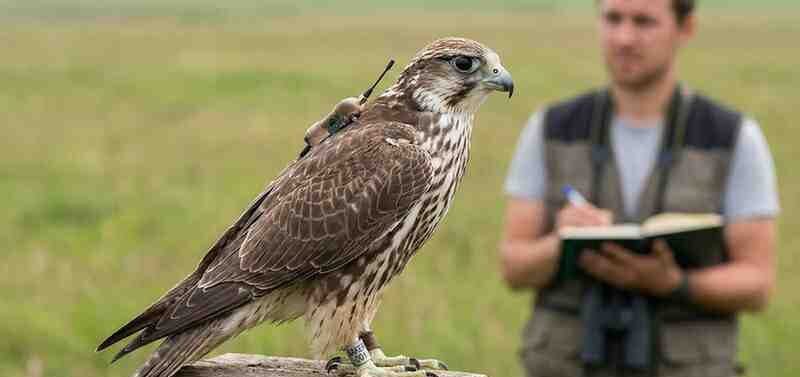
Gone are the days of bulky antennas and “beep beep” sounds. The “smart marshal” system will be in place in 2026.
- Real-time Data:
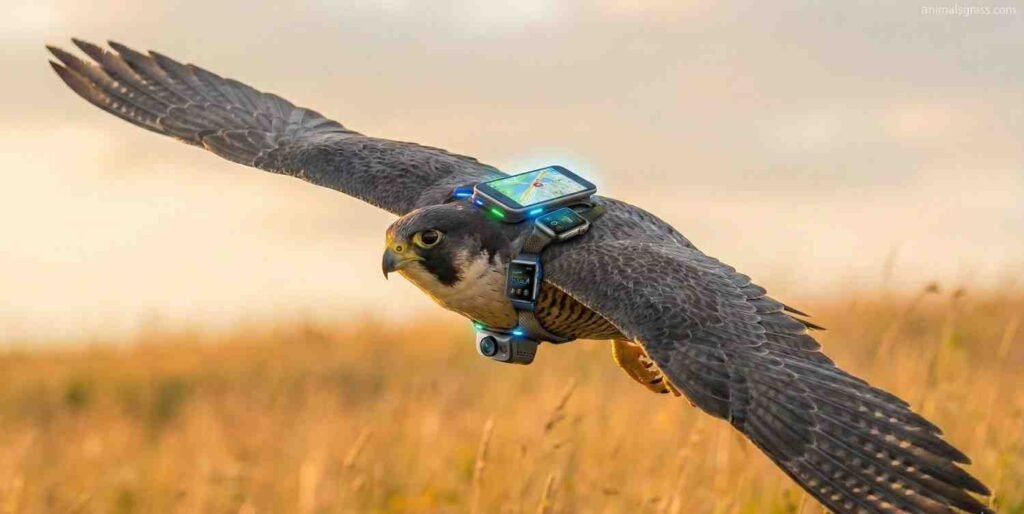
- The new transmitters weigh less than 5 grams. They use 5G internet and instantly tell a mobile app where the bird is at that moment.
- Biometrics:
- The more expensive models now also tell you what the bird’s heart rate is and how much G-force it is under when it swoops. This information tells us that the “peregrine” falcon can withstand much more pressure than we previously thought.
The “Telwah” Smart Device
“The automated ‘Telwah’ machine has changed the way of training alone. The machine can be controlled via a mobile app to determine when and how fast it should release the decoy. This way, a hunter can train several birds alone, without any helpers.”
4. Legal & Regulatory Updates
Falconry laws are changing as governments try to balance old culture with protecting wildlife.
USA: Bird Law
A 2026 change to the Bird Law (MBTA) has had an impact on American hunters. The government has made it easier to get a permit to catch wild falcons.
- Online reporting: The paperwork is now gone. Everything is done online on a computer, making it faster and easier to change ownership of a falcon.
- Goshawk: The number of “goshawks” in the West is decreasing, so there is a debate. Several states have started a “lottery system” for their hunting in 2025-26, which is worrying hunters.
UK: Brexit impact
After the UK left the EU, it has become more difficult to move falcons from one country to another. In 2026, a “health certificate” will now be required every time a bird crosses the border, which has increased the cost of hunting.
United Arab Emirates: Falcon Passport
The United Arab Emirates has launched a “digital passport” for falcons that is connected to the government system. This digital ID contains information about the bird’s diseases, the owner’s name and DNA. This passport is now required to enter any government place or competition.

5. Cultural Heritage: UNESCO and Beyond
Culture and UNESCO
In 2010, falconry was included in the UNESCO Intangible Cultural Heritage of Humanity list. More countries are now joining the list.
Ireland Inclusion:
In late 2025, there was good news that Ireland had also joined the list. Irish falconers have worked hard for years to prove that it is their culture. This will now provide schools with government grants to teach children that falconry is not just about hunting, but about protecting birds.
Female Falconers
Previously a hobby mostly limited to men, the number of female falconers has increased significantly in 2026, especially in the Middle East and Central Asia.
- Diana Cup: A new tournament for women called the “Diana Cup” was held in Europe, which emphasized falconry style and good health.
- Saudi Arabia: Female registrations at the King Abdulaziz Fair increased by 40 percent, which the Saudi Falconers Club called a major success.
Art and Film Several films and books were released on the subject in 2025. The Sky Bond won the award for a documentary film. The film compared the lives of Mongolian eagle hunters and British falconers.
6. Famous Birds: Special Hawks of 2026
Due to climate change and the growth of cities, hunters are now raising different types of hawks.
Rise of hybrids
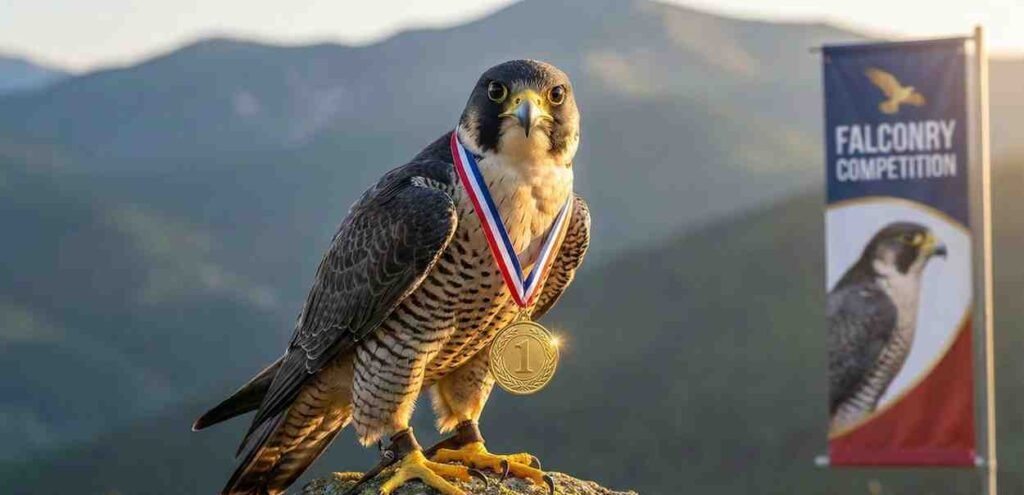
Although some people prefer purebreds, “hybrid” hawks are now leading the race. They are as big and fast as the “Gyr” hawk, but are more heat-tolerant than the “Sekir” or “Shaheen”.
“Super hybrid” hawks sold for record prices at a Riyadh auction in 2025. Some were worth more than 500,000 dollars.
Urban Harris Hawk
The “Harris Hawk” is the most popular bird for general hunters in the US and UK.
Nowadays, the use of these hawks has increased to avoid pigeon droppings in cities. It has now become a big business. Bird repellers are getting big contracts to scare birds away from airports and large buildings.
Golden Eagle
Golden eagles are enjoying a resurgence in popularity in Central Asia and Europe. But because they are so large and dangerous, strict new rules have been put in place in Germany and Austria.
For safety reasons, a law was passed in 2025 that now you can only get a license to own an eagle if you complete two years of training with a specialist.
7. Ethics and Well-being: New Thinking
There is now a lot of talk about the principles of keeping birds of prey. In 2025, hunters themselves have solved these problems so that the government does not have to impose restrictions from the outside.
The “Five Freedoms of Falconry”
The International Association of Falconers (IAF) has adopted the “Five Freedoms” of animals:
- Freedom from hunger and thirst: The bird should not lose too much weight.
- Freedom from suffering: A good place to sit and protect it from the weather.
- Freedom from pain and injury: Competing birds must be examined by a doctor.
- Freedom of natural behavior: There should be enough open space for the birds to fly.
- Freedom from fear and distress: Training with love and rewards rather than killing.
Weight debate
A major change in 2026 is that the method of training birds by starving them has been abandoned. Now hunters train them by giving them rewards (food). Science says that falcons with a good weight live longer and do not get sick, so the old training books are now being proven wrong.
8. Economic impact (money matters)
Falconry is no longer just a hobby, but a major source of income.
Auction business
A falconry worth 15 million (about $15 million) was sold in just one week at an auction in Saudi Arabia in 2025. This has greatly benefited falcon breeders in Europe and the United States, who sell well-bred falcons to Gulf countries.
Tourism
“Falcon tourism” is growing rapidly. Hotels in Scotland, the United Arab Emirates and Mongolia now offer tourists the opportunity to spend time with falcons. In 2025, bookings increased by 15%. An “ethical badge” (certificate) has also been launched so that tourists can know which companies do not abuse birds.

9. The future: 2026 and beyond
Climate change
As winters are now getting warmer, so is the hunting season. Hunters in the UK and US are demanding that hunting dates be based on the weather, not the calendar, so that hunting is not done in the heat.
Virtual falconry
Computer and VR (virtual falconry) competitions are now being held in simulated falconry. It can’t replace real hunting, but it’s a great way to introduce today’s kids to the hobby.
Genetic Bank (Preserving the Breed)
The sperm of the best and rarest falcons is being frozen and preserved in a project called “Frozen Ark”. The aim is to save the falcon species from extinction if a disease like bird flu spreads in the future.
Conclusion
The news of 2025 and 2026 shows that falconers are changing and evolving with the times. First, falconry was just a means of filling their stomachs, then it became a cultural heritage, and now it has become a modern and technological global sport.
But despite drone races, GPS and multi-million dollar auctions, the true spirit of this sport has not changed. It is still the name of the fragile trust between a man and a wild bird. It is the name of the cool of the morning, the wet shoes and the powerful moment when a falcon folds its wings and swoops down from the sky on its prey. As long as this relationship is maintained, falconry will not only survive but also grow.
Whether you are watching new laws in the United States, watching a Saudi Arabian festival live, or sitting at home fixing a falcon’s hood, you are part of this living history. Stay connected, take care of the rules and fly high.