The Ultimate Guide to Falconry Breeding: Process, Laws, and Best Practices
There’s something undeniably magical about watching a bird of prey take flight. For thousands of years, humans and raptors have forged a unique bond through the ancient art of falconry. But as wild populations faced incredible threats in the 20th century, the focus shifted from simply trapping wild birds to mastering the intricate science of falconry breeding.
Today, captive breeding isn’t just a way to preserve game in the United States, the United Kingdom, and around the world. It’s a vital conservation tool. If you’ve ever wondered what it takes to breed these magnificent predators, you’ve come to the right place.
In this comprehensive guide, we’ll walk you through the fascinating world of falconry breeding. From navigating the complex legal frameworks in the US and UK to the delicate art of incubation and rearing, here’s everything you need to know about birds of prey.
What is Falconry Breeding?
At its core, falconry breeding (often legally referred to as “raptor propagation”) is the process of breeding, incubating, and raising birds of prey in captivity for the purpose of falconry, education, or conservation release.
Decades ago, almost all falconry birds were “passage” birds—juveniles captured from the wild during their first migration. However, after the devastating effects of DDT on peregrine falcon populations in the 1960s and 70s, falconers stepped up. They developed captive breeding techniques that not only saved the peregrine from the brink of extinction but also revolutionized the sport forever.
Choosing the Right Species for Falconry Breeding
Not all birds of prey are created equal, nor do they have the same breeding requirements. Before setting up a breeding facility, propagators should decide which species they want to focus on. Here are the most popular choices in the falconry community:
1. Peregrine Falcon
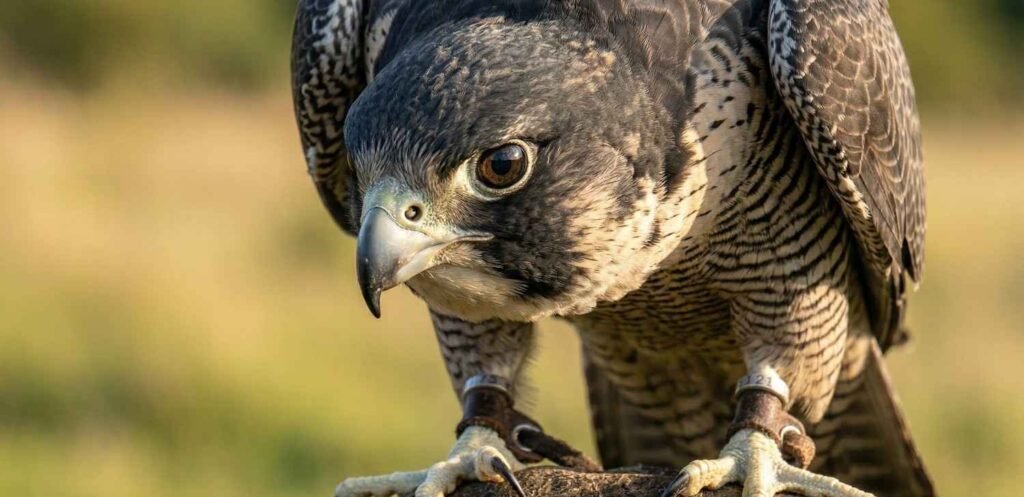
The undisputed king of the falconry world, the peregrine is bred for its incredible speed and aerial acrobatics. Peregrines require a lot of space for aerial courtship to breed, although many modern breeders successfully use artificial insemination (AI) for imprinted birds.
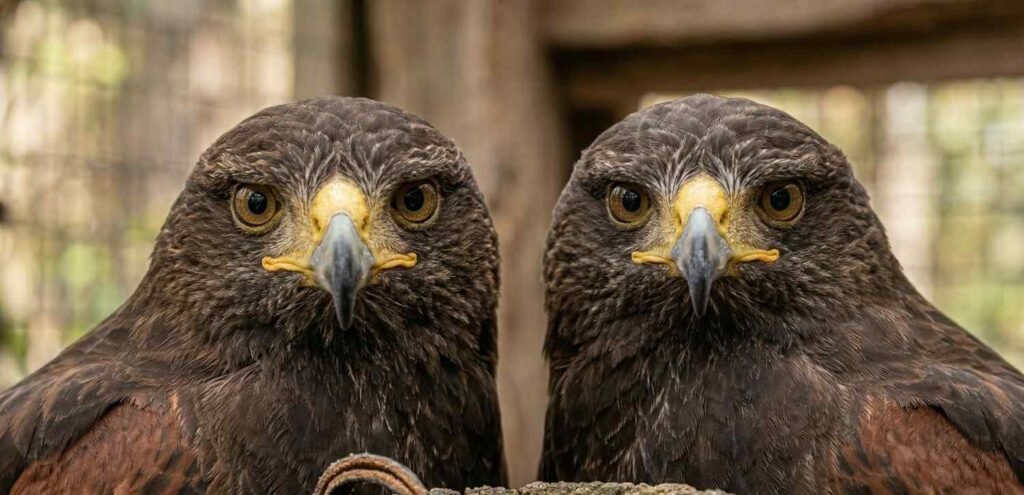
2. Harris’s Hawk
Native to the Americas, the Harris’s Hawk is the most popular beginner and intermediate bird in both the UK and the US. Because they are highly social and hunt in packs in the wild, they are incredibly cooperative breeders. They often breed easily in captivity without the need for complex artificial insemination techniques.
3. Gyrfalcon
The largest of the falcon species, the Gyrfalcon is native to the Arctic. They require climate control to breed, especially in the warmer regions of the United States. They are highly prized (and very expensive), making them a lucrative but challenging focus for advanced falconry breeders.
4. Northern Goshawk
Known for their explosive speed and aggressive hunting style, goshawks are loud. They are extremely difficult to breed because the females are large and can be aggressive towards the males. Careful introductions and perfectly designed breeding chambers are essential.
Legal Requirements: Following US and UK Laws
You can’t just wake up one day and decide to raise an eagle or falcon in your backyard. Because birds of prey are highly protected, falconry breeding is one of the most tightly regulated animal husbandry practices in the world.
United States Regulations (USFWS)
In the United States, raptor propagation is overseen by the United States Fish and Wildlife Service (USFWS) under the Migratory Bird Treaty Act, along with state wildlife agencies.
- Permits: You must have a specific raptor propagation permit. To obtain one, you typically need to be a general or master class falconer.
- Facility Inspections: Your breeding chambers (muse) will be inspected by state wildlife officials to ensure they meet strict size and safety standards.
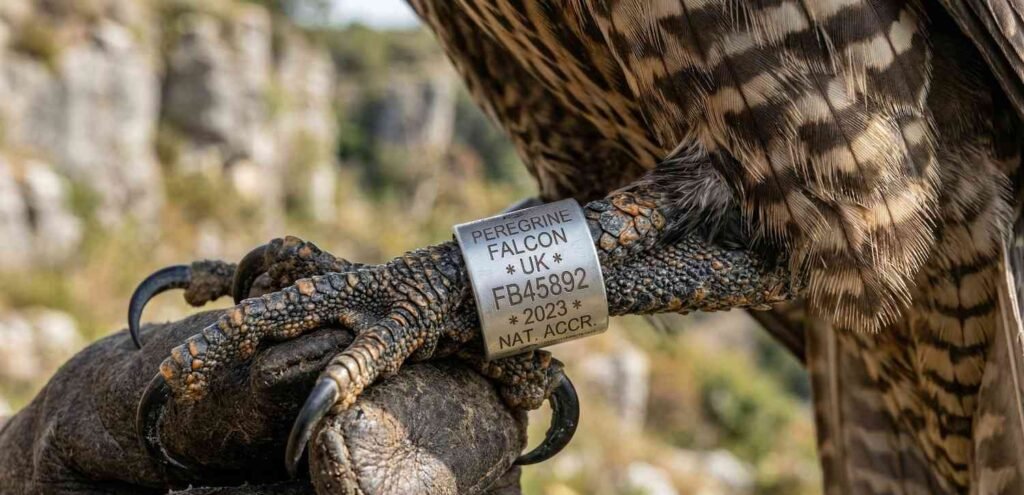
- Reporting: Every egg laid, hatched, or failed must be carefully logged. Successfully bred birds must be banded with a smooth USFWS band to prove they were captive bred.
UK Regulations (DEFRA and APHA)
The UK has equally strict regulations, heavily influenced by CITES (the Convention on International Trade in Endangered Species).
- Article 10 Certificates: To breed and sell captive-bred birds of prey for commercial purposes in the UK, you must obtain an Article 10 certificate for each bird.
- Ringing/Banding: All captive-bred raptors in the UK must be fitted with a closed, smooth leg ring immediately after hatching.
- Wildlife and Countryside Act 1981: This Act strictly prohibits the taking of wild birds for breeding. All breeding stock must be legally obtained from captive-bred birds.
Setting Up the Breeding Facility
A successful falconry breeding program starts with the environment. Raptors are incredibly sensitive to stress, and if they do not feel secure, they simply will not breed.
The Breeding Chamber
The breeding chamber needs to be a secluded, quiet haven. Unlike standard falconry mews where birds are tethered or free-lofted, breeding rooms should be large enough to allow for flight, companionship, and natural behavior.
- Isolation: Many breeders use solid walls with slatted roofs. Birds need natural sunlight and rain, but they cannot see humans, dogs, or passing traffic.
- Nest Ledges: Different species have different nesting preferences. Falcons prefer high, flat ledges filled with smooth pea gravel where they can scrape a bowl. Hawks, like the Harris Hawk, prefer a stick nest built on a sturdy platform or in a large barrel.
- Security: Double-door entries are essential to prevent accidental escapes. Predator-proofing against raccoons, foxes, and stray cats is also non-negotiable.
The Breeding Process: From Pairing to Mating
Once the facilities are ready and the legal paperwork is done, the actual biological process begins. This is where a breeder’s skill, patience, and intuition are truly tested.
Choosing a Breeding Pair
Genetics play a large role in falconry breeding. Breeders look for specific traits: size, hunting drive, temperament, and feather quality. Line breeding is sometimes used to lock in desired traits, but careful outcrossing is necessary to prevent genetic bottlenecks.
Natural Mating vs. Artificial Insemination (AI)
There are two basic methods for fertilizing raptor eggs in captivity:
- Natural mating: A male and female are placed together in a breeding chamber. If they are compatible, they will engage in courtship feeding, vocalizations, and eventually mate naturally. This is common with hawks and owls.
- Artificial insemination (AI): Many of the advanced falcons used in breeding are “marked” (raised by humans from a very young age). Because they identify with humans rather than their own kind, they will not mate with any other bird. Instead, they court the human race. The breeder collects semen from the male imprint and artificially impregnates the female imprint. During the process, AI allows for accurate genetic pairing and the creation of hybrids (such as a peregrine/gyrfalcon cross).
Incubation: The Critical Phase
After the eggs are laid, the clock starts ticking. A falconer must decide whether to let the parents incubate the eggs naturally or to pull them for artificial incubation.
Natural vs. Artificial Incubation
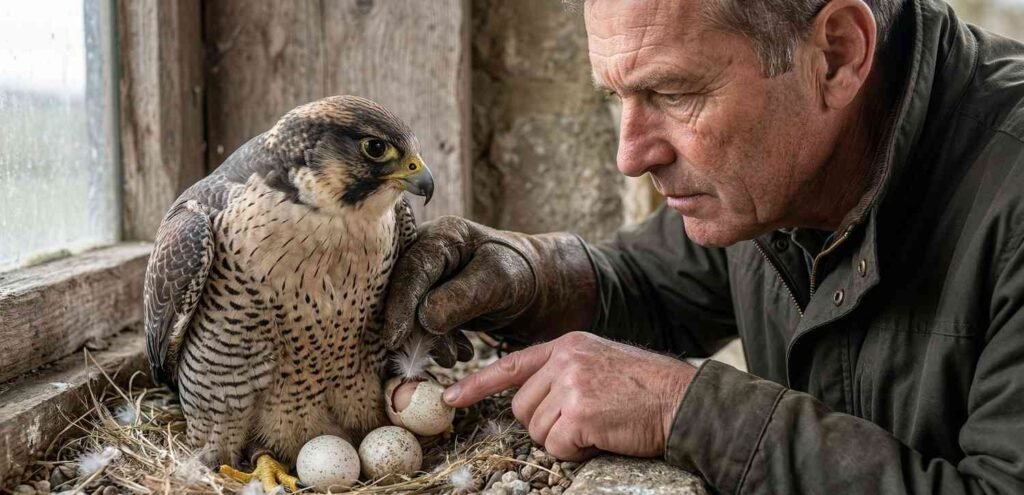
Leaving the eggs with the parents is less work for the breeder, but it comes with risks. Weather changes, inexperienced parents, or chamber malfunctions can lead to cracked or cold eggs.
Most serious falconry breeders pull the eggs shortly after they are laid. This not only protects the egg but often triggers the female to “double clutch” (lay a second batch of eggs), increasing the yearly yield.
The Science of Incubators
- Temperature: Usually maintained around 99.5°F (37.5°C). Even a one-degree fluctuation can be fatal to a developing embryo.
- Humidity: Obsessively monitored. Bird eggs must lose a certain percentage of their weight (usually about 15%) through moisture loss before they hatch. Breeders weigh the eggs daily to adjust the incubator’s humidity.
- Candling: Breeders use high-intensity light in a darkened room to look inside the egg. This allows them to see blood vessels developing, check the size of the air sacs, and make sure the baby is in the right place to hatch.
Raising Eyasses (Chicks)
The term for a baby bird of prey is eyasse. Raising chicks is a demanding, 24-hour job that requires in-depth knowledge of nutrition.
Imprinting vs. Parental Raising
The way a chick is raised determines its psychological future.
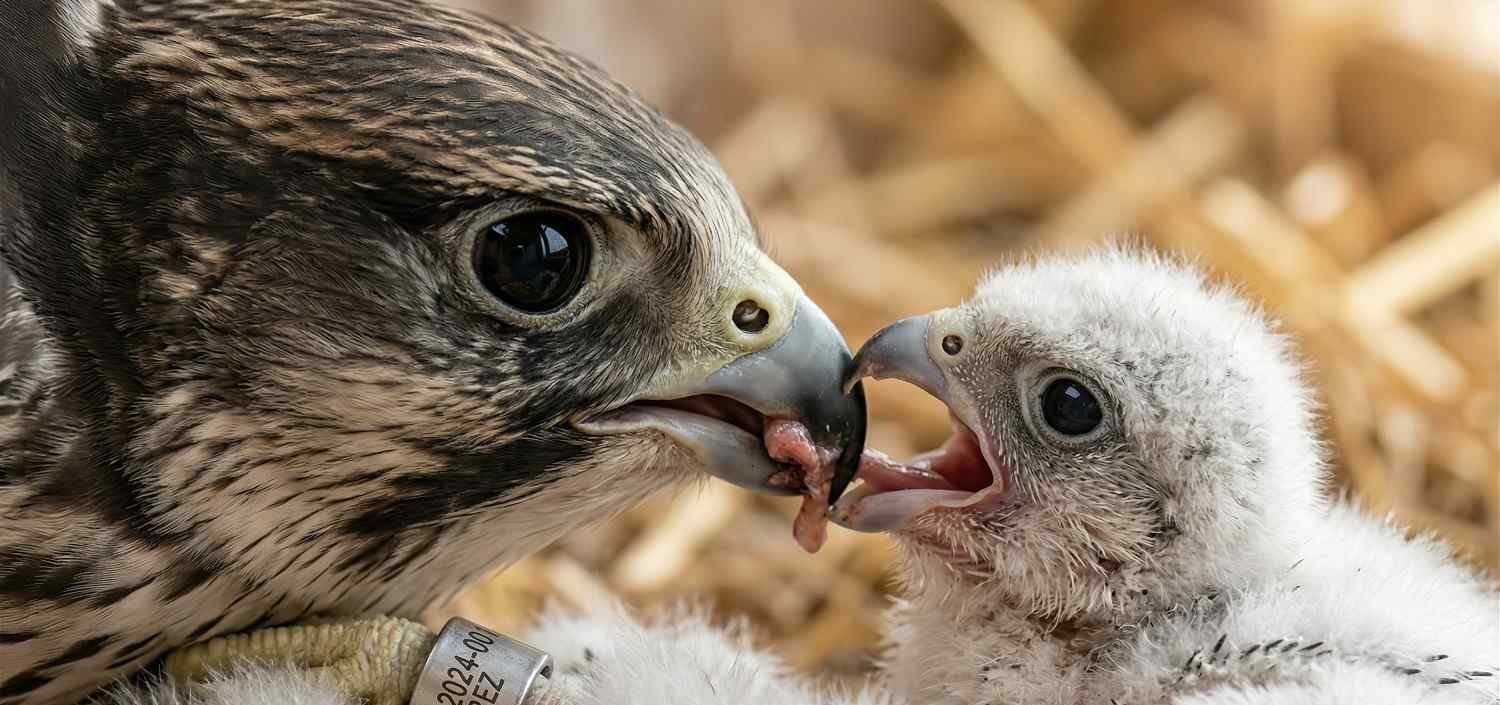
- Parental Raising: Chicks are returned to their natural parents (or foster raptor parents) in a chamber. They grow up knowing that they are birds. This makes for excellent future breeding and hunting companions.
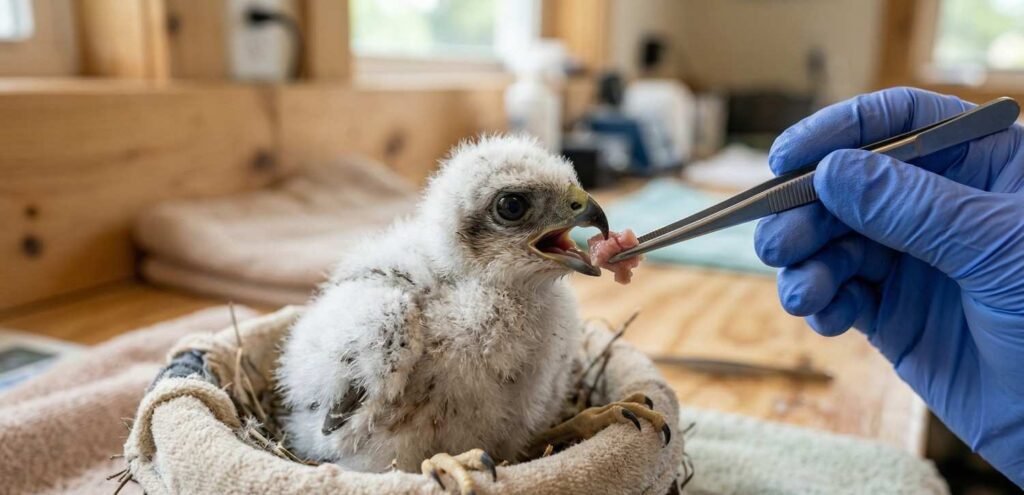
- Hand-reared (imprinting): The breeder feeds the chick from day one. The bird grows up completely fearless of humans. Imprints are often vocal and can be aggressive if not handled properly, but they are incredibly bold hunters and essential for future artificial insemination programs.
Nutrition and Diet
You cannot feed a baby raptor commercial pet food. They need a complete prey diet to thrive. Breeders use high-quality, ground quail, mice, and day-old chicks. The diet should include bones for calcium (essential to prevent metabolic bone disease) and internal organs for essential vitamins. As they grow, whole pieces of meat are introduced so they can learn to tear food with their beaks.
Challenges in Falconry Breeding
While deeply rewarding, falconry breeding is not for the faint of heart. It is expensive, time-consuming, and fraught with potential heartbreak.
- Infertility: Even with the perfect pairing or AI, some eggs simply will not be fertile.
- Disease: Captive birds are susceptible to respiratory problems such as Aspergillosis, a fungal infection that can quickly destroy the breeding chamber. West Nile virus and avian influenza are also major threats that breeders should vaccinate against or establish strict biosecurity protocols for.
- Financial costs: The cost of raising falcons, purchasing high-quality complete game food, operating commercial incubators, and paying for veterinary care can easily run into the tens of thousands of dollars. It takes years for a breeding program to become profitable.
The Future of Falconry Breeding and Conservation
Falconry breeding is no longer just about providing birds for sport. It is a key pillar of global wildlife conservation. The techniques developed by falconers are the very methods that biologists use today to save endangered species.
From the California condor recovery program in the United States to the breeding of the Mauritius kestrel, the skills of private falconry falcons have saved numerous species from complete extinction. As urbanization and climate change threaten wild raptor habitats, the captive gene pool maintained by dedicated falconry breeders is an increasingly important safety net for nature.
Final Thoughts
Falconry breeding is a close blend of art, science, and devotion. Whether you’re in the United States, the United Kingdom, or anywhere else in the world, successfully breeding birds of prey requires a deep understanding of genetics, strict compliance with wildlife laws, and an unwavering commitment to the birds’ welfare.