Falconry Birds for Sale: A Comprehensive Guide to Finding Your Winged Partner
There’s nothing quite like the weight of a raptor on your glove. The sharp grip of the talons, the intense, calculating stare, and the sheer, uncontrollable power of a bird of prey perched inches from your face is an experience that changes people. If you’ve been inspired by the ancient art of hunting with birds and are now looking for falconry birds for sale, you’re on the verge of a major, life-changing commitment.
Buying a falcon or hawk is not like bringing home a golden retriever. They are not pets. They are wild predators, highly skilled athletes who require hours of daily care, specialized diets, expensive equipment, and a deep understanding of avian psychology.
Whether you’re in the United States, the United Kingdom, or somewhere else with a strong falconry tradition, this guide will tell you exactly what it takes to acquire, house, and hunt with a bird of prey.

The Reality of the Falconry Lifestyle
Before you look for falconry birds for sale, you need to understand the everyday reality of the sport. Falconry is often described as a disease, an obsession that dictates your schedule.
When you commit to a bird, you commit to daily weighings using a highly accurate gram scale. A raptor’s weight determines its motivation to hunt and return to you. If it’s too heavy, it will fly away. If it’s too light, it can become fatally ill. You’ll be handling raw meat — quail, mice, day-old chicks and rabbits — every single day. You’ll spend your weekends wading through mud, brush and snow, often coming home empty-handed and exhausted.
Navigating the Legal Landscape: USA vs. UK
Because birds of prey are so heavily protected, the legal hoops you have to jump through vary considerably depending on where you live.
United States: A highly regulated passion
In the US, you can’t simply go online, find falconry birds for sale, and hit “check out.” The process is strictly regulated by the U.S. Fish and Wildlife Service (USFWS) and your state’s wildlife agency.
- Exam: You must first pass a rigorous written state exam that covers raptor biology, care, diseases, and game laws.
- Sponsorship: You must find a general or master falconer who is willing to sponsor you as an apprentice for at least two years. Sponsors are notoriously picky and will turn away anyone who isn’t 100% dedicated.
- Facility Inspection: Before you can acquire a bird, a state warden must inspect your raptor housing (“meow”) and your seasonal area to ensure they meet strict legal dimensions and safety standards.
- Acquiring Birds: In the United States, apprentices are generally not allowed to purchase captive-bred birds initially. You must trap a wild, juvenile bird (a “passage” bird) under the supervision of your sponsor. Typically, this is a red-tailed hawk or American kestrel. You can only purchase captive-bred birds after you have completed your apprenticeship.
UK: A Different Approach
The UK has a much longer, less restrictive history with falconry. Laws here focus more on the origin of the bird and the act of hunting rather than licensing the falconer.
- No license to keep: Surprisingly to many Americans, you don’t need a specific falconry license to own a captive-bred bird in the UK.
- Article 10 Certificate: However, if you are buying a bird listed under CITES Annex A (such as a peregrine falcon or goshawk), it must come with an Article 10 (A10) certificate to prove that it is legally captive. Buying or selling an Annex A bird without an A10 is a serious criminal offence.
- Hunting laws: While keeping a bird is largely unregulated, hunting with one is not. You must get permission from the landowner to fly and hunt your bird, and you must strictly follow the Wildlife and Countryside Act 1981 regarding which species you can hunt and when.

Top Falconry Birds for Sale: Choosing Your Species
If you have your legal statuses sorted out and are ready to look at breeders, you need to choose the right species. The best bird for you depends entirely on what kind of game is available in your area and your level of experience.
1. Red-tailed Hawk (Buteo jamaicensis)
- Best for: Beginners (USA), squirrel and rabbit hunters
- Temperament: Strong, forgiving, and relatively calm once trained.
- Overview: The red-tailed is the undisputed king of American apprenticeships. They are the “tanks” of the sky. While they may not have the blinding speed of a falcon, they do snap through trees and brush past rabbits and squirrels with incredible power. They are strict and can forgive the inevitable mistakes a beginner will make regarding weight management.
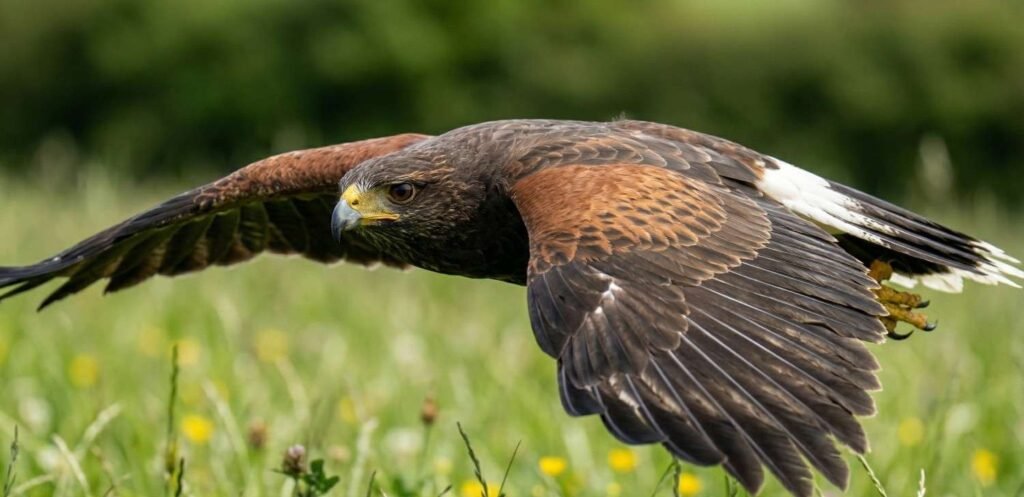
2. Harris’s Hawk (Parabutio unisanctis)
- Best for: Beginner (UK) to Advanced (Global), Mixed terrain.
- Temperament: Highly social, intelligent, pack-oriented.
- Overview: If you’re looking for falconry birds for sale in the UK, Harris’s Hawk is almost always the recommended starting point. Native to the American Southwest, these birds are unique in that they hunt in the wild in family groups. This makes them naturally drawn to working alongside a human. They are incredibly smart, easy to train, and will happily follow you from tree to tree through the forest.
3. Peregrine Falcon (Falco peregrinus)
- Best for: Advanced falconers, open country, winged game.
- Temperament: High energy, athletic, requires wide open spaces.
- Overview: Sophisticated falcon. Peregrines are the fastest animals on Earth, capable of diving at speeds of up to 240 mph to snatch a duck, grouse, or pheasant mid-air. You should only seek out peregrines if you have access to thousands of acres of wide-open, treeless land. They are strictly for experienced falconers who understand how to condition a high-performance avian athlete.
4. Northern Goshawk (Accipiter gentilis)
- Best for: Master falconers, dense forests.
- Temperament: Fierce, high-strung, incredibly fast over short distances.
- Overview: Goshawks are the sports cars of the raptor world. They are visually stunning with their red eyes and slate-gray backs, but they are notorious for their explosive tempers. They require a falconer who is exceptionally calm, patient, and precise. They hunt rabbits, hares, and pheasants in dense forests, taking a dime to chase prey.
5. American Kestrel (Falco sparverius)
- Best for: Beginners (USA), small game (starlings, sparrows).
- Temperament: Delicate, fast metabolism, high energy.
- Overview: Despite their small size, kestrels are true falcons. They are an option for American apprentices who live in urban or suburban environments without access to large rabbit farms. However, because they weigh so little (about 100 grams), weight management is a razor’s edge. An error of just a few grams can be fatal, making them a challenging beginner bird.
How much does it cost? (Financial Reality)
When you type “market birds for sale” into a search engine, you might be thinking only of the purchase price of the animal. In fact, the bird is often the cheapest part of the equation.
Here’s a realistic breakdown of what you can expect to spend in your first year (prices estimated in USD and GBP).
| Item / Category | Estimated Cost (USD) | Estimated Cost (GBP) |
| The Bird (Captive Bred) | $500 – $3,000+ | £250 – £1,500+ |
| The Mew (Housing materials) | $1,000 – $3,000 | £800 – £2,500 |
| Telemetry (GPS/VHF Tracker) | $500 – $1,200 | £400 – £1,000 |
| Leather & Hardware (Jesses, gloves) | $200 – $400 | £150 – £300 |
| Perches (Bow, Block, Giant Hood) | $200 – $500 | £150 – £400 |
| Food (Annual estimate) | $400 – $800 | £300 – £600 |
| Avian Vet Visits | $200 – $500+ | £150 – £400+ |
Total First Year Estimate: Easily upwards of $3,000 to $6,000 (£2,200 to £4,700), not including the fuel costs of driving to your hunting grounds every weekend.
Equipment Required: Grooming
You can’t bring a bird home unless you have the proper equipment. Falconry relies on equipment that has barely changed in a thousand years, combined with cutting-edge technology.
- The Mew: This is a special, free-flying aviary where the bird lives when it is not flown or tethered. It should protect the bird from predators (such as foxes or raccoons), severe weather, and prevent damage to its flight feathers.
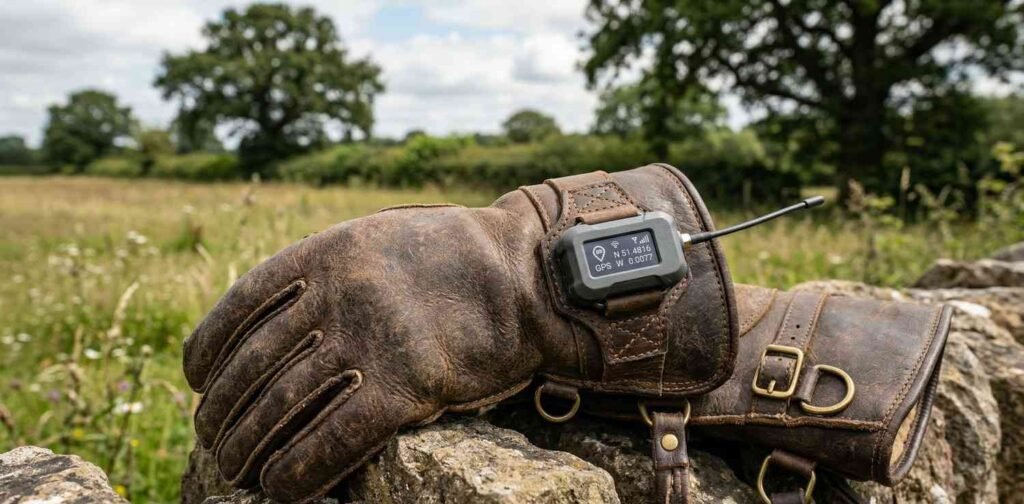
- Leather Furniture: You will need a thick leather gauntlet (glove). The bird will wear anklets (leather bracelets around its legs), jesus (leather straps with anklets), swivels to prevent tangling, and a leash.
- Hood: A custom-made leather cap that goes over the falcon’s head. Since birds of prey are highly visual, depriving them of their sight during transport or stressful situations will quickly calm them down.
- Telemetry: This is non-negotiable in modern falconry. A small radio or GPS transmitter is attached to the bird’s leg, tail, or back. If the bird chases prey over the horizon and gets lost, telemetry is the only way you can get your mate back.
Where to find ethical falconry birds for sale
If you are legally clear and financially prepared, the final step is to actually source the bird.
To avoid red flags:
Never buy a bird from generic pet classifieds, social media groups that feel sketchy, or anyone offering to ship birds internationally without mountains of CITES paperwork. The black market for raptors is real, and participating in it can lead to prison sentences.
The right way to buy:
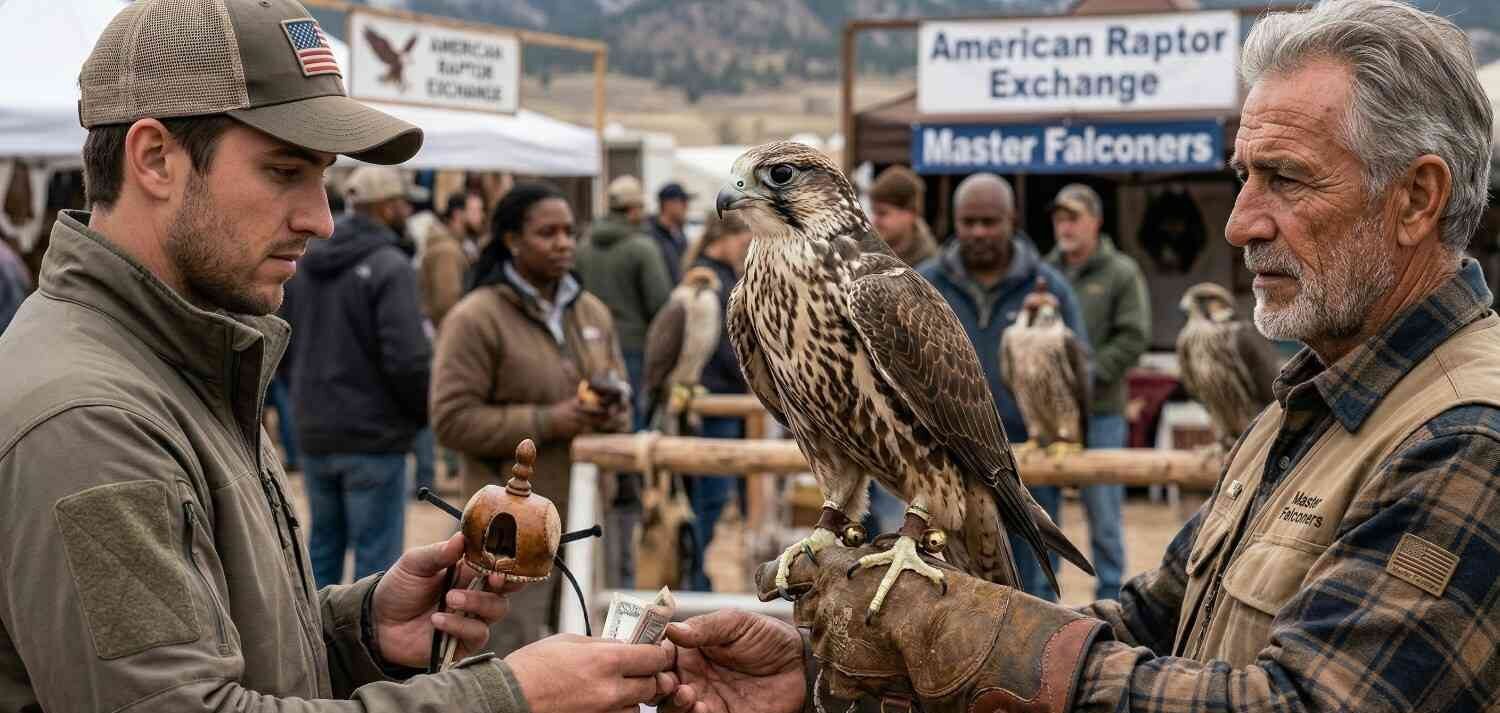
- Networking: The falconry community is incredibly small. Go to local meetups hosted by your state or national falconry club (such as the North American Falconers Association in the US or the British Falconers Club in the UK).
- Reputable breeders: Word of mouth is everything. Experienced falconers will be happy to point you in the direction of breeders who raise healthy, well-socialized birds. Good breeders will interview you as much as you will interview them. They want to make sure their birds are going to working falconers, not pet owners.
- Raptor Rescues/Rehabs: Occasionally, rehabilitation centers have birds that cannot be released that can be transferred to master falconers for educational or hunting purposes, although this is rare for beginners.
Health, Diet, and Longevity
When looking at falconry birds for sale, remember that you are buying an animal that can live a very long time. A well-cared-for red-tailed hawk or harris hawk can easily live into their teens or early twenties.
Their diet should consist of the same things they would eat in the wild. You can’t feed them hot dogs, chicken breasts from the grocery store, or ground beef. They need a whole-animal diet to get adequate calcium from the bones and vitamins from the organs. You will need a dedicated freezer in your garage filled with frozen quail, whole mice, and day-old cockerels.
Additionally, you should seek out a certified avian veterinarian before you get your bird. Birds of prey are incredibly stoic. By the time they show signs of illness (such as Aspergillosis, a deadly fungal respiratory infection, or Bumblefoot, a severe foot infection), they are often very close to death. Prompt access to a vet who understands raptor medicine is critical.
The Unbreakable Bond of Prey
You don’t own a falconry bird. You enter into a partnership with it. The bird stays with you because you are a convenient asset to its survival. You flush the game, you provide security, and in return, the bird allows you a front row seat to the raw, unfiltered beauty of nature. Watching your hawk crash through a bush, or your falcon swoop down from a thousand feet into the sky like a teardrop missile, is an adrenaline rush that no one else can replicate.