Can You Mow Grass Wet? The Ultimate Guide to Lawn Health, Safety, and Mechanics
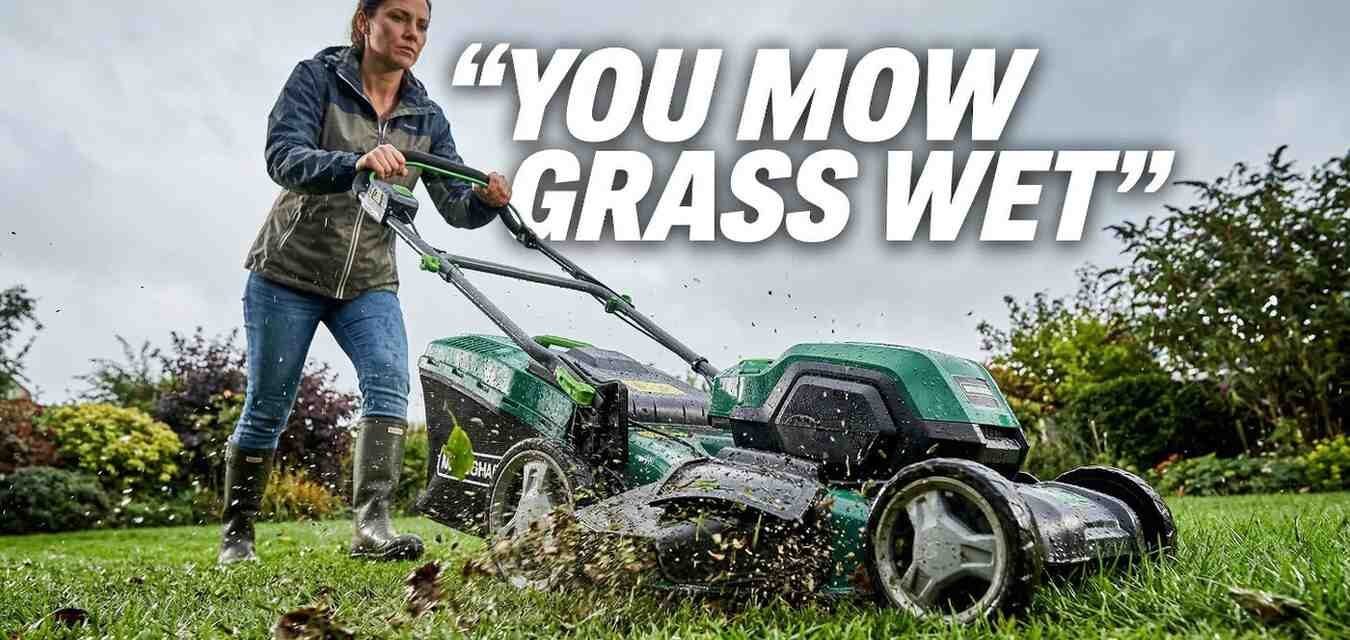
It is the eternal struggle of the homeowner: The grass is growing at an alarming rate, ankle-deep and looking unkempt. You finally carve out a Saturday morning to tame the yard, but you wake up to a heavy dew, or perhaps a thunderstorm rolled through the night before. The sun is out now, but the turf is soaked.
You stand in the garage, hand on the mower, asking the question: “Can I get away with mowing this wet?”
If you ask a neighbor, they might shrug and say, “It’s fine.” If you ask a golf course superintendent, they might look at you with horror. The truth is complex. While the physical act of mowing wet grass is possible, the consequences ripple through the health of your turf, the lifespan of your machinery, and the quality of your soil.
This is not just a yes or no answer. This is a comprehensive breakdown of the physics, biology, and mechanics of mowing wet grass. By the end of this guide, you will understand exactly why the experts say wait, and exactly how to proceed if you have no other choice.
Part 1: The Biology of the Blade
To understand why mowing wet grass is problematic, we must first look at the anatomy of the grass plant itself.
The Tearing vs. Shearing Effect
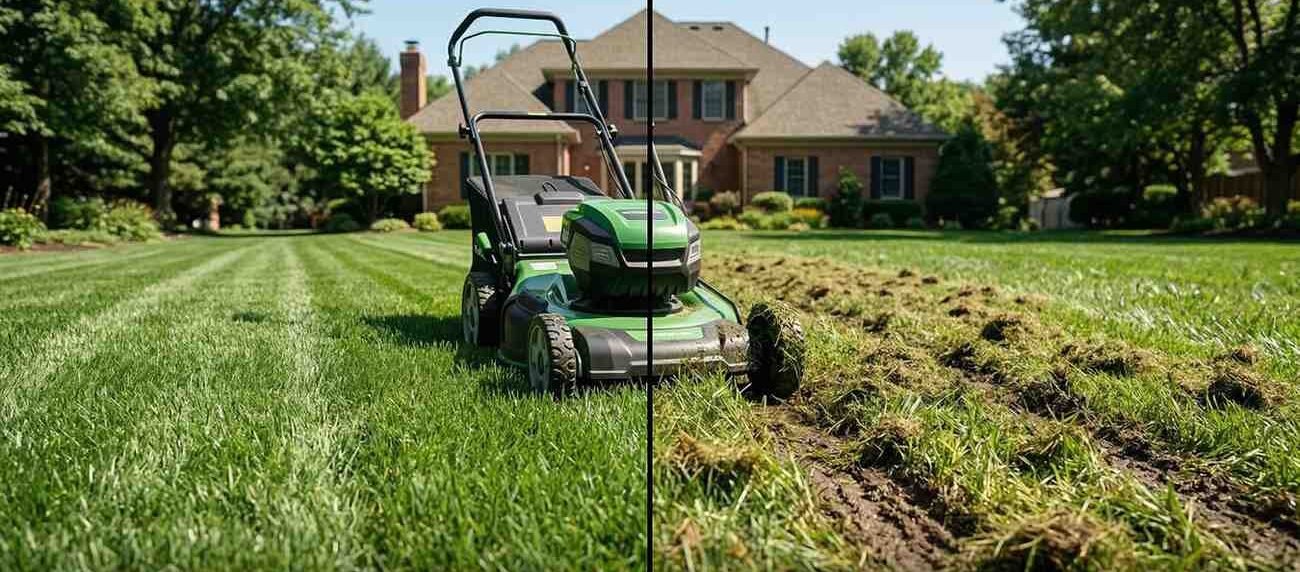
When grass is dry, the blades stand upright, held tense by their internal water pressure (turgor pressure). When a mower blade—spinning at roughly 3,000 revolutions per minute—hits a dry blade of grass, it slices through it cleanly, much like a sharp pair of scissors cutting paper.
However, when grass is wet, two things happen:
- Weight: The water droplets weigh the blade down, causing it to bend.
- Lubrication: The water acts as a lubricant on the metal of the mower blade.
Instead of a clean slice, the mower blade often slides along the wet grass blade before hacking it off. This results in a tear rather than a cut. If you look at wet-mown grass under a microscope, the tip looks shredded.
Why does this matter?
A shredded tip has a larger surface area of open “wound” than a clean cut. This causes the grass to lose moisture more rapidly once the sun comes out, leading to the “white haze” you often see on lawns a day after a wet mow. Those brown, jagged tips are dead plant tissue.
The Fungal Highway
Lawn diseases love moisture. Fungi like Brown Patch (Rhizoctonia), Pythium Blight, and Dollar Spot rely on water to travel.1
When you mow a wet lawn, you are essentially creating the perfect storm for disease transmission:
- The Vector: Your mower wheels pick up fungal spores from one infected patch of the yard.2
- The Medium: The wet grass clippings clump together on the underside of your deck.
- The Distribution: As you mow, these infected, wet clumps drop onto healthy parts of the lawn. Because they are wet and heavy, they mat down, trapping humidity against the soil surface.
This “suffocation” prevents airflow and sunlight from reaching the crown of the plant, creating a humid greenhouse effect that accelerates fungal growth.
Key Takeaway: Mowing wet doesn’t just cut the grass; it actively helps transport disease across your property.3
Part 2: The Physics of Soil Compaction
Perhaps the most overlooked danger of wet mowing is what happens under the grass.
Understanding Soil Porosity
Healthy soil is not a solid block; it is a mixture of minerals, organic matter, and roughly 25% air. These air pockets (pores) are essential for roots to breathe and for water to drain.4
The Sponge Effect
Think of your lawn’s soil like a kitchen sponge. When a sponge is dry, it is stiff and resistant to pressure.5 You can press on it, and it bounces back. When a sponge is wet, it becomes soft and malleable. If you squeeze it, it stays compressed.
When you run a 60 to 100-pound push mower (or a 500-pound riding mower) over wet soil, the tires press the soil particles together, squeezing out the air pockets. This is called soil compaction.
The Consequences of Compaction:
- Root Suffocation: As the air pockets collapse, roots cannot access oxygen.6
- Drainage Issues: Water can no longer filter through the soil, leading to standing water and more mud.7
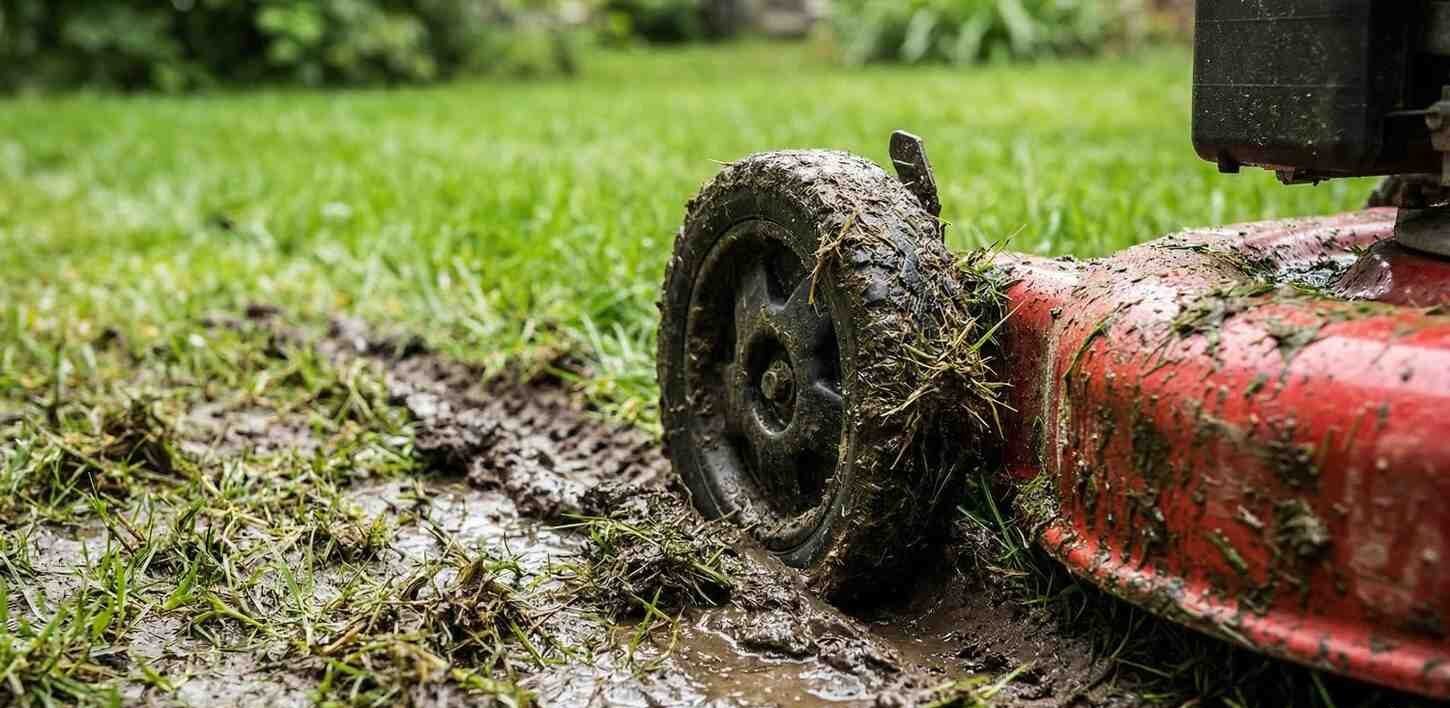
- Rutting: On wet soil, tires sink. Once the soil dries, these ruts harden into concrete-like tracks that make future mowing bumpy and difficult.8
Part 3: The Mechanics of the Mower
We have discussed the grass and the dirt, but what about the machine? Mowers are engineered to operate within specific aerodynamic parameters. Water throws those parameters out the window.
The Aerodynamics of the Deck
A lawn mower deck is not just a cover for the blade; it is a wind tunnel. The blade is designed with a “lift” or a “wing” on the back edge. As it spins, it creates a powerful vacuum that sucks the grass blades upward so they can be cut evenly. It then uses that airflow to shoot the clippings out the side chute or into the bag.
Water destroys this airflow.
Wet grass is significantly heavier than dry grass. The vacuum created by the blade is often not strong enough to lift the heavy, wet blades. This leads to:
- Uneven Cutting: Some blades are lifted and cut, others remain bent over and are missed.
- The Clog: Wet clippings are sticky.10 Instead of flowing out the discharge chute, they paste themselves to the inner walls of the deck.
The Strain on the Engine
As the grass builds up under the deck, the space for the blade to spin decreases. The engine has to work significantly harder to push the blade through this thick, green paste.
- Gas Engines: You will hear the RPMs drop. The engine will “bog down,” consuming fuel at a much higher rate and increasing the operating temperature, which can shorten the engine’s life.
- Electric/Battery Mowers: The resistance drains the battery rapidly.11 A lawn that usually takes one charge might take three. Additionally, the motor may overheat as it tries to maintain torque against the resistance of the wet clumps.
The Corrosion Factor
Grass is naturally acidic. When you mix acidic grass sap with water and plaster it against a metal mower deck, you create a recipe for rust. If this wet paste is left to dry and harden after the mow, it traps moisture against the metal, leading to premature deck rot.
Part 4: The Safety Hazard (Human Element)
We often forget that mowing is operating heavy machinery with a rapidly spinning blade. Safety should always be the primary concern.
The Slip and Fall
According to consumer safety commissions, thousands of injuries occur annually involving lawn mowers.12 A significant portion of these involve slips. Wet grass has a coefficient of friction similar to ice.
If you are using a push mower, your footing is compromised. A slip on a slope could result in your feet sliding under the mower deck. If you are on a riding mower, wet grass significantly reduces the traction of the drive wheels. This can cause the mower to slide uncontrollably down hills or into ditches, potentially tipping over.
Part 5: The “Emergency Protocol” – How to Mow Wet if You Must
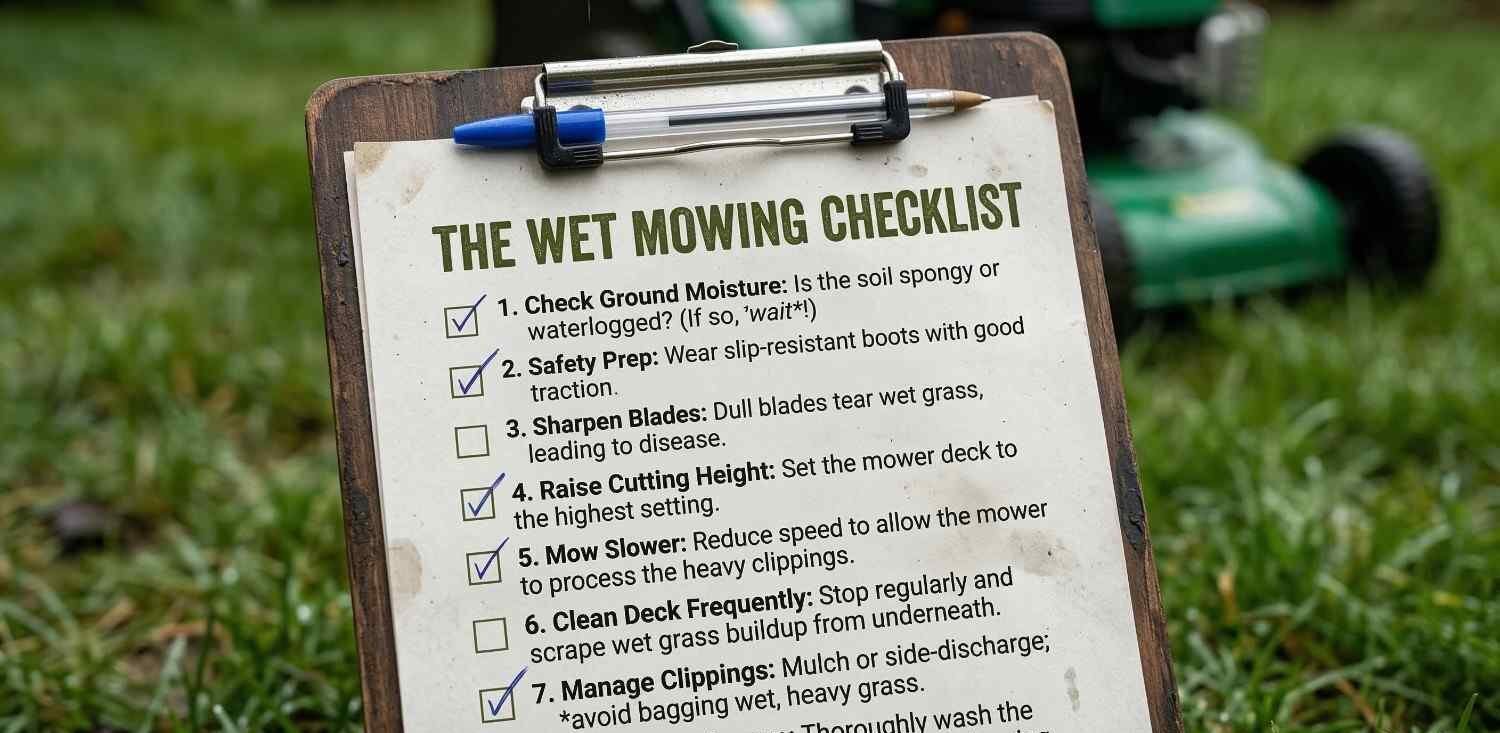
Despite all the warnings above, we live in the real world. Sometimes, it rains for two weeks straight. Sometimes, the HOA is threatening a fine. If you absolutely cannot wait for the lawn to dry, you must change your technique to mitigate the damage.
Follow this Wet Mowing Protocol strictly.
1. The Inspection Phase
Before you start, walk the lawn.
- The Shoe Test: Step on the grass. If water squishes up around your sole, or if the footprint fills with water, stop. It is too wet. You will destroy the soil structure.
- The Firmness Check: If the ground is firm but the grass blades are wet (dew or light rain), you may proceed with caution.
2. Prep Your Equipment
- Sharpen the Blade: This is non-negotiable. You need the sharpest edge possible to slice through wet grass rather than shredding it.
- Clean the Deck: Start with a perfectly clean underside. Any old dry grass will act as a velcro anchor for the new wet grass to stick to.
- Fuel Up: Ensure you have a full tank or fully charged battery; you will need the extra power.
3. Adjust the Height
Raise your mower deck.
If you normally cut at 2.5 inches, move it up to 3.5 or 4 inches.
- Cutting only the very top inch of the grass requires less torque than cutting deeper into the thicker, wetter base of the plant.
4. Discharge Management
- NO Bagging: Wet grass is too heavy. It will fill the bag in seconds and likely tear the mesh or break the bagger mount.
- NO Mulching: Mulching requires the grass to circulate under the deck to be cut multiple times. Wet grass will simply ball up and drop in unsightly “haystacks” that will kill the grass underneath.
- YES Side Discharge: Open the side chute. Let the clippings fly out. You want them to exit the deck as fast as possible to maintain airflow.
5. The Mowing Technique
- Half-Swaths: Do not cut a full width of grass. Overlap your previous line by 50%. This means the mower is only cutting half the amount of grass it usually does, reducing strain on the engine.
- Slow Down: Keep the throttle (blade speed) on high, but move your walking/driving speed to “slow.” Give the blade time to process the wet material.
- Clean Frequently: Every 10 minutes, turn the mower off, disconnect the spark plug wire (for safety), and use a scraper or stick to remove the buildup under the deck. You will be shocked at how fast it accumulates.
Part 6: Post-Mow Recovery
You finished the job. The lawn is shorter, but it probably looks a bit messy. Here is how to clean up the aftermath.
Deal with the Clumps
You will likely have heavy, green clumps of wet grass (“haystacks”) sitting on your lawn. Do not leave them.
- Wait for them to dry: Give it a few hours or a day until the clumps turn pale and dry out.
- Re-mow or Rake: Once dry, run over the clumps again with the mower (mulching mode) to disperse them, or rake them up. If left wet, they will kill the grass beneath them within 48 hours.
Clean the Machine
This is the most critical step for your equipment.
- Hose it down: While the grass is still wet, it is easier to remove. Use a garden hose to blast the underside of the deck.
- Scrape it: Use a plastic putty knife to remove the paste.
- Dry it: If possible, let the mower sit in the sun to dry, or use a leaf blower to dry the metal parts to prevent rust.
- Lubricate: Spray a little WD-40 or silicone spray on the clean under-deck (avoiding the belt) to help prevent future sticking and corrosion.
Part 7: Seasonal Nuances
Not all wet grass is the same. The season dictates how risky the mow is.
Spring: The High-Risk Zone
In spring, the grass is growing rapidly and is full of moisture (succulent). The soil is often saturated from winter snowmelt or spring rains.
- Verdict: Avoid wet mowing if at all possible. The risk of soil compaction and fungal disease is highest here.
Summer: The Thunderstorm Window
Summer grass is tougher and drier. Rain usually comes in bursts (storms) rather than days of drizzle.
- Verdict: You can usually wait an hour or two. The hot summer sun dries grass quickly. Wait for the steam to rise and the blades to lift.
Autumn: The Dew Factor
In the fall, the ground is often dry, but heavy morning dew lingers until noon.
- Verdict: This is the safest time to mow “wet.” If the ground is dry but the leaf is wet, you risk a messy cut, but you likely won’t damage the soil structure or the mower engine as severely.
Part 8: Alternatives to Traditional Mowing
If you live in a climate like the Pacific Northwest or the UK, where it rains constantly, waiting for a dry day might be impossible. Consider these equipment changes:

Robotic Mowers
High-end robotic mowers (like Husqvarna Automowers) are actually designed to work in the rain. Because they cut tiny micro-clippings every day, they don’t rely on heavy lift or suction. The clippings are so small they don’t clump.
- Benefit: The robot is light (20-30 lbs), so it won’t compact the wet soil.
String Trimmers
For small patches or truly overgrown areas that are soaking wet, use a heavy-duty string trimmer (weed eater) to knock down the height. It’s messy, but it bypasses the “clogged deck” issue entirely. You can then rake up the debris.
Patience Pays Off
So, can you mow grass wet? Yes. You can also drive your car with the parking brake on—it’s possible, but it causes unnecessary damage and costs you money in the long run.
Mowing wet grass results in a poor quality cut, increases the risk of lawn disease, compacts your soil, and puts immense strain on your mower.13 The “perfect cut”—that velvety, carpet-like finish—relies on the grass blades standing tall and the clippings dispersing evenly.14 Neither of these happens when water is involved.
The Expert Recommendation:
If the forecast shows rain for the next 3 days, and your grass is already long, wait for a break in the weather. Even a 2-hour window where the sun dries the tips of the grass is better than mowing during a drizzle.
Your lawn is a living ecosystem. Treat it with patience, and it will reward you with resilience and beauty.