Can Chickens Eat Grass? The Ultimate Guide to Foraging, Nutrition, and Safety
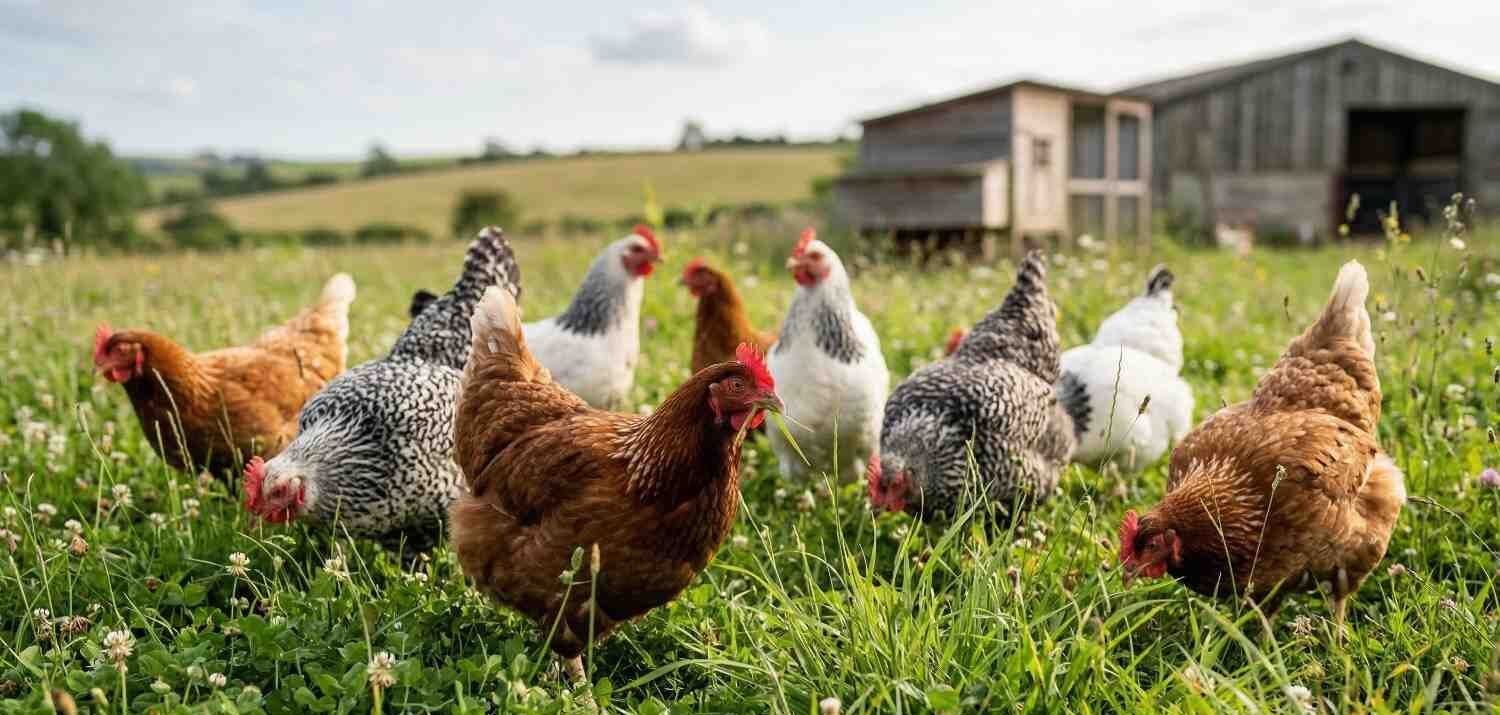
If you have ever watched a flock of backyard chickens, you know they are relentless foragers. They scratch, peck, and investigate everything in their path. As a chicken keeper, one of the most common questions that arises when looking at a lush green lawn is: Can chickens eat grass?
The short answer is yes, chickens can eat grass.1 In fact, grass is a natural part of a chicken’s diet. However, it’s not as simple as opening the coop door and letting them mow your lawn. There are significant risks involved—from crop impaction to chemical toxicity—that every poultry owner must understand.
This comprehensive guide will cover everything you need to know about feeding grass to your flock. We will dive deep into chicken anatomy, nutritional values, safety protocols, and how to manage a chicken-friendly lawn.
1. The Short Answer: Is Grass Safe?
Yes, grass is generally safe and healthy for chickens to eat. It provides vitamins, minerals, and carotenoids that make egg yolks a rich, vibrant orange. However, chickens are not cows. They are omnivores, not ruminants.2 Their digestive systems are not designed to ferment large amounts of fibrous cellulose in the same way cattle or sheep do.
Key Takeaways at a Glance:
- Yes: Fresh, untreated grass is healthy in moderation.
- No: Long, stringy grass can cause fatal blockages (impaction).3
- No: Chemically treated lawns are toxic.4
- Maybe: Lawn mower clippings can be dangerous if they mold.5
2. The Nutritional Value of Grass for Chickens
Why should you encourage your chickens to eat grass? While it shouldn’t be their only food source, grass acts as a fantastic supplement to a balanced commercial feed.
Vitamins and Minerals
Grass is packed with essential nutrients that boost flock immunity.6
- Vitamin A: Essential for growth, reproduction, and eye health.
- Vitamin E: Vital for the immune system and neurological function.
- Calcium: Crucial for strong eggshells and bone health.7
The “Egg Yolk” Effect
Have you ever noticed the difference between a store-bought egg and a farm-fresh egg? Store-bought yolks are often pale yellow. Backyard eggs from chickens that graze on grass have deep orange yolks. This is due to Carotenoids (specifically lutein and zeaxanthin) found in green plants.
Fiber
While chickens cannot digest fiber as well as mammals, a moderate amount promotes healthy gut motility. It keeps the digestive tract moving and prevents constipation.
Mental Enrichment
Foraging is a primary instinct for chickens.8 Letting them graze on grass reduces boredom, prevents feather pecking, and lowers stress levels in the flock.
Note: Grass is low in protein. If your chickens fill up entirely on grass, they may not get enough protein to lay eggs consistently. Grass should be a “side salad,” not the main course.
3. Understanding Chicken Digestion: The Crop Factor
To understand why grass can be dangerous, you must understand the chicken’s anatomy. Unlike humans who chew food before swallowing, chickens swallow food whole.
The Crop
When a chicken eats grass, it travels down the esophagus into the crop. The crop is a storage pouch at the base of the neck where food is held and moistened before digestion begins.9
The Gizzard
From the crop, food moves to the proventriculus (stomach) and then the gizzard.10 The gizzard is a strong muscular organ that acts like “teeth.”11 It grinds food up using small stones and grit the chicken has eaten.
The Danger: Impaction
If a chicken eats long, tough strands of grass, those strands can ball up in the crop. Because the grass is long and fibrous, it tangles into a knot that cannot pass into the stomach.
This is called Sour Crop or Impacted Crop.
- Impacted Crop: A physical blockage where the crop feels hard and lumpy.
- Sour Crop: A yeast infection (Candidiasis) that occurs when food gets stuck and ferments.12
How to avoid this?
- Keep grass short (under 2-3 inches).
- Ensure chickens have access to plenty of grit (small rocks) to help grind down the fiber.
4. The Dangers of Lawn Mower Clippings
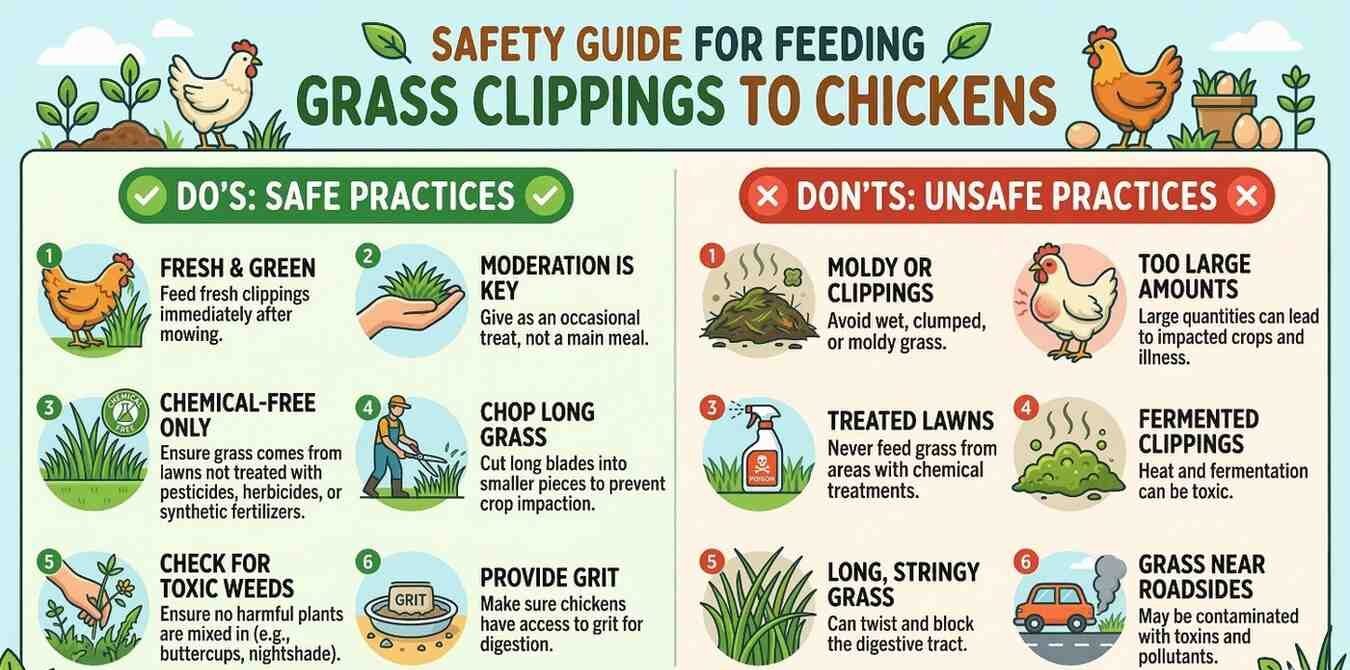
Many chicken keepers make the mistake of mowing their lawn and dumping the bag of clippings into the chicken run. This is highly risky.
1. The Gulping Hazard
When chickens see a pile of clippings, they tend to gorge themselves. They eat too much, too fast. Because the clippings are already cut, the chickens don’t take the time to peck and tear small pieces. This rapid consumption leads to crop impaction.
2. Mold and Fermentation
Cut grass begins to ferment almost immediately, especially in warm weather.
- Mold Spores: Can cause Aspergillosis (a respiratory fungal infection).13
- Botulism: Wet, slimy grass clippings can harbor the bacteria Clostridium botulinum, which produces a neurotoxin that causes paralysis and death (Limberneck).
Safe Way to Feed Clippings:
If you must feed clippings, spread them out in a very thin layer so they dry quickly, or feed a small handful immediately after mowing and remove any uneaten portion within an hour.
5. Toxic Grasses and Chemicals: The Silent Killer
The grass itself might be safe, but what is on the grass can be deadly.
Herbicides and Pesticides
If you treat your lawn with “Weed and Feed,” glyphosate (Roundup), or fertilizers, do not let your chickens graze there.
- Chickens are small animals; it takes a very small amount of chemical residue to cause kidney failure, neurological damage, or death.
- Even if the chicken survives, these chemicals can accumulate in the eggs that you eat.
The Rule: Wait at least 2-3 heavy rains or waterings (or follow the manufacturer’s specific grazing waiting period, usually 2-4 weeks) before letting chickens on treated lawns. Better yet, go organic.
Toxic Weeds Hiding in the Grass
Your lawn isn’t just grass. It likely contains weeds. While chickens are generally good at avoiding toxic plants, they can make mistakes if food is scarce.
Watch out for:
- Buttercups: Can irritate the mouth and digestive system.
- Azaleas/Rhododendrons: Highly toxic, causing heart failure.
- Nightshade: Deadly.
- Foxglove: Causes cardiac arrest.
6. How to Safely Introduce Grass to Chicks
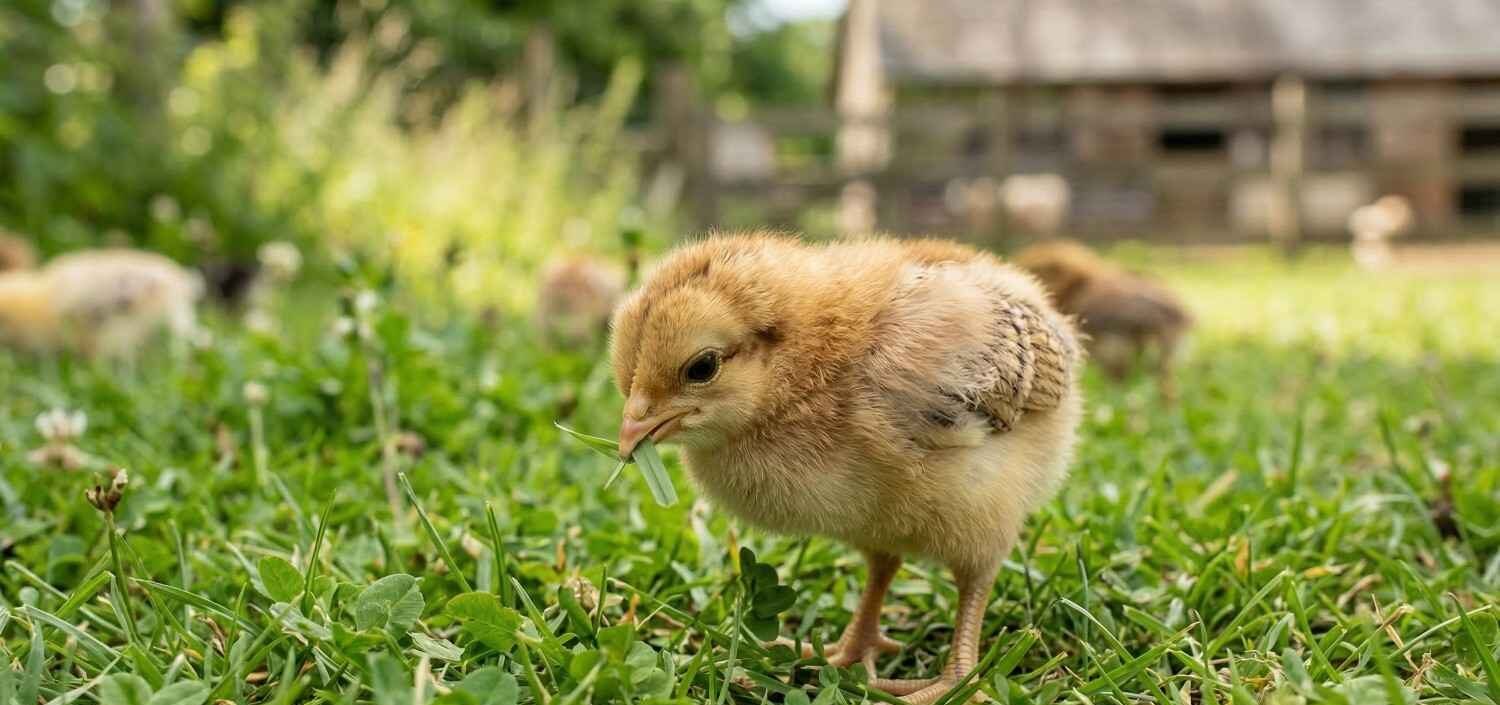
Can baby chicks eat grass? Yes, but with strict precautions.
The 2-Week Rule
Wait until chicks are at least 2 weeks old before introducing greens. Their digestive systems are sterile and delicate when they hatch.14
Grit is Non-Negotiable
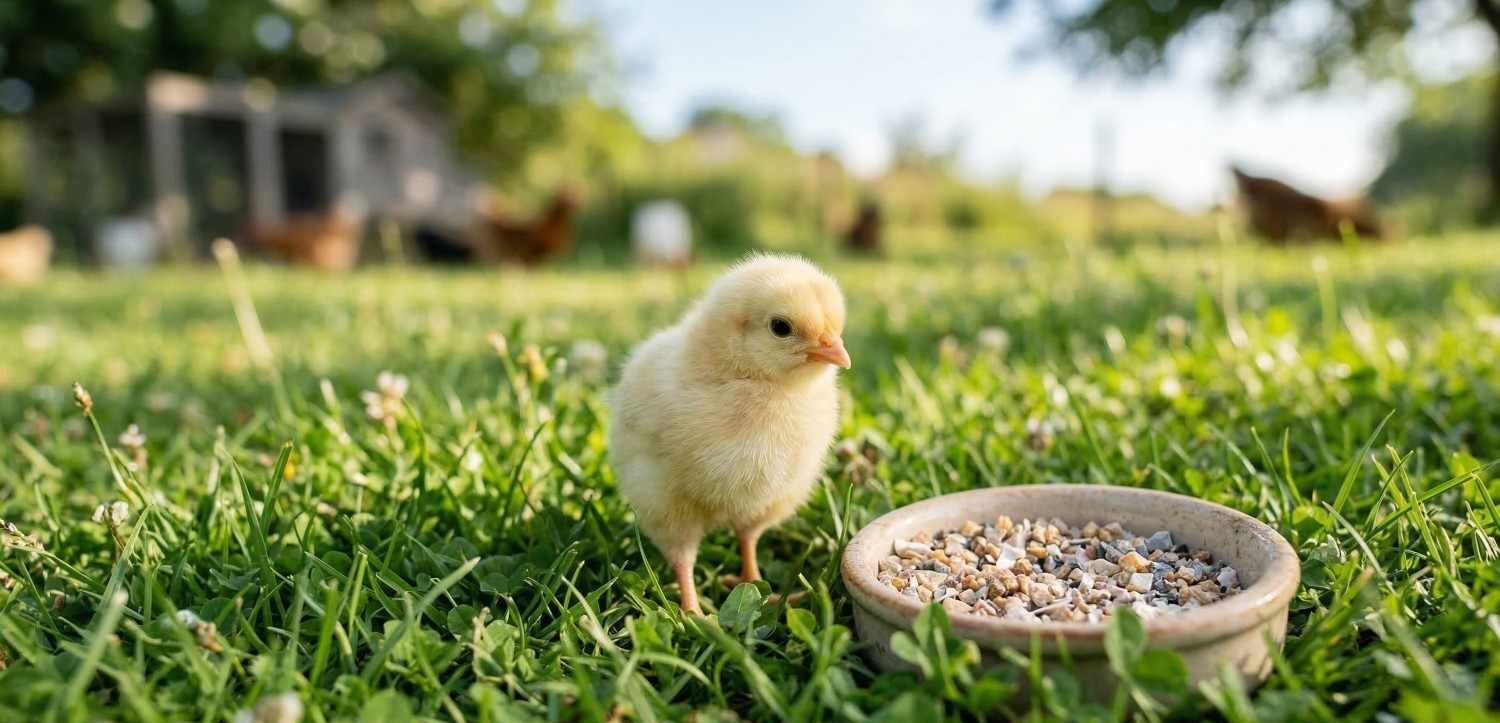
Crucial: If you feed chicks anything other than commercial crumble feed, you must provide chick grit. Without grit in their gizzard, they cannot grind down the fibrous grass, leading to immediate impaction.15
Finely Chopped
Do not give chicks long blades of grass. Use kitchen scissors to chop the grass into tiny, confetti-sized pieces (1/4 inch or smaller).
7. Best Types of Grass and Ground Cover for Chickens
If you are planting a pasture or a run for your flock, not all green is created equal. Here are the best varieties to plant:
| Plant Type | Benefits | Hardiness |
| Ryegrass | Fast-growing, durable, high protein | High |
| White Clover | Excellent source of protein, nitrogen-fixer for soil | Medium |
| Alfalfa | The “gold standard”—high in calcium and protein | Medium |
| Kentucky Bluegrass | Dense turf, withstands scratching well | High |
| Dandelion | Not a grass, but a weed that chickens love. High in vitamins. | High |
The “Chicken Tractor” Method
To prevent your chickens from turning your lawn into a mud pit, consider using a chicken tractor. This is a movable coop without a floor.
- Place the tractor on a patch of fresh grass.
- Let the chickens graze and fertilize that spot for one day.
- Move the tractor to a new spot the next day.This prevents over-grazing and keeps the grass healthy.
8. Identifying and Treating Crop Impaction
Since grass is the number one cause of crop impaction, you need to know how to spot it.
Symptoms:
- The chicken is lethargic and isolating herself.
- She is not eating or drinking.
- Her crop (at the base of the neck) feels hard and baseball-sized, even first thing in the morning.
- Foul smell coming from the beak (indicates Sour Crop).
Basic Treatment Protocol:
- Isolate: Separate the bird.
- Hydrate: Withhold food for 24 hours but provide water with electrolytes or a little apple cider vinegar.
- Massage: Gently massage the crop to try and break up the grass ball.
- Oil: Dropping a small amount of olive oil into the beak (carefully, to avoid the lungs) can help lubricate the mass.
- Vet: If the blockage doesn’t pass, surgery may be required.
9. Frequently Asked Questions (FAQs)
Here are the most common questions chicken keepers ask about grass, optimized for voice search and long-tail keywords.
Can chickens eat dried grass or hay?
Chickens can peck at alfalfa hay, which is leafy and nutritious.16 However, standard long-stemmed hay or straw provides little nutritional value and poses a high risk of crop impaction.17 They generally prefer fresh greens.
Can chickens eat grass seed?
Yes, chickens love grass seed. It is a grain, after all. However, most commercial grass seed is coated with blue or green fungicides which are toxic. Only let chickens eat “raw,” uncoated grass seed.
Why do chickens eat grass if they can’t digest cellulose?
While they can’t digest the fiber perfectly, they extract the juice and cellular contents (vitamins and sugar) inside the grass blade during the grinding process in the gizzard. The fiber then passes through as waste.
Will chickens ruin my lawn?
Yes, eventually. Chickens scratch to find bugs and eat the roots of the grass.18 A small flock in a large yard poses little threat, but a large flock in a small yard will turn grass to dirt within weeks.
Can chickens eat wet grass?
Yes, but wet grass (from rain) is fine. Wet clippings (piled up) are bad because they mold.19
10. Alternatives to Grass: The “Green” Supplement List
If you don’t have a lawn, or it’s winter, how can you provide these nutrients?
- Fodder Systems: You can sprout barley or wheat seeds in trays.20 In 6-7 days, you have a mat of 4-inch tall grass that is highly nutritious and root-bound, so they eat the whole thing.
- Cabbage on a String: Hang a head of cabbage in the run. It’s the “tetherball” of chicken treats.
- Kale and Spinach: Dark leafy greens are excellent, though spinach should be fed in moderation due to oxalic acid (which binds calcium).21
- Weeds: Pull weeds from your garden (chickweed, purslane, lamb’s quarters) and toss them to the hens.
11. Conclusion: To Graze or Not to Graze?
Can chickens eat grass? Absolutely. It is a natural, healthy, and cost-effective way to supplement their diet. It leads to happier hens, healthier immune systems, and superior eggs.
However, the responsibility lies with you, the keeper, to ensure the environment is safe.
- Keep it short: Long grass kills.
- Keep it clean: No chemicals.
- Keep it gritty: Always provide grit.