Bear with Dogs: Safety, Risks, and Management Strategies Guide
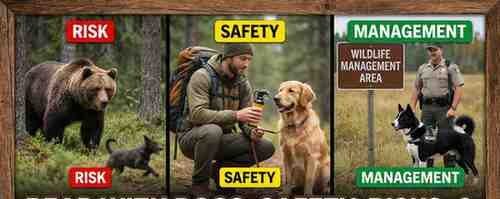
The relationship between a bear and a dog is ancient, complex, and deeply rooted in evolutionary history. For outdoor enthusiasts, hikers, and rural homeowners, understanding the dynamics of a bear with dogs is not just a matter of curiosity—it is a critical safety requirement. Whether you are exploring the backcountry with your canine companion or looking to understand how specialized breeds are helping conserve bear populations, this comprehensive guide covers every angle of the topic.
In this extensive article, we will explore why bear with dogs scenarios often turn dangerous, the essential protocols for hiking in bear country, how to handle a sudden encounter, and the fascinating world of working dogs used for bear hazing and management.

The Primal Dynamic: Why Bears and Dogs Clash
To understand the interaction of a bear with dogs, we must first look at biology. Bears and dogs (canines) are ancestral rivals. In the wild, wolves—the ancestors of domestic dogs—are one of the few natural predators of bear cubs and competitors for food. Consequently, bears do not view dogs as harmless pets; they view them as wolves.
When a bear encounters a dog, its reaction is driven by instinct. A bear may see a dog as a threat to be neutralized or, in some cases, as prey to be hunted. Conversely, domestic dogs often retain a prey drive or a protective instinct that compels them to bark at, chase, or corner a bear. This clash of instincts is the root cause of most negative encounters.
The “Wolf” Factor
Even a friendly Labrador possesses body language that screams “predator” to a wild bear. The staring eyes, the posturing, and the barking are all signals of aggression in the animal kingdom. This is why a bear with dogs is a volatile mix; the bear is often reacting defensively to what it perceives as a pack of wolves, even if it’s just a single terrier.
The Dangers of Unleashed Dogs
Statistics from wildlife agencies across North America consistently show that off-leash dogs are involved in the majority of bear attacks on humans involving canines. The freedom of an unleashed dog in bear country significantly escalates the risk profile for everyone involved.
1. Provocation and Aggression
A loose dog often lacks the recall training to return immediately when it catches a scent. When an off-leash dog smells a bear, it may rush forward to investigate or attack. This is known as provocation. A bear that might have otherwise moved away quietly is now forced into a defensive state.
Once provoked, a bear—especially a grizzly or a sow with cubs—will fight back. Dogs are agile, but bears are incredibly powerful. A single swipe can be fatal to a dog.
2. The “Boomerang Effect” (Escalation)
This is the most dangerous scenario for the human owner. It typically unfolds like this:
- The off-leash dog finds a bear and charges it, barking.
- The bear turns to defend itself and charges the dog.
- The dog, realizing it is outmatched, turns and runs back to safety—which means it runs directly back to its owner.
- The bear chases the dog, leading the angry predator right to the human.
In this bear with dogs scenario, the human is put in immediate life-threatening danger solely because the dog was not under control.
3. Food Defense
Bears are driven by their stomachs. If a dog approaches a bear that is feeding—whether on a carcass in the wild or garbage in a suburban backyard—the bear’s reaction will be swift and violent. This is food defense. Dogs often lack the prudence to respect a bear’s personal space around food sources, leading to rapid escalation.

Hiking Safely: Best Practices for Dog Owners
Enjoying nature with your pet is possible, but it requires strict adherence to safety protocols. When you introduce a bear with dogs into the wilderness, you must be the responsible party.
The Non-Negotiable Leash Rule
The single most effective way to prevent conflict is to keep your dog on a non-retractable leash, preferably 6 feet or shorter. A leashed dog allows you to:
- Control the dog’s movement if you spot a bear first.
- Prevent the dog from chasing scent trails into dense brush.
- Keep the dog close to you, which makes your group appear larger and more intimidating to a bear.
Why not retractable leashes? Retractable leashes offer too much freedom (often 20+ feet) and can snap under the force of a lunging dog or a bear encounter. You need physical control.
Situational Awareness
When hiking, you must be alert. Look for bear scat, tracks, overturned rocks, or claw marks on trees. If your dog suddenly stops, raises its hackles, or stares intently into the woods, trust their senses. They can smell and hear a bear long before you see it. In a bear with dogs context, your dog is your early warning system, but only if you are paying attention.
Making Noise
Surprise is the enemy. Bears generally want to avoid humans. By making noise—talking loudly, clapping, or singing—you alert bears to your presence, giving them time to move away. The sound of a human voice is usually a deterrent. However, the sound of a dog barking is not a deterrent; it is a challenge. Therefore, human noise is safer than dog noise.

What to Do During an Encounter (With Your Dog)
Despite your best efforts, you may find yourself facing a bear with dogs. How you react in the first few seconds is critical.
1. Stay Calm and In Control
Do not run. Running triggers a predator’s chase instinct. Grip your dog’s leash tightly. If your dog is large, command it to stay behind you or at your heel. You must control the dog’s barking if possible; a barking dog can agitate the bear further.
2. Be Loud and Big
You need to communicate to the bear that you are human and you are not prey.
- Stand your ground.
- Wave your arms slowly.
- Speak in a low, firm, monotone voice. Say things like, “Hey Bear, whoa Bear.”
- Do not scream or squeal, as this can mimic the sound of wounded prey.
3. Use Bear Spray
Bear spray is your best defense in a close-range bear with dogs encounter. It is more effective than a firearm in most high-stress situations because it creates a wide barrier of deterrent.
- Have the spray on your belt or chest holster (not inside your backpack).
- If the bear approaches within 30-40 feet, deploy a warning blast.
- Aim slightly downward to create a cloud the bear must run through.
- Be aware of wind direction to avoid incapacitating yourself and your dog.
4. Retreat Slowly
If the bear is stationary, slowly back away while keeping your eyes on the bear. Do not turn your back. If the bear follows, stop and hold your ground again. Continue this dance until you are out of the area.
5. If the Bear Attacks
- Brown/Grizzly Bear: If contact is made, play dead. Lie on your stomach, clasp hands behind your neck, and spread your legs to make it harder to flip you over. Keep your pack on for protection.
- Black Bear: Do not play dead. Use rocks, sticks, and kicks, aiming for the nose and eyes.
- The Dog’s Role: In an attack, your dog may try to defend you. Sadly, you cannot intervene to save your dog if it is physically engaged with the bear without putting yourself at extreme risk. Focus on deploying bear spray.

The Flip Side: Dogs Helping with Bear Management
While the previous sections focused on the dangers, there is a positive side to the bear with dogs story. Dogs are currently being used as vital tools in wildlife conservation and management.
Karelian Bear Dogs: The Guardians
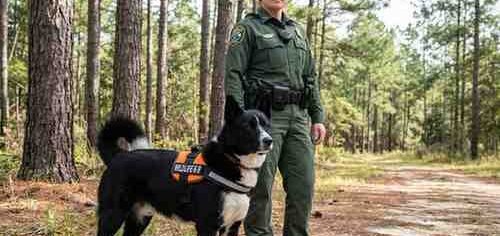
The Karelian Bear Dog is a primitive breed originating from Finland/Russia, specifically bred to hunt aggressive game. In North America, wildlife agencies (such as in Washington state, Nevada, and Canada) use these dogs not to kill bears, but to save them.
How Hazing Works
“Hazing” is the process of using negative reinforcement to teach “problem bears” to avoid humans. When a bear becomes habituated to campgrounds or urban areas, wildlife officers use Karelian Bear Dogs to chase the bear away.
- The dogs are released to bark at and nip at the bear’s heels.
- They push the bear out of the human zone and back into the deep forest.
- The experience is frightening for the bear but physically harmless.
This creates a psychological boundary. The bear learns that “Humans = scary barking dogs,” and is less likely to return. This technique saves the bear from having to be euthanized as a public safety threat.
Tracking Wounded or Nuisance Animals
When a bear is injured by a vehicle or a poacher, it becomes dangerous and unpredictable. Wildlife officers use scent-tracking hounds (like Plott Hounds or Bloodhounds) to locate the injured animal quickly to humanely euthanize it or provide medical care. This aspect of bear with dogs highlights the dog’s incredible olfactory abilities, which far surpass human technology.
Early Warning Systems
In polar bear country (like Churchill, Manitoba, or Svalbard), dogs are often kept outside stations or camps. Their job is solely to bark. They provide an early warning system that gives humans time to prepare or retreat before a polar bear gets too close.
Understanding the Breeds
Not all dogs are created equal when it comes to bears.
Management/Hunting Breeds
- Karelian Bear Dog: Fearless, agile, and intelligent. Used for hazing.
- Plott Hound: High stamina, aggressive tracker. Used for hunting and tracking.
- Akita: Originally bred in Japan for hunting bears, though now mostly a guardian.
Companion Breeds & Risks
- Terriers: High prey drive, low fear. Terriers are at high risk because they will often challenge a bear despite the size difference.
- Herding Dogs (Collies, Shepherds): May try to “herd” the bear, nipping at heels, which can trigger a violent defensive reaction from the bear.
- Retrievers: Generally friendlier, but their desire to investigate scents can lead them into trouble.
Regardless of breed, any dog can trigger a negative bear with dogs encounter if untrained and off-leash.
Prevention at Home: The Backyard Encounter
Encounters don’t just happen on the trail; they happen in the backyard. As urban sprawl encroaches on wild habitats, bears are entering suburbs.
Secure Attractants
The golden rule of bear safety is to secure attractants.
- Garbage: Keep it in a bear-resistant container or locked in a garage until pickup morning.
- Pet Food: Never feed your dog outside in bear country. Leftover kibble is a high-calorie magnet for bears.
- Bird Feeders: Remove them during active bear seasons (spring to late fall).
If a bear enters your yard and your dog is out:
- Recall immediately: Call your dog inside.
- Do not exit: Do not go outside to intervene physically.
- Haze from safety: Open a window and yell, bang pots, or use an air horn to scare the bear away after the dog is secure.
Legal and Ethical Considerations
When discussing bear with dogs, we must touch upon the legal responsibilities. In almost all jurisdictions, you are legally responsible for your dog’s actions. If your off-leash dog harasses wildlife, you can be fined. If your dog provokes a bear that attacks a third party, you could be liable for damages.
Furthermore, there is an ethical obligation. We are guests in the bear’s home. Allowing a dog to harass wildlife causes unnecessary stress to the animal, burning vital calories they need to survive winter hibernation. Responsible ownership ensures that the bear with dogs interaction remains one of avoidance, not conflict.
Key Takeaways
To summarize the vast topic of bear with dogs, remember these core pillars of safety and management:
- Control is Key: A leashed dog is a safe dog. The majority of negative encounters involve unleashed pets.
- Prevention is Best: Secure your food and garbage to stop bears from entering your space.
- The Wildlife Ally: Specialized dogs like Karelians are heroes in conservation, teaching bears to stay wild and saving them from euthanasia.
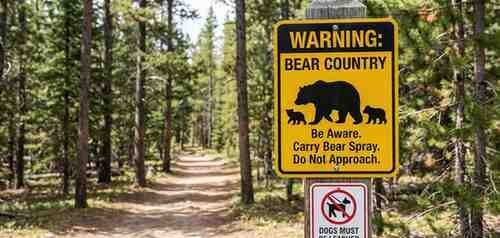
- Be Prepared: Always carry bear spray and know how to use it. It is your backup plan when preventative measures fail.
The relationship between bears and dogs doesn’t have to be one of conflict. With the right knowledge, specialized training for management dogs, and responsible handling by pet owners, humans, dogs, and bears can coexist safely on the landscape. By respecting the wild nature of the bear and controlling the domestic nature of the dog, we ensure the safety of all three species.
Frequently Asked Questions (FAQ)
Q: Can my large dog protect me from a bear?
A: Generally, no. While some large breeds may intervene, a bear is significantly stronger and better armed than any dog. A dog is more likely to escalate the situation than resolve it.
Q: Does bear spray work on dogs?
A: Yes. If you are attacked by a loose, aggressive dog while hiking, bear spray is an effective deterrent. However, be careful not to spray your own dog during a bear with dogs tussle.
Q: Are bells effective on dogs?
A: Putting a “bear bell” on your dog’s collar can help. It adds a metallic, unnatural sound that alerts wildlife to the dog’s movement, preventing startle encounters.
Q: What if I see a bear while my dog is off-leash?
A: Immediately recall your dog using your emergency recall command. Do not scream in a high pitch. If the dog does not listen, prepare your bear spray and stand your ground. Do not run after the dog toward the bear.