Bear with Dogs: Safety, Risks, and Management Strategies Guide
1. Understanding the Relationship
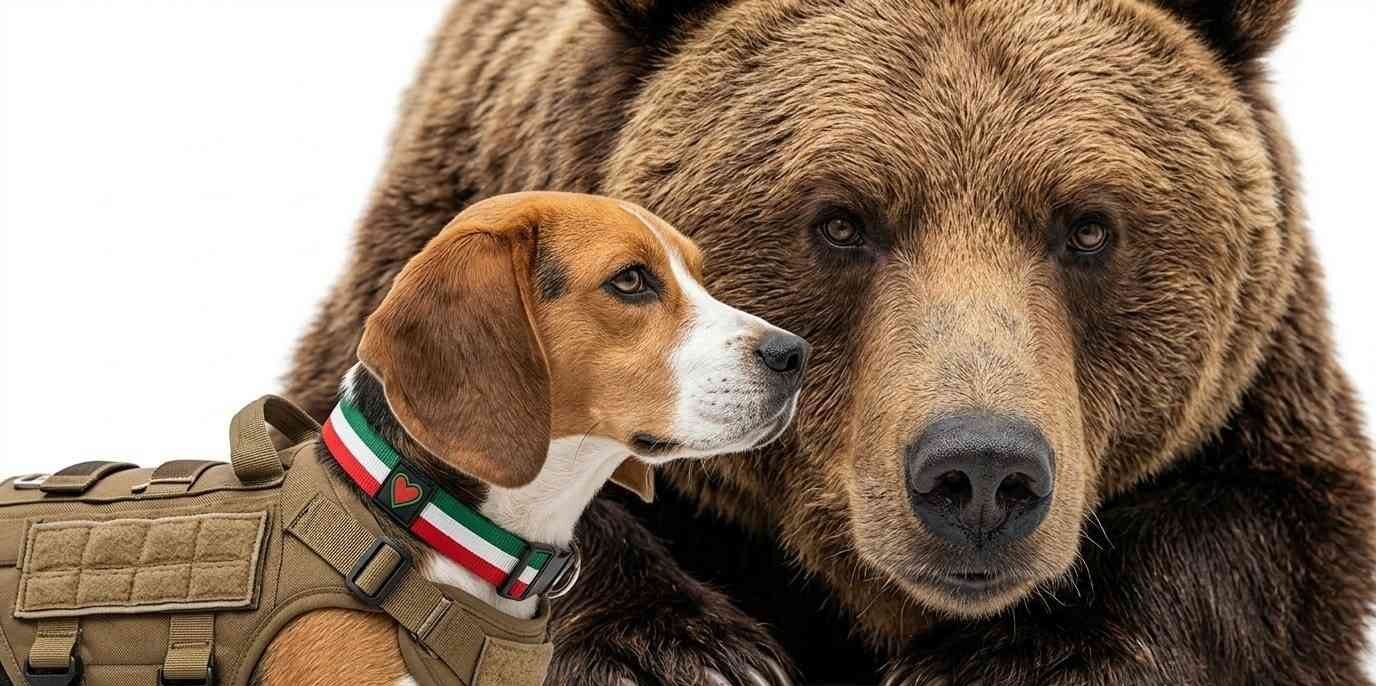
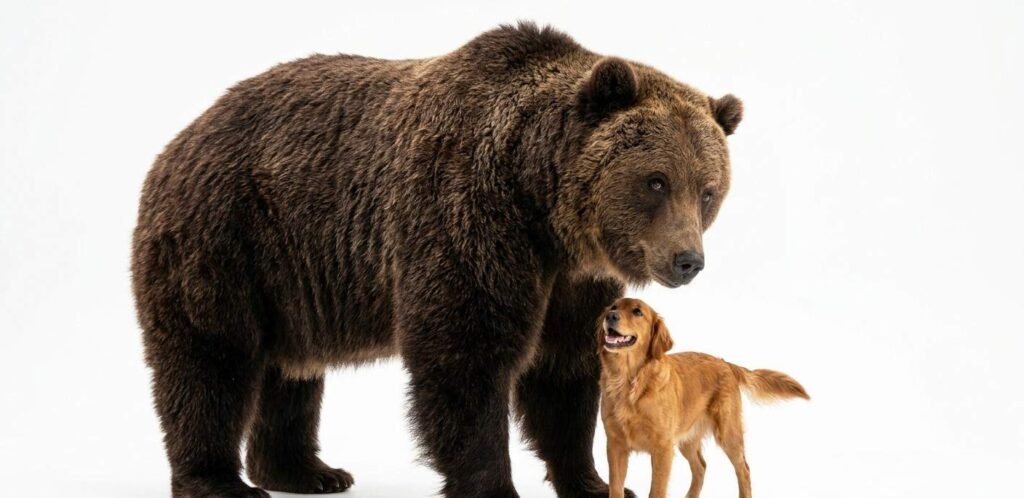
The relationship between bears and dogs is one of the most complex aspects of nature. Both animals belong to the same group, Caniformia, which means they share a common ancestor. Dogs are territorial by nature and will bark if they sense danger, while bears, despite their strength, are generally solitary. When a dog comes face to face with a bear, the bear perceives it as a predator or a threat to its cubs.
Human intervention has given this relationship a new dimension. For centuries, humans have trained specific breeds of dogs, such as the Karelian Bear Dog, to drive bears away from human populations rather than kill them. It’s a kind of “silent agreement” where the dog uses its voice and body language to tell the bear to back off.
2. Why Are Bears Afraid of Dogs?
2.1 Unpredictable behavior and noise
Bears are usually quiet and solitary animals. On the other hand, dogs start barking continuously and loudly when they see a bear. This sudden noise and the dog’s aggressive behavior confuse the bear. It is difficult for the bear to understand how a small animal is showing such courage, so it is better to cautiously back away.
2.2 Wolf memory
Historically and evolutionary, bears have encountered wild wolves. Wolves attack bears in packs and tire them out. Since dogs are related to wolves, the dog’s scent and barking style create a subconscious fear of a “hunting pack”.
2.3 Agility and Speed
A bear is powerful, but it cannot keep moving like a dog. Dogs will circle around a bear, pounce on its hind legs, and immediately retreat. It is difficult for a bear to control such a small and fast target, and it wants to avoid any fight in which it is at risk of injury.
2.4 The dog’s fearless instinct
Some dogs, such as Karelian Bear Dogs, are bred specifically to face bears. There is no fear in these dogs’ eyes. When a bear sees that its fear is not affecting the one in front of it, it feels safe to run away, feeling threatened.
3. The Karelian Bear Dog
3.1 Karelian Bear Dog
The Karelian Bear Dog hails from Finland, where it has been used for centuries to hunt large animals, especially bears and elks. This dog is known worldwide for its courage, agile and independent nature.
3.2 Notable Features and Skills:
- Fearless Nature: This dog is physically much smaller than a bear, but its courage is such that it does not hesitate in the face of even the largest bear. It has the ability to challenge a bear by looking it in the eye.
- Silent hunter: During the hunt, this dog chases the bear very quietly, but as soon as the bear stops, it starts barking loudly so that the hunter can detect the presence of the bear and keep the bear busy in one place.
- Intelligence and loyalty: These dogs are not only hunters but also excellent protectors. They risk their lives to protect their owner and territory.
3.3 Role in bear conservation:
Today, in countries like the United States and Canada, these dogs are being used for “bear management”. Instead of shooting bears that come into human populations, the Karelian Bear Dog scares these bears and sends them back into the wild. This method is proven to be safe for both bears and humans.
3.4 Appearance:
They are usually black and white in color, with thick fur that protects them from the harsh cold. Their tails are curled upwards and their eyes are always alert.
4. Black Bear with Dogs
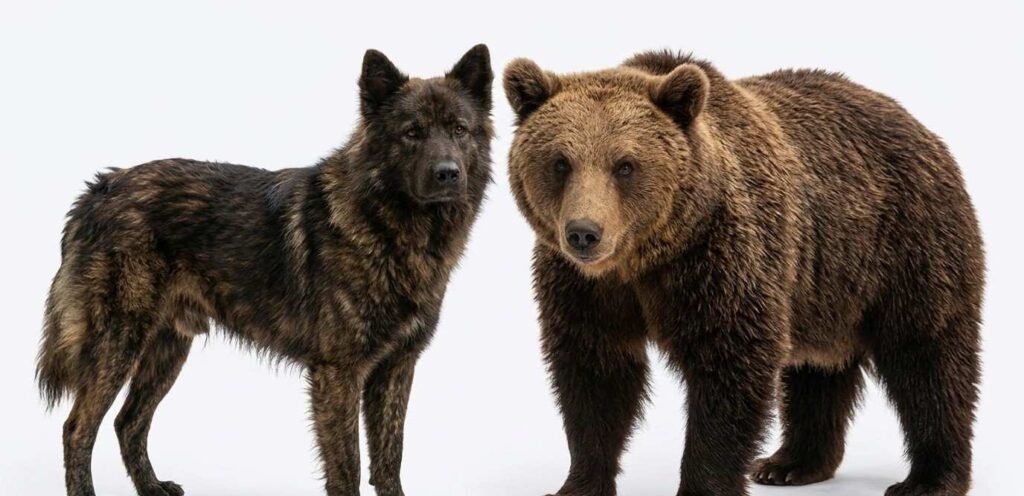
Encounters between black bears and dogs are quite common in the wild and can often be dangerous. Black bears are usually shy by nature and will run away even when chased by a small dog, but if a dog surrounds them or barks loudly, the bear may react defensively and attack. According to research, more than half of all incidents between humans and black bears involve dogs, because the dog’s movements startle the bear.
If your dog encounters a bear, the first thing to do is immediately put your dog on a leash and keep him calm. Do not let your dog bark or lunge at the bear, as this can further provoke the bear. If the bear has spotted you, stand still, raise your arms to show your size, and speak in a confident but calm voice. Never turn around and run away, as this can trigger the bear’s instinct to chase.
5. Bear Hunting Outfitters with Hounds
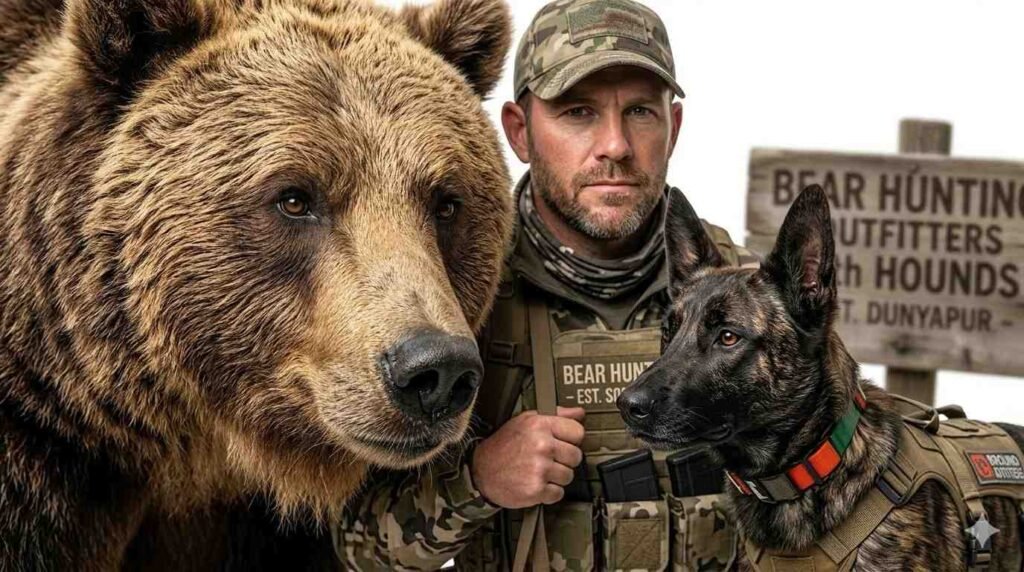
Bear hunting with hounds (hunting dogs) is an ancient and unique tradition that is especially prevalent in some areas of North America. This method uses trained dogs that track down a bear, chase it, and force it to climb a tree, where the hunter can safely reach it.
The role of outfitters (professional guides) is extremely important in the entire process. These experts are well-versed in local laws, wildlife behavior, and the requirements for safe hunting. They not only ensure the provision of the best hounds, but also implement all safety measures during the hunt.
Hunters should keep in mind the following important points:
- Legal Permits: Each area has its own specific hunting laws and seasons, which must be strictly adhered to.
- Ethical Hunting: Only adult and healthy animals should be targeted to preserve the breed.
- Be Prepared: Physical and mental preparation is essential for long walks in the forest and difficult weather.
- Safety Equipment: Carry appropriate weapons, first aid kit, and communication equipment.
6. Dog vs. Pug
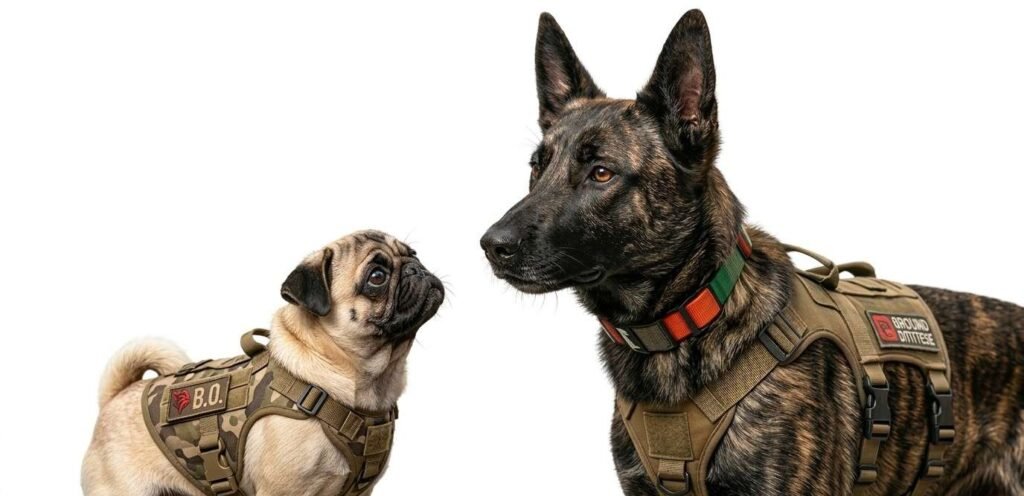
When it comes to dogs against bears, the comparison of Pug and hunting dogs (such as the Karelian Bear Dog) presents an interesting but very different picture. Having a Pug in bear territory can be quite a sensitive issue from a dog safety perspective.
6.1 Pug
Pugs are by nature very affectionate, loyal and domestic dogs. But in the event of a confrontation or encounter with a bear, their position is vulnerable for the following reasons:
- Physical structure: Pugs are small in stature and their facial structure (brachycephalic) is such that they can quickly have difficulty breathing. They are not capable of running away from a bear or putting up a long struggle.
- Rescue instinct: Pugs may usually run towards a bear, mistaking it for a large toy or something strange, which can provoke the bear.
- Noise and Defense: Although pugs can bark, their voice does not have the ferocity of a large hunting dog that can scare away a bear.
6.2 Hunting Dog vs. Pug (Comparison)
| Characteristics | Karelian Bear Dog / Large Hunting Dogs | Pug |
|---|---|---|
| Purpose | To scare and hunt bears | Home decoration and companionship |
| Response | Strategic barking and keeping distance | Approaching a bear out of curiosity or fear |
| Survival ability | Very high (speed and alertness) | Very low (slowness and weakness) |
| In case of danger | To force the bear to retreat | Risk of becoming a bear’s prey |
Important Tip:
If you live in an area where bears are known to roam, small dogs like pugs should never be left unattended. Bears may mistake them for easy prey and attack them. In contrast, large, well-trained dogs act as a “warning” to bea
7. Do bears attack dogs?
Yes, bears can attack dogs, but it usually happens for a specific reason. Bears naturally try to stay away from humans or dogs, but in a few cases they can become aggressive:
7.1 Protecting their cubs
If a bear is with her cubs and a dog tries to approach them or barks, the bear will immediately attack, considering it a serious threat. This is the most common reason for a bear attack.
7.2 Defending food
If a bear is eating somewhere or has hidden prey, it will protect that area. If a dog goes near that food, the bear will think it is stealing it and attack.
7.3 Provoking the dog
Often dogs will run after a bear or get too close to scare it away. When the bear feels that it cannot escape, it turns around and pounces on the dog.
7.4 The dog runs back to the owner
This is the most dangerous situation. The dog teases the bear and when the bear runs after it in anger, the dog runs back to its owner in fear. In this way, the bear unintentionally reaches the human and can also attack the human.
7.5 Differences in breed and size
Large bears (such as grizzlies or polar bears) can sometimes see small dogs as prey, especially if the bear is very hungry.
7.6 Prevention measures:
- Always keep your dog on a leash in bear areas.
- If you see a bear, try to keep the dog quiet so that the bear does not get angry.
- Train your dog to “recall” so that it doesn’t chase the bear.