Best Guide to Grow Grass Quickly
Growing grass quickly doesn’t mean just throwing seeds on the ground and sitting back and waiting. It requires choosing the right seeds, preparing the seedbed well, and paying close attention to soil moisture.
Understand the science
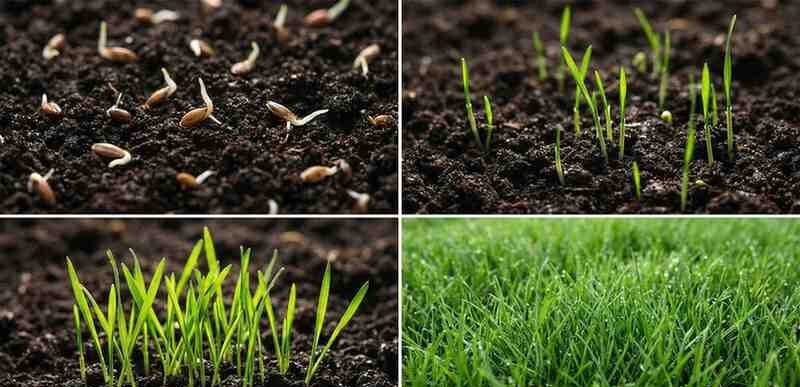
Seed germination is a natural process. The seed drinks water, wakes up from its slumber, and then a root grows out of it. It totally depends on the environment that you give. If conditions are not great, the seed will remain dormant for its own protection and will not germinate until it is sure that the outside environment is safe.
Highlights
- Temperature (weather):
- The seed needs a certain amount of heat to wake up. If it is too cold, it will remain dormant.
- Moisture (water):
- The seed shell must be softened by water so that the little plant can break through it and come out.
- Soil contact:
- The seed must be well pressed into the soil so that the roots can get food immediately.

Step 1: Choose the Fastest Growing Seed
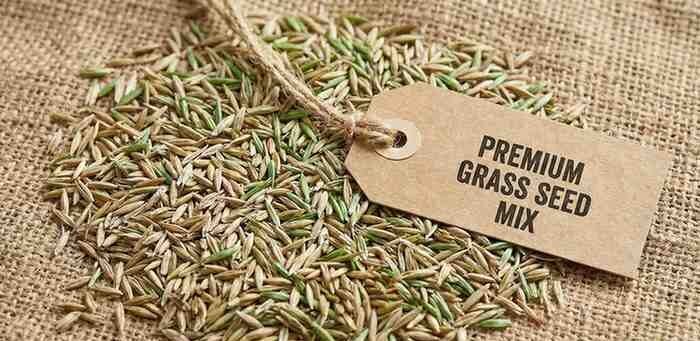
Not all grasses are the same. Choosing the right seed is the most important decision if you want fast results. You can’t force a slow-growing seed to grow quickly, so choose a fast-growing seed.
Cool Season Grasses
If you live in an area with cold winters, these grasses are best:
1. Perennial Ryegrass
- Growing Time: Usually it takes 5 to 7 days.
- Why Choose It?: It is the “Usain Bolt” of the grass world. It is very fast-growing and is often mixed with other seeds to make the lawn look greener faster.
- Why is it good for: To repair damaged grass or where there is a lot of foot traffic.
2. Tall Fescue
- Growth time: Usually it takes 7 to 14 days.
- Why choose it?: It is a little slower than ryegrass but very hardy. It tolerates heat and lack of water, so it is good for home lawns.
3. Kentucky Bluegrass
- Growth time: Usually it takes 14 to 30 days.
- Why choose it?: It is the slowest. If you are in a hurry, don’t use it alone. But when it does grow, it looks very beautiful and repairs itself.
Warm Season Grasses
For southern regions, Bermuda Grass (which we can also call Khabal or Fine Grass in our native language) is best for speed.
- Growth Time: Usually it takes 10 to 30 days.
- Note: The soil must be warm for it to grow. Get seeds that are hulled, they germinate faster than hulled seeds.
Step 2: Choosing the right time (timing is everything)
You can buy the fastest-growing seed in the world, but if you plant it in extreme cold or extreme heat, it won’t grow.
The Goldilocks Zone
The soil temperature for grass to grow quickly should be 10 to 18 degrees Celsius (50-65 F). This means that the weather during the day should be pleasant (about 15 to 24 degrees Celsius).
- Autumn/Defoliation (best):
- After summer, the ground is still warm but the air is cooling. Weeds also grow less during this season.
- Spring (second best):
- Wait until all danger of frost has passed.
Step 3: Prepare the Soil (so the roots can take root quickly)
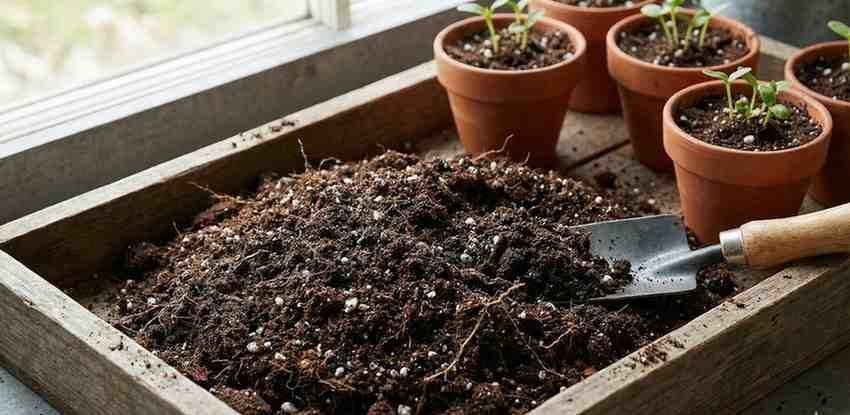
If you throw the seeds on hard ground, they will just sit there and not grow. To speed up the process, you need to loosen the soil for the tiny roots.
Clean up
Remove any debris, dead grass, and weeds from your lawn. If you’re going to sow a small area, rake up the old, dead grass with a rake to expose the soil.
Soil Softening
- If you’re going to sow a whole lawn, it’s important to aerate the soil to allow air and water to penetrate deeper.
- For smaller areas, use a hand tool to loosen the topsoil.
Starter Fertilizer
Don’t use regular lawn fertilizer. You need “starter fertilizer.” Look at the N-P-K on the fertilizer bag, the middle number should be higher (like 10-18-10).
Step 4: The right way to plant seeds
The biggest mistake that homeowners make is either pressing the seeds too deeply or leaving them on top of the garbage where they get lost.
Spread Seeds
To spread the seeds evenly in large areas, use a seed spreader (Spreader) and in small areas, use a hand tool.
- Method: Make two rounds. Spread half the seeds lengthwise and the other half widthwise. This way, no space will be left empty.
Mixing the seeds and soil
Once the seeds are planted, it is important to stick or press them into the soil.
- For large areas:
- Use a “lawn roller” (fill it one-third full of water to weigh it down) and roll it over the seeds so that they are pressed into the soil.
- For a small area:
- Just walk over the area with the help of your shoes.
Laying a light layer on top
Lay a very thin layer of “peat moss” or local compost on top of the seed.
- Benefit: It protects the seed.
- Most importantly: When this layer dries, its color turns light. This is a kind of “alarm” that tells you “My Brither” I’m thirsty, water it.
Step 5: How to water (most important for fast growth)
If you want your grass to grow fast, you will have to become a master at watering.
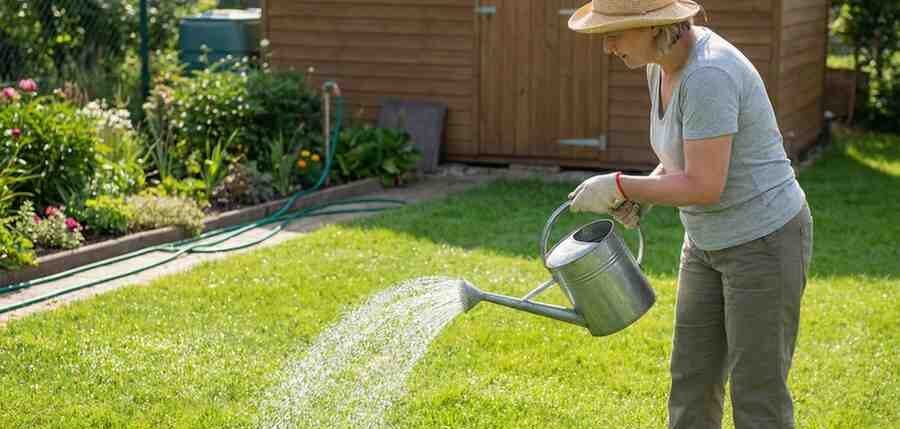
Golden rule: Keep the seed just slightly moist (moist) for 24 hours, but do not fill it with water so much that it becomes muddy. If the tiny sprouting seed dries out even for a few hours, then it is dead. If it remains submerged in water, it will rot. You have to be very careful about this for the first two weeks.
Schedule (Time Table)
- Days 1 to 10: Water 2 to 3 times a day.
- Morning (7 am): 5 to 10 minutes.
- Afternoon (12 pm): 5 to 10 minutes.
- Evening (4 pm): 5 to 10 minutes.
- Days 11 to 21 (when grass emerges): Now water only once a day, but for a little longer so that the water can penetrate deep to the roots.
- After 21 days: Now return to your normal routine (water occasionally but thoroughly).
Troubleshooting: Why is grass taking so long to grow?
Sometimes, despite all your hard work, it just doesn’t work. Here are some common reasons:
1. You planted the seed too deep
Grass seeds are very small. They need sunlight to germinate. If you plant them too deep (more than 1/4 inch below the surface), they will die out before they can reach the surface.
2. The soil is too acidic
Grass likes normal soil. If the soil is too acidic, the grass will not be able to get food from the fertilizer. To fix this, add “lime” to the soil.
3. The seed is old
Seeds also have an expiration date. If you are using seeds that have been lying in your warm store or garage for three years, they probably will not germinate. Always buy fresh and good quality seeds.
Patience and the right method
We all want to get the result quickly, but nature has its own time. However, if your method is right, you can speed up this work as much as possible. If you use a fast-growing seed like “ryegrass”, mix properly phosphorus fertilizer in the soil and pay close attention to water, then you will definitely succeed.