
The Female Cardinal Bird: Identification, Facts, and How to Attract Her
Whenever we mention the name of the cardinal bird, the image of a bright red bird perched on a white snow immediately come in to ours mind. The male Cardinal is very famous in North America for his flamboyant and beautiful color. But his companion, the female Cardinal, has a different and quiet beauty of her own. Although she deserves our attention just as much as the male.
What Does a Female Cardinal Look Like? Mastering Identification
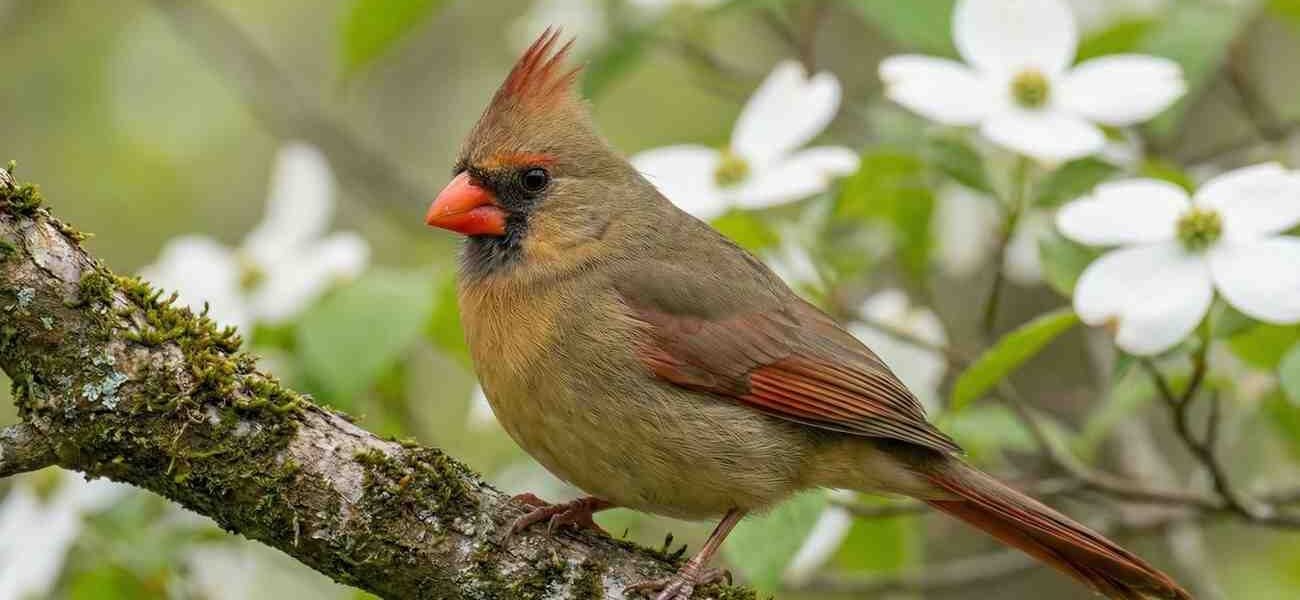
While it is easy to identify a male Cardinal, new bird enthusiasts are often confused about the female Cardinal. The secret to identifying it is that its body structure and structure are exactly the same as the male, but the purpose of the two colors is different. The male’s bright color is for show, while the female’s color is designed to hide it in the environment.
Color: Beauty in simplicity
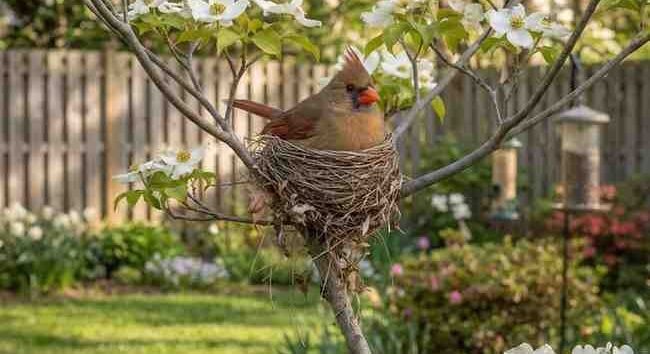
The most distinctive feature of the female Cardinal is its olive-brown body. This is not an ordinary or dull color, but rather it has a beautiful combination of golden, gray and light gray colors. Nature has given it this color so that it can escape the eyes of predators.
But it is not that it is completely colorless. If you look closely, you will see a light red flash on its wings, tail and crest. This red is not as intense as the male, but it shines beautifully in the sun and is a sign that it is truly a cardinal.
Special signs: Red beak and crest
Both males and females have two things in common that help in identification:
- Beak: A thick, short and bright red beak. This beak is triangular in shape and very strong easily to break hard seeds.
- Crest: Both have a special crest of feathers on their heads. This indicates their mood. When the female is excited or feels threatened, she raises the crest, and when she is calm, she presses it against her head.
Facial Mask
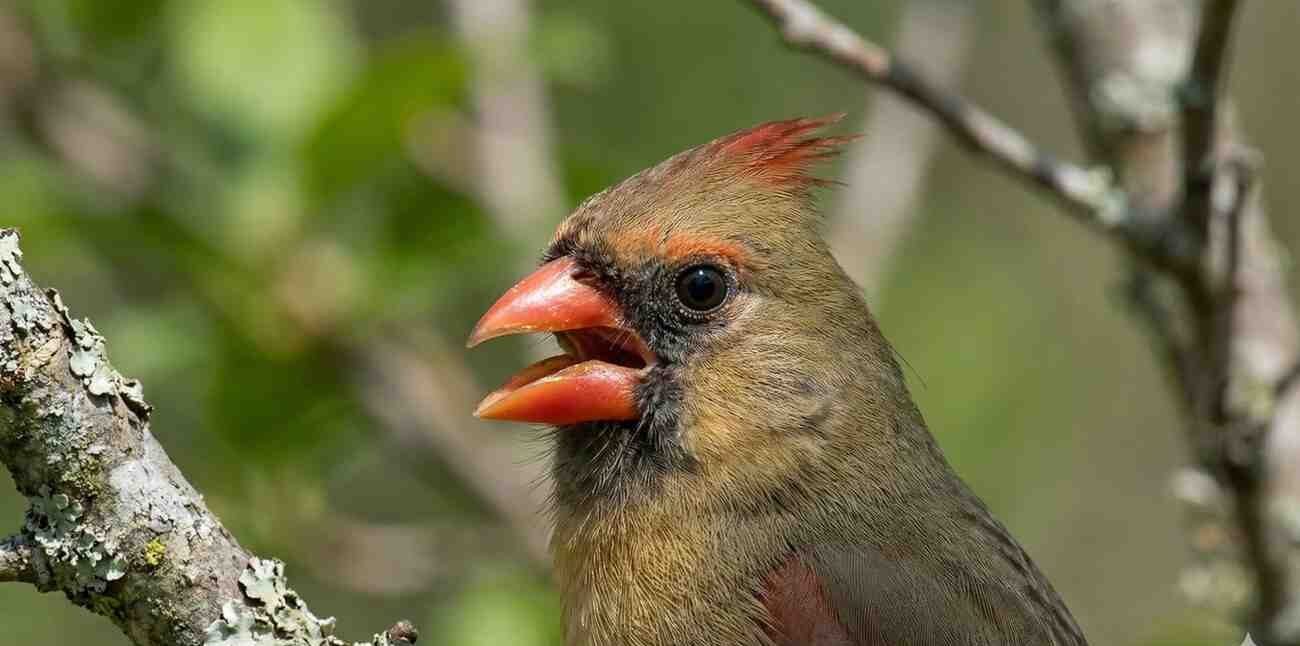
The male Cardinal has a dark black mask on his face, but the female’s face is much softer and lighter. His red beak and eyes are usually a light gray or buff color. It is much lighter than the male’s, which further enhances the female’s beauty and simple appearance.
Male and Female Cardinals: How to Tell the Difference Between the Two?
The world of cardinal birds is very interesting. In them, the female Cardinal and male Cardinal are different to each others.
There is a specific reason for this in Science:
- Male: Its job is to defend its territory and attract the female, so nature has given it a bright red color so that it can be seen from afar.
- Female: It has to sit on eggs in the nest, so its color is dull or dull so that it can hide in trees and bushes and not be seen by any predator.
Easy way to identify:
- Color: The male is a bright red. While the female is light brown.
- Face: The male has a dark black mask around the eyes on his face. The female’s mask is a very light gray.
- Head and beak: These are the same in both. Both have a crown on their heads and both have red beaks.
- Wings: Although the female is brown, there is definitely a slight red color somewhere on her wings and tail.
An interesting fact:
When these birds are young, whether male or female, they all look like their mother (brown) and their beaks are black. As they grow older (by the first autumn), their beak turns from black to red, and the male changes his color to red.
Female Cardinal: A Unique Singer
The most surprising thing about the female cardinal issinging.
Usually, in the bird world, only the “male” sings to call the female or to protect their territory. But the case is different with Cardinal birds. The female Cardinal is an excellent singer and often sings head to head with her partner.
Why does she sing?
There are two main and specific reasons for the female’s singing:
1. Strengthening the Relationship:
Before building the nest, the male and female often sing together, just like a “duet”. They respond to each other and match their melodies. This method strengthens their relationship so that they can raise the children together.
2. Messaging from the nest:
When the female is sitting on the eggs, she sings while sitting there. This is actually a message to the male. She tells him:
- “I’m hungry, bring me food for me.”
- Or “Beware! There’s a predator nearby, don’t come near the nest yet.”
What does she sound like?
Her song is clear and whistle-like. If you listen carefully, it sounds like she’s saying:
- “Cheer, cheer, cheer” (Cheer, cheer, cheer)
- or “Purdy, purdy, purdy” (Purdy, purdy, purdy)
Female Cardinal: Habitat, Food and Breeding
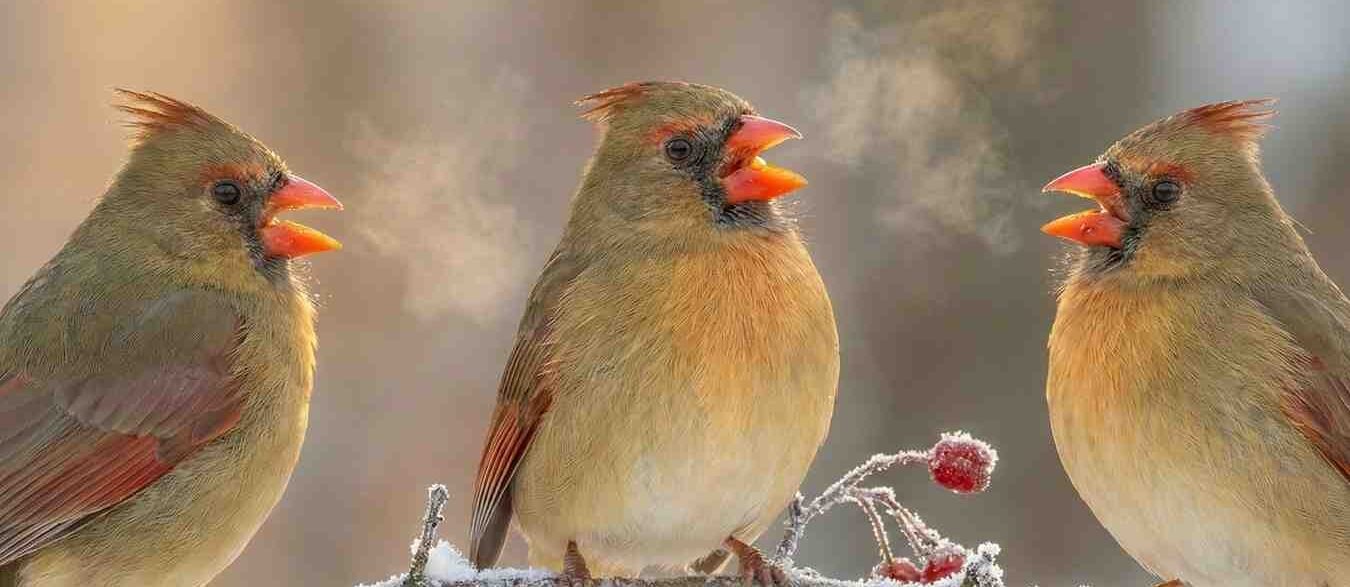
The female Cardinal is very easy to understand than others. If you want to see her around your home, keep these things in mind:
1. Habitat: Where does she live?
Cardinal birds do not migrate, they live in the same area all round the year.
- Favorite place: The female cardinal likes dense bushes and plants. She does not like to live in open fields.
- Reason: She needs “cover” to hide herself and her nest from predators.
2. Food: What does she eat?
She always changes her diet depending on the season:
- Winter and autumn: During this season she eats mostly seeds and fruits. Sunflower seeds and wild berries are her favorites.
- Spring and Summer: When it is time to lay eggs, she needs energy; so she eats insects.
A cute habit: The male cardinal often feeds the female with grain from his beak show expression of their affection and proof that the male can bring food for the young.
3. Nest and raising the young
The female cardinal’s role in building and running the nest:
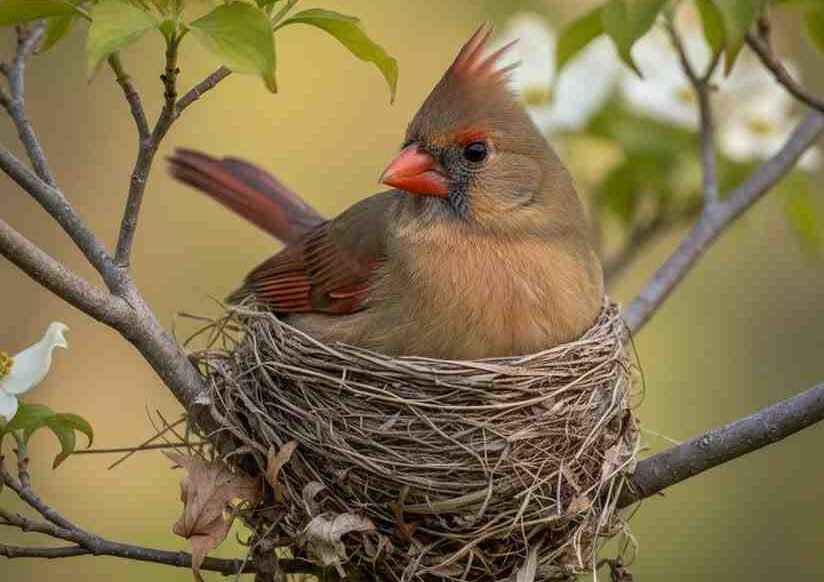
- Architect: The female does all the work of building the complete nest herself. She builds a bowl-shaped nest of straw and soft grass among the bushes.
- Egg protection: Only the female sits on the eggs because her brown color hides them in the trees and protect the eggs. If the bright red male sits, predators will immediately see him. During this important time, the male Cardinal bird also brings food for female bird.
- Breeding: After the young theirs hatch, both parents male and female cardinals feed them insects for providing them energy. The young grow very quickly and leave the nest in just 9 to 11 days.
- Next brood: The pair often raises 2 to 3 broods in a one summer. While the male is tending the first brood, the female quickly begins building a new nest.
Female Cardinal: Spiritual Signs and How to Call Her
The cardinal bird is often considered a “message from heaven,” a message of hope from loved ones who have passed away.
Her appearance is a sign of:
- Hidden Beauty: Not everything has to be flashy. It teaches us that true beauty and value often lie beneath the surface, it needs to be looked at carefully.
- Inner Voice: The female cardinal often sings in secret. This is a sign to trust your “sixth sense” or the voice of your heart and recognize the creativity within you.
- Tenderness and Patience: As she protects her eggs despite storms and dangers, she is a sign of “motherly courage” and staying strong in difficult times.
- Silent Strength: She shows that it is not necessary to be loud to be powerful; there is also great power in silence and dignity.
How to invite a female cardinal to your garden?
If you want this shy and beautiful bird to come to your yard, you need to make her feel safe. Since she is more cautious than the male, take care of these three things:
1. Favorite Food (Menu)
This bird likes to eat sitting on the ground or in an open area.
- Bowl: Use a large, open tray feeder.
- Seeds: Black oil sunflower seeds are her favorite. If squirrels are a nuisance, add Safflower seeds, cardinals eat them with gusto but squirrels don’t like them.
- Winter gift: Give her “Suet” in the winter to keep her warm.
2. Hiding place (most important)
Female cardinals don’t come out into the open, they need a place to hide.
- Dense bushes: Plant dense bushes at the edges of your garden. These will become her “safe house”.
- Wood pile: If possible, keep a pile of dry branches and twigs in a corner of the garden. This seems to be the best shelter for her from storms and predators.
3. Water
In addition to food, she needs water to drink and bathe. Keep a simple bowl of water that is not too deep. Try not to let the water freeze in the winter.
Queen of the Backyard
While the flamboyant red male cardinal may seem like the “king of the backyard,” the female cardinal is undoubtedly the “queen” of the yard. Her beauty lies not in her flamboyant colors, but in her simplicity, skill, and quiet hard work. The way she sings beautiful songs, builds a nest out of straw, and quietly raises her young is what makes her so special.
Frequently Asked Questions (FAQs)
Here are some common questions that people often ask about female cardinals:
Question: If a cardinal is brown and has a red beak, is it always a female?
Answer: Yes, most of the time it is. If the bird is brown, has a crown (crest) on its head, and a red beak, it is a female.
Question: Do female cardinals migrate (migrate) in the winter?
Answer: No! Cardinals do not migrate. They stay in your area year-round, even in the harshest winters, and they weather the weather together with their mate.
Question: Do males and females stay together for life?
Answer: Yes, these birds are very loyal. Usually, the pair stays together for life. However, if for some reason one partner dies, the other one is not left alone but quickly finds a new partner.
Question: Why do these birds sometimes attack windows or glass in the house?
Answer: They are not crazy, in fact, they think that the “reflection” seen in the glass is some other bird (enemy) that has entered their territory. So they hit the glass to scare it away.
Question: How old is a female cardinal?
Answer: The average lifespan of female cardinal bird is 3 years. Many babies die in the first year. But if conditions are good, they can live up to 15 years (which is a record).