Animal in Animal: Best Guide to Endosymbiosis, Inquilinism, and Parasitism
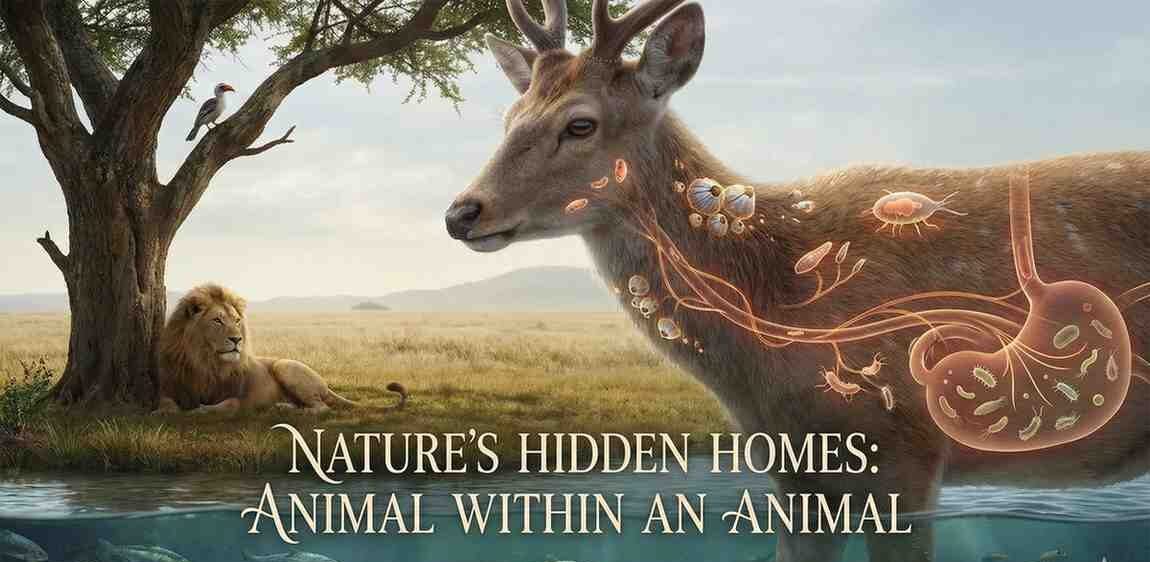
When we look at nature, we see everything as separate and in order. A lion is in the forest, a fish is in the sea or river, and a bird is in a tree. We think that an animal’s home is a ‘place’—like a forest, a desert, or a cave.
But there are unlimited animals in the world whose home is not made of wood or stone, but of flesh, blood, and bones. Their home is actually ‘another animal.’ This system of being an ‘animal within an animal’ is one of the most successful and oldest living strategies on earth.
1. Where does the limit end?
In the wild, a place to live is also a resources for foods. There are three benefits of living inside the body of another animal that are impossible to find outside:
Comfort:
The weather inside in the animals remains the same, no fear of the sun or cold.
Safety:
A strong skin or bone that protects against enemies.
Food:
They get free energy! Either eat the meat of the host or kill part of what it is eating.
We can divide these “inhabitants” into three types:
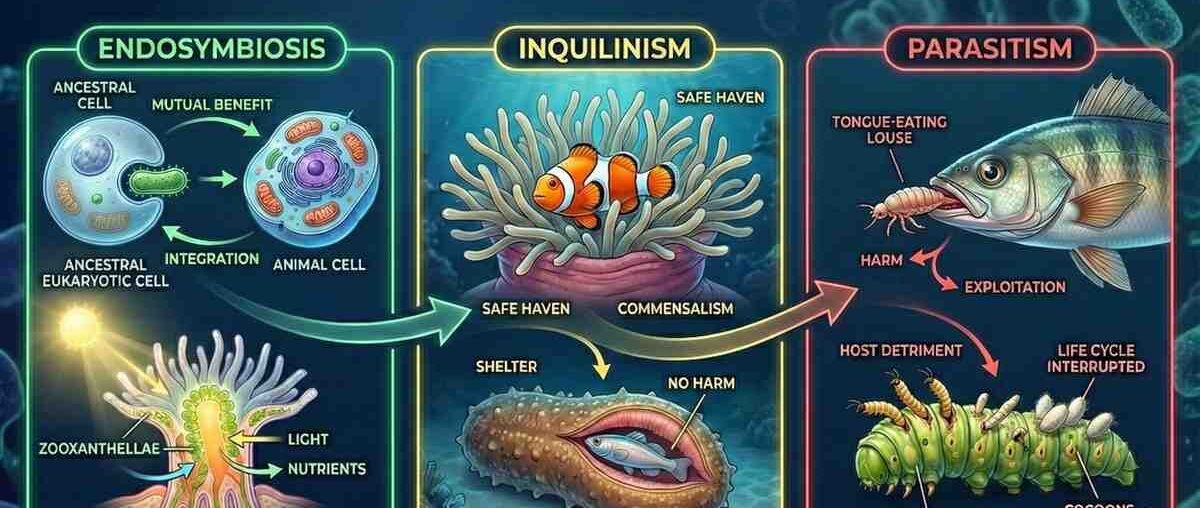
1. Inquilinism
This means “living in”. In this case, the inhabitant does not harm the host, but simply uses it as a place for refuge.
- Case: The tenant gets safety, the owner does not suffer much.
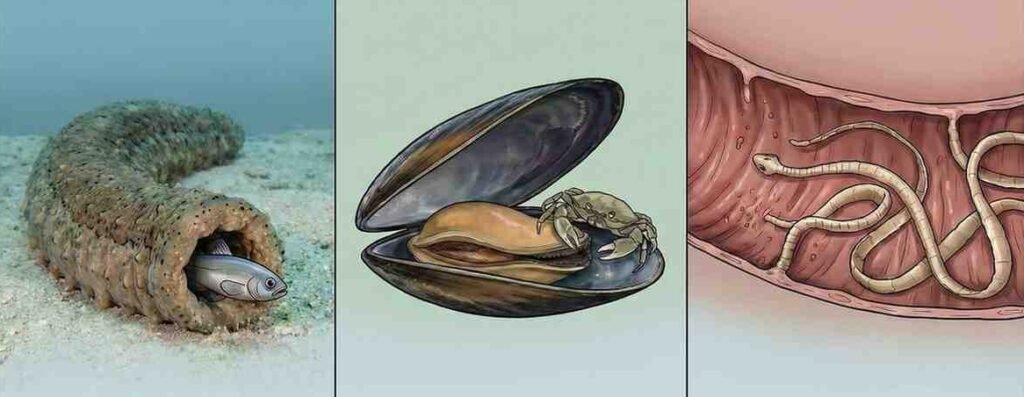
- Example: A pearl fish hidden inside a sea cucumber.
2. Kleptoparasitism
This is a bit of a mess. The inhabitant does not eat the host.
- Case: The guest also gets free food. The host loses its strength.
- Example: A small pea crab living inside a mussel.
3. Endoparasitism
This is the most dangerous. The guest eats the flesh, blood or vital fluids of its host.
- Context: One wins and other dies. This relationship often ends when the host dies.
- Example: Tapeworms, etc.
2. Sea Hotels
There is no place to hide in the open ocean water, so the animals hide inside each other.
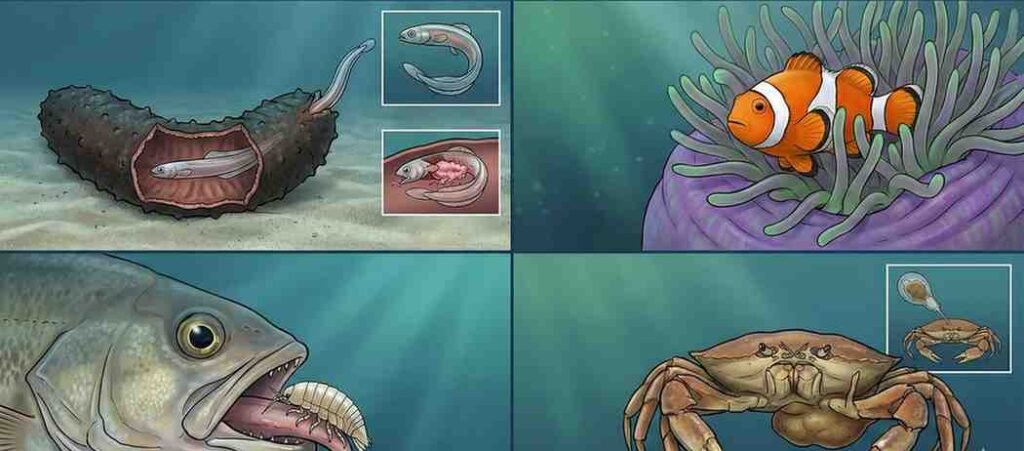
Pearlfish and sea cucumber
Sea cucumbers lie on the ocean floor. To breathe, they pump water in and out through their back. The pearlfish, which is as thin as an eel, takes advantage of this opportunity.
- Inside: When the fish feels enemy, it burrows into the back of the cucumber with its tail or head.
- Living: The fish is safe inside because the cucumber’s skin is poisonous. But there are two types of fish:
- Good tenant: It just goes in to hide and then comes out.
- Bad tenant: It goes in and starts eating the cucumber’s organs very badly. The funny thing is that the sea cucumber regenerates its organs, so the fish keeps getting fresh food.
Clownfish and anemones
.’Sea Anemones’ are poisonous and sting other fish. But the “clownfish” has a special sticky substance on its body, which makes the anemone not consider it an “enemy”. Thus, the fish lives happily between these poisonous arms.
Body invaders and terrifying transformations
If you thought that pearlfish were unwelcome guests, these are straight-up “body snatchers.” They don’t just live inside someone, they transform their host’s body.
Tongue-eating worm
This is one of the strangest examples of the marine world. It’s a tiny worm that goes after fish.
- Attack: This worm burrows into the fish’s gills and reaches its mouth.
- Tongue-eating: It sinks its claws into the root of the fish’s tongue and starts sucking blood.
- Terrifying twist: This worm doesn’t kill the fish, but instead replaces its broken tongue.
Barnacle that doesn’t look like a barnacle
Barnacles are usually those hard white shells that stick to ships or rocks. But this one of the most enemy of crabs.
- Infection: It injects its larvae into the crab’s body like an injection.
- Making zombies: If the crab is “male”, this worm changes its hormones and turns it into a “female”.
3. One within another
In the world of insects, there is such a chain that the mind is stunned that is called “Hyperparasitism“.
Worm within worm, worm within it
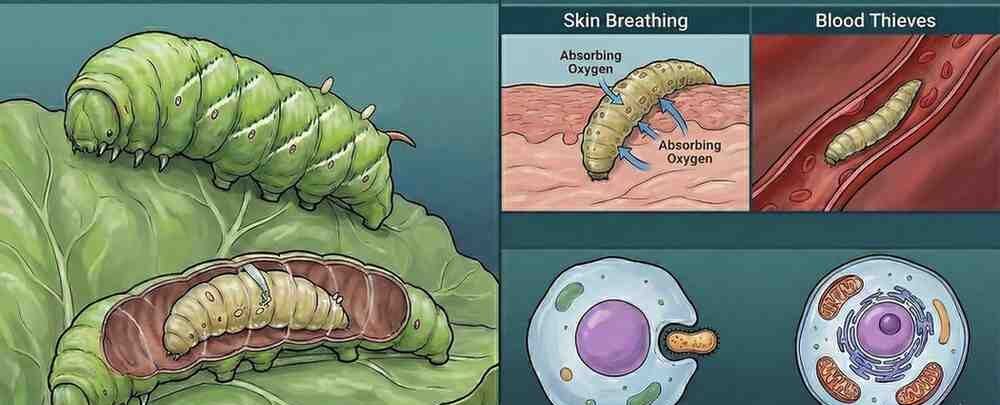
Take the example of a caterpillar eating cabbage:
- Level 1 (host): The caterpillar, which is eating leaves.
- Level 2 (first predator): A wasp comes and lays its eggs inside the caterpillar’s body.
- Level 3 (Second Predator): Another little wasp arrives and discovers that the caterpillar is infected. She lays her eggs inside the baby wasp inside the caterpillar.
4. How do they breathe inside?
There is no air inside the stomach or meat.
- Open window: Some insects sit right next to the mouth or anus for fresh air or water.
- Skin breathing: Some insects have skin like sponges, they absorb the oxygen present in the host’s body.
- Blood thieves: Some live directly in the blood vessels and steal the oxygen that is going to our brain or heart.
5. We are all Mixes
We think we are one animal, but in reality we are “a combination of two”.
- Billions of years ago, a large cell ate a small bacterium, but did not digest it.
- Both made a deal: The younger one said “I will make energy”, the older one said “I will protect you”.
- The Mitochondria in our body today is the same old bacteria. That is, we ourselves are built on the principle of “animal within animal“.
6. Horrible incidents with humans
We humans are not safe from them either.
- Botfly: This fly cleverly sticks its eggs on mosquitoes. When the mosquito bites us, the eggs fall into our skin and become worms inside and eat the flesh.
- Guinea Worm: It enters humans through dirty water. It grows inside for a year and grows 3 feet long. Then it burns the skin of the leg and comes out (thankfully, it is going to end now).
7. Why does nature do this?
Why didn’t nature eliminate these insects?
- The race is on: We build immunity, they find new ways to attack.
- Control: If it weren’t for these insects, one animal would take over the whole world.
Quick Reference Table
| Type | Definition | Example | Outcome for Host |
| Inquilinism | Living inside for shelter only. | Pearlfish in Sea Cucumber | Neutral / Minor Harm |
| Endoparasitism | Living inside to feed on host resources. | Tapeworm in Dog | Harmful (Chronic) |
| Parasitoidism | Living inside to eventually kill the host. | Wasp Larvae in Caterpillar | Fatal |
| Kleptoparasitism | Living inside to steal food. | Pea Crab in Mussel | Negative (Energy Loss) |
| Endosymbiosis | Mutually beneficial internal partnership. | Gut Bacteria / Mitochondria | Beneficial (Essential) |