

Can Dogs Eat Apples? The Ultimate Guide to Safety, Benefits, and Risks
If you own a dog, chances are you’ve been in the situation where you’re enjoying a crisp, juicy snack and suddenly feel two soulful eyes staring back at you. Your four-legged best friend is begging for a bite and you’re wondering if it’s safe. You may be asking: Can dogs eat apples? The short, happy answer is a resounding yes. But there is much more to the story. Most dogs love this fruit, and it is a great and healthy treat, but it must be cooked properly to avoid hidden dangers. This complete guide will cover everything you need to know about feeding apples to your dog, including the nutritional benefits and potential risks.
Can dogs eat apples? Short answer:
Yes, dogs may safely eat apples and most pups adore them. Apples are a very nutritious, cheap and widely available food that can augment your dog’s normal diet. The crunch gives dogs a pleasurable chewing experience similar to many commercial dog treats. But they should be given solely as a special treat and not as a meal replacement. And it’s good to know what sections of the apple you may eat, and what parts you shouldn’t eat.

Amazing Health Benefits of Apples for Dogs
Apples are typically labeled a superfood for humans, but their nutrition profile is just as spectacular for our four-legged friends. When you give your dog a piece of apple, you are giving them a natural boost of vital vitamins. Vitamin C is particularly prominent in apples, which helps support a robust immune system and lowers inflammation. They are also packed with Vitamin A which aids healthy skin, a lustrous coat and perfect vision. Since dogs can really produce their own Vitamin C, the added boost from an apple is good for senior dogs who might need a little help in the joint and immunity sectors.
Another big benefit to feeding your dog apples is that they are a great source of dietary fiber. Fiber is good for your dog’s digestive system health and for controlling his bowel movements. Occasional moderate constipation in dogs can be helped along naturally with a few slices of apple. Plus, fiber fills your dog up and makes him feel happy without too many calories. This is a great weight control treat for dogs that need to lose a few pounds.
And apples can also offer an unexpected boost to your pet friend’s dental health. The natural crunch of the fruit serves as an organic toothbrush to help clean plaque and tartar off their teeth. It is not designed to replace regular dog dental care or tooth brushing, but it definitely helps preserve the health of the teeth and gums between cleanings. Plus, the high water content and fresh enzymes in apples can naturally freshen that notoriously foul dog breath. Your dog receives a tasty reward and you get a dog with better scented kisses.
The Dangers Lurking: What to Be Aware Of
The apple’s flesh is quite healthy, but other sections of the fruit can be dangerous for dogs to eat. The biggest risk comes from the apple seeds themselves. Apple seeds contain a chemical called amygdalin. When an apple seed is chewed up and digested, amygdalin releases cyanide into the blood stream. While a single seed is unlikely to harm a medium or large dog, eating seeds regularly or consuming a large amount at once can lead to cyanide poisoning. So you are better off playing it safe and removing all the seeds before giving this fruit to your pet.
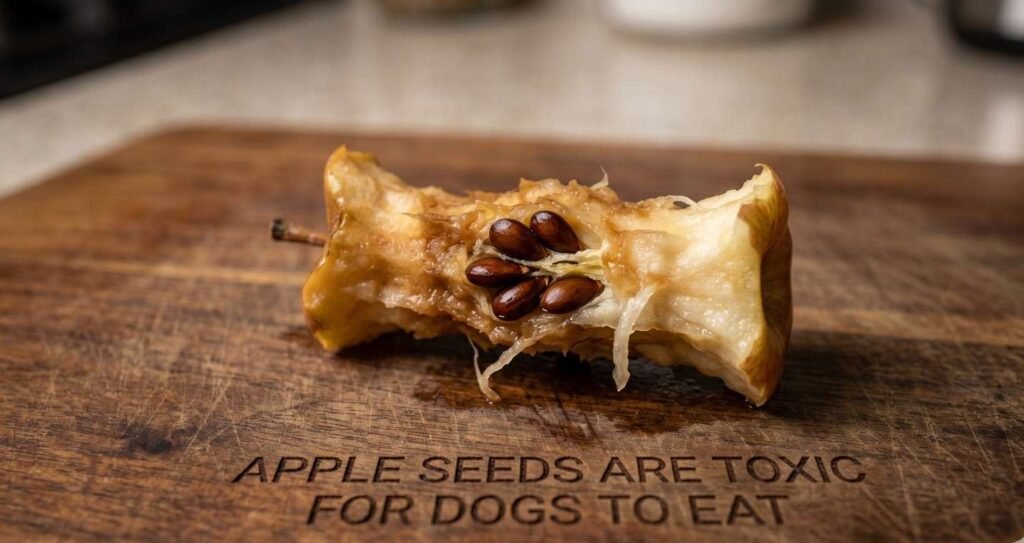
The apple core itself is another big danger that dog owners should know about. The core is stiff, fibrous, and exceedingly hard for a dog to chew correctly before swallowing. If a dog swallows an apple core whole, it can easily get caught in their throat and turn into a serious choking threat. If it does manage to go down the throat, the tough core can cause a dangerous blockage in the stomach or intestines. If your dog does happen to get hold of an apple core, keep a tight eye on them for any symptoms of distress and if they start vomiting get in touch with your vet right once.
Finally, the natural sugars in apples are okay in moderation, but overfeeding might be an issue. Dogs are not made to process high levels of sugar, even the natural sugar in fruit. Feeding your dog too many apples can cause an upset stomach, diarrhea or, over the long term, obesity and diabetes. That’s why apples should be a treat, not a staple in your diet every day. Always consult with your veterinarian before giving your diabetic dog any sugary fruits.
How to Cook Apples for Your Dog Safely
The secret to sharing this tasty fruit with your pet safely is proper preparation. The first step is to rinse the apple well under cold running water. Commercial apples are often sprayed with pesticides, herbicides and protective waxes to keep them looking fresh in the grocery store. These chemicals might irritate your dog’s delicate stomach and lead to gastric problems. If feasible, buy organic apples to help reduce your dog’s exposure to these harmful agricultural chemicals.
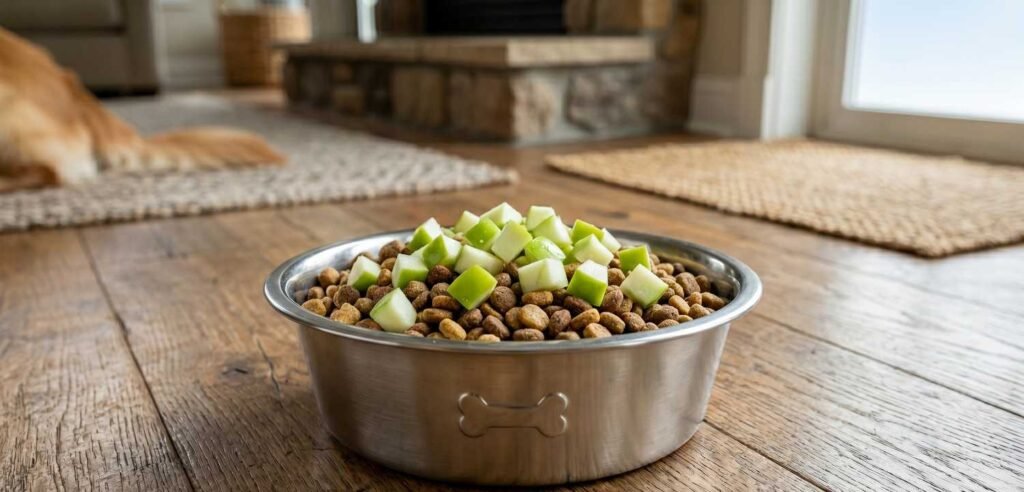
Now that your apple is clean, it’s time to chop it. Always use a sharp knife to chop the apple into bite-sized pieces, suitable for the size of your dog. For a small Chihuahua, the bits should be no bigger than a normal kibble so as not to choke. A larger breed like a German Shepherd can tolerate somewhat bigger slices, but they should still be tiny enough to readily eat. Don’t let your dog consume a full apple since this can lead to them eating the harmful core and seeds.
You may be wondering:
Do you peel the apple first? The apple peel is the most nutritious section of an apple as it has the highest concentration of vitamins and fiber. But for certain dogs, especially pups or senior dogs with delicate stomachs, the skin can be a bit hard to digest. If your dog has never eaten an apple before, it is recommended to peel it the first few times to watch how their stomach reacts. Once you know they tolerate it well, you can start leaving the nutrient-rich skin on.”
Serving Sizes How Much is Too Much?
The one absolute golden rule when feeding your dog any kind of human food is moderation. Veterinarians propose the “10% rule” when it comes to dog diets. This means that all treats, even nutritious fruits like apples, should make up no more than 10% of your dog’s total daily caloric consumption. The remaining 90% should be from a good grade nutritionally balanced dog food. Too many violations of this guideline might lead to nutrient deficiencies and undesirable weight gain.
Just one or two thin slices of apple are plenty for a daily treat for a small dog, a little goes a long way. Medium-sized dogs can comfortably eat three or four slices, and giant dogs may be able to eat up to half an apple. However, no matter the size, monitor how your specific dog reacts to the fruit. Some dogs have more sensitive stomachs, where even a small piece of fruit can cause a loose stool. Begin with a small piece and watch them for 24 hours before including apples into their normal schedule.
Can Dogs Eat Apples?
Puppies can absolutely enjoy apples, and they actually make an excellent training treat. Puppies are always learning and growing, therefore positive reinforcement with treats is a key part of their everyday existence. Instead, you can use little bits of apple to help them stay lean and healthy during training sessions rather than high-calorie processed puppy treats. The crispness of a cold apple is also very calming for teething puppies with sensitive, swollen gums. Just be sure to chop the bits very small as puppies have a tendency to swallow their treats without chewing.
However, a puppy’s digestive system is still developing and is much more sensitive than an adult dog’s. Introducing new meals too rapidly might result in uncomfortable gas, bloating, and severe diarrhea. If you want to give your puppy apples start with a chunk the size of a pea. Wait a full day to verify their feces remains solid and they act normally. If all goes well you can steadily increase the amount as they grow into their adult size.
Are Processed Apples Safe? (Applesauce, Juice & Pies)
Fresh, raw apples are a wonderful pleasure but processed apple products are a different story. Most of us have a container of applesauce in our kitchen, but most of those containers are full of added sugars and high fructose corn syrup. Even worse, some low-sugar or “diet” apple sauces contain artificial sweeteners like xylitol. Xylitol is very poisonous to dogs and may cause a fast drop in blood sugar or acute liver failure. If you want to give your dog applesauce, you will need to make it yourself using simple, unpeeled apples that you cook and mash together with no other ingredients added.
You should also make sure that you don’t give your pet apple juice. When you juice an apple, all the good dietary fiber is stripped away, leaving you with a very concentrated liquid sugar. Dogs do not need fruit juice to be hydrated, they just need fresh clean water. Apple juice will lead to a rapid surge in blood sugar levels and significant gastrointestinal irritation in dogs. Stick to firm fruit if you want them to receive the nutritious rewards.
And last but not least, it goes without saying that human desserts like apple pie, apple crisps or apple tarts are completely off the table. These tasty treats are full of butter, sugar and fat which can lead to painful diseases like pancreatitis in dogs. Many apple sweets are also intensely flavored with cinnamon and nutmeg. While a tiny pinch of cinnamon is safe, nutmeg contains a toxin called myristicin, which can cause hallucinations, high heart rates, and seizures in dogs. Keep holiday pies firmly on the table and out of counter-surfing paws.
Easy and Fun Dog Apple Recipes
If you want to get creative in the kitchen, there are lots of exciting ways you can incorporate apples into your dog’s food. One of the easiest approaches is to produce frozen apple delights for hot summer days. For a quick fix, just blend a fresh cored apple with a couple tablespoons of plain unsweetened Greek yogurt and a splash of water. Pour the mixture into a cute paw print mold or silicone ice cube tray and freeze until set. These frozen snacks are an excellent way to calm off a panting pup after a long afternoon stroll.
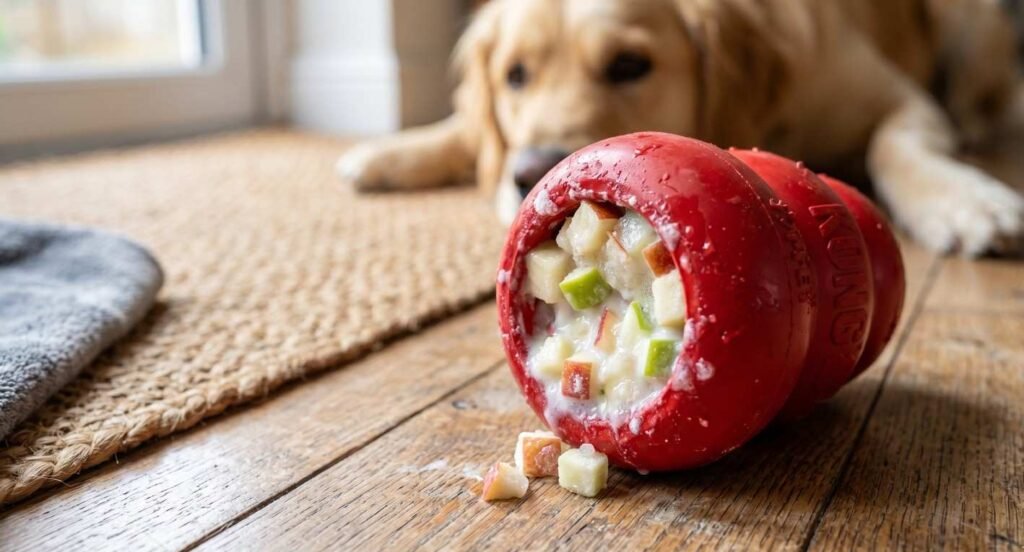
You can also construct great interactive toy stuffers using apples. Get a hollow rubber chew toy like a Kong and put a little dog-safe peanut butter in the bottom (make sure it’s xylitol-free!). Add a few small cubes of fresh apple, seal the top with a little extra peanut butter and drop it in the freezer. The peanut butter hardens and keeps the apples in place, making it a tough and psychologically interesting puzzle for your dog. This is a great technique to keep a high energy dog active while you are busy working or cleaning the house.
If you want something to nibble on, consider preparing some fresh baked apple chips for your dog. Preheat oven to a very low temperature, such as 200°F (93°C). Slice an apple into paper-thin rounds, taking care to remove the core and all seeds. Lay the slices flat on a parchment-lined baking sheet and bake them for about two hours, rotating them halfway through until they are crispy and dry. These natural chips will stay fresh in an air-tight container for several weeks and make a fantastic, no-mess pocket reward for training walks.
Apple Varieties: Does the Color Matter?
When you are looking at the produce area you will find apples that are from dark red to bright green and you may be wondering which is best for your dog. The truth is, dogs may safely eat practically any variety of apple, whether it is a Granny Smith, a Fuji, a Gala, or a Honeycrisp. The main distinction between these kinds is the ratio of sour to naturally sweet. Fuji and Gala Red Apples tend to be sweeter and have more natural sugars, which are quite tasty for dogs who have a sweet craving.
Green apples have a bit less sugar and a sour, acidic bite (the famous Granny Smith is an example of this). Some dogs adore its sour crunch and some dogs might spit it out right away. Green apples have a little less sugar and a little more fiber, so they are technically a little healthier for overweight dogs. But you shouldn’t overthink it though, the nutritional differences are so slight. Give your dog any variety of apple you are eating yourself, provided it is properly cored and sliced.
What to Do If Your Dog Eats an Apple Core or Apple Seeds
We do our best but dogs are opportunistic scavengers and accidents will happen. If you drop an apple core and your dog takes it before you can react, try not to panic instantly. Look how big the dog is compared to what it ate. A larger breed dog such as a labrador will most likely pass a typical apple core through their digestive tract without any severe complications. But if a small breed like a Pomeranian eats a core, the risk of intestinal blockage is much higher.
Either way, you need to keep a close eye on your dog for the next 24 to 48 hours. Look for choking, gagging, heavy drooling or trouble breathing, which indicates the core is stuck in the esophagus. If the core reaches the stomach but causes an obstruction, you will likely suffer symptoms of vomiting, tiredness, loss of appetite and inability to defecate. If you detect any of these red signals, do not wait; take your dog to an emergency veterinarian clinic immediately.
As for the cyanide in the seeds, a dog eating one single apple core is very very unlikely to have cyanide poisoning. The seeds have to be well eaten and smashed to release the toxin and a dog’s body can metabolize small levels of cyanide safely. A healthy dog would have to eat many smashed seeds, often dozens or hundreds, to be poisoned to death. However, if your dog gets into a bag of discarded cores or a compost bin, the toxicity risk skyrockets, and veterinary intervention is required.
Frequently asked questions FAQs
Can dogs eat apple skin?
Yes, dogs can eat apple skin safely. In fact, the skin includes a major amount of the fruit’s fiber and antioxidants. Just be sure to wash the apple properly to eliminate pesticides and waxes before feeding it to your dog. If your dog is sensitive to the stomach, then it is best to peel the apple the first time.
Apples useful for dogs with diarrhea?
While the fiber in apples can help firm up a dog’s stool, raw apples are not the greatest instant cure for acute diarrhea. In fact, the natural sugars and high water content can irritate an already inflamed digestive tract. If your dog has diarrhea, a bland diet of white rice and boiled chicken is best. Consult your vet before using fruit as a digestive aid.
Can I offer my dog apples daily?
It is normally not suggested to give your dog apples every single day. Due of the sugar content, eating it every day might contribute to weight gain and cause blood sugar to surge. But it’s ideal to rotate your dog’s treats, so feed apples a few times a week along with other dog-safe vegetables such as carrots or green beans. Variety will give a larger spectrum of nutrients and keep your dog more interested in the goodies.
Can Apple Juice Hurt My Dog?
Can apple juice give a dog an upset stomach? Yes, it can. It lacks the good fiber of whole apples, and it is quite concentrated with sugar. Apple juice causes blood sugar to increase rapidly and causes explosive diarrhea. Always use fresh sliced apples. Only hydrate with normal water.
Are green apples safe for dogs?
Of course. Green apples, like Granny Smith apples, are okay for dogs to eat. They are a fantastic choice, little lower in sugar than red types. However, some dogs might not love the sour flavor and could prefer the sweeter red apples.
Why is my dog throwing up after eating apples?
If your dog vomits after eating apples it could be they ate too much too quickly, a huge portion or just have a sensitivity to the fruit. Stop giving them apples immediately and see what condition they are in. If vomiting persists or is followed by other symptoms like as lethargy or diarrhea, consult your veterinarian.
End thoughts: the Dog and Apple decision
Sharing a snack with your dog by adding fresh fruit to their diet can be a great way to improve their nutrition. The answer to “can dogs eat apples?” is a resounding “yes,” providing we follow a few simple safety regulations. Apples are high in Vitamin A, Vitamin C and the dietary fiber that’s good for dogs of all ages, from teething puppies to stiff elders. They clean teeth, refresh breath, and create a delightful crunch dogs naturally seek.
But as a responsible pet owner, you’re always the gatekeeper of your dog’s diet. Don’t underestimate the danger of an apple core or the toxicity of apple seeds. If you wash, core and slice the fruit well in advance of serving (by an extra sixty seconds), then treat time stays safe and delightful. Hence, you can prevent weight gain and digestion problems by controlling your portions and following the 10% rule.